

Where is it? Why is it there? So what?
~~~
Geographers apply spatial understanding to the real world.
Monday, November 29, 2010
Geography of Coffee Tables


Shopping Saturday, not Friday

This is, in fact, a movement that has now been around long enough that the original posters are called BND Classic. We knew it was a major movement, but it was not covered much, and we heard relatively little about it from our friends or colleagues. Even NPR, which prides itself on independence from advertising, we can count on a flurry of reports about shopping on this holiday weekend, with little, if any, mention of those who are purposely opting out.
We did notice, however, that the day after Thanksgiving is no longer the busiest shopping day of the year -- despite all the hype -- and we were thinking that people like us might be part of the reason. Of course, a bigger factor is the growth of online shopping, of which we do a fair bit (but not on Thanksgiving or the day after). Again, NPR and other media have focused on every possible cause except for the Buy Nothing Day movement.
 Today I received a message from Heifer International, mentioning that the Black Friday haul probably exceeded $10,000,000,000, and suggesting an alternative way to give gifts. We have enjoyed giving and receiving Heifer International gifts over the years, and I recommend it as the perfect gift for people who already have everything they need (which is myself and most people I know, honestly).
This year, it seems to be different. We have heard more this year than ever before about people choosing not to participate in "Black Friday." We think this is something more than the usual, echo-chamber effect of surrounding ourselves with like-minded people. As people in the United States are just beginning to believe that an economic recovery may be occurring, it seems that more thought is going into purchases -- not only in terms of household solvency but also in terms of the broader implications of consumerism. I am especially proud -- and encouraged -- to see this thoughtfulness among my university students. In fact, one of my former students contacted me for more information on the movement, remembering that I had mentioned it when he took my class years ago.
We did notice, however, that the day after Thanksgiving is no longer the busiest shopping day of the year -- despite all the hype -- and we were thinking that people like us might be part of the reason. Of course, a bigger factor is the growth of online shopping, of which we do a fair bit (but not on Thanksgiving or the day after). Again, NPR and other media have focused on every possible cause except for the Buy Nothing Day movement.

This year, it seems to be different. We have heard more this year than ever before about people choosing not to participate in "Black Friday." We think this is something more than the usual, echo-chamber effect of surrounding ourselves with like-minded people. As people in the United States are just beginning to believe that an economic recovery may be occurring, it seems that more thought is going into purchases -- not only in terms of household solvency but also in terms of the broader implications of consumerism. I am especially proud -- and encouraged -- to see this thoughtfulness among my university students. In fact, one of my former students contacted me for more information on the movement, remembering that I had mentioned it when he took my class years ago.
We spent the Thursday holiday with friends, cooking, sitting by the fire, and enjoying great food -- much of it local -- and conversation. (In one concession to what has become the mainstream pursuit of the holiday, we were in a house with television, and did not completely ignore the football games.) We spent Friday doing not much of anything. Then we spent Saturday taking a pleasant drive to the South Coast and supporting several local and regional businesses on Small Business Saturday -- a new and welcome tradition.
We learned of the day from a local small business, the Rockin' K Cafe in Bridgewater, whose owner went out of her way to promote other local businesses to her regular customers. I have found that a lot of local business owners, especially cafe owners, are keen to support one another -- yet another way in which a local coffee shop can be the heart of a community. What surprised us was that Small Business Saturday has has a major corporate sponsor: American Express. We bought some pet supplies from a pet store just a couple blocks from our house. It does not have the volume to match the prices of the big national pet stores, but we frequent this store because of the proximity and the terrific service that has often been quite helpful to us and our menagerie.

We started to fantasize about retiring to a community that is part of a "Farm Coast" region that is very focused on the protection of open space and the promotion of healthy, local food. Unfortunately, retirement is a long way off, and this kind of community has become so rare that it is actually quite expensive to live there, so for the foreseeable future we will continue to work with our neighbors to try to help Bridgewater live up to its potential. The most selfish and narrow-minded interests have had the upper hand for decades, but we see some signs of hope in local efforts to promote fair trade, land protection, civic involvement, neighborhood improvement, and social justice.
Sunday, November 28, 2010
Coffee Shops and the Space Program
"Chance favors the connected mind."
Thanks are again due to my friend Carol in Texas, for sharing this intriguing video about coffee shops and innovation. Apparently I am not the only academic to have noticed the sensual dimensions of coffee. Steven Johnson calls the coffee house the "conjugal bed of ideas." His talk starts and ends with coffee houses, with interesting diversions to rural Africa and outer space along the way.
The stimulative effect of coffee houses is not so much about the caffeine (though this is certainly preferable to alcohol) as it is to the conversational networks that they foster. This has been increasingly recognized among academic architects, so that the coffee shops are now integral to a lot of academic buildings. This is even being done on my own campus, though in a very limited fashion. An innovative idea for a coffee shop in our new science center was bureaucratically trimmed to a generic shop the size of a single sheet of plywood, but we are still hoping to make the best educational use of that small space and the surrounding lobby.
Thanks are again due to my friend Carol in Texas, for sharing this intriguing video about coffee shops and innovation. Apparently I am not the only academic to have noticed the sensual dimensions of coffee. Steven Johnson calls the coffee house the "conjugal bed of ideas." His talk starts and ends with coffee houses, with interesting diversions to rural Africa and outer space along the way.
The stimulative effect of coffee houses is not so much about the caffeine (though this is certainly preferable to alcohol) as it is to the conversational networks that they foster. This has been increasingly recognized among academic architects, so that the coffee shops are now integral to a lot of academic buildings. This is even being done on my own campus, though in a very limited fashion. An innovative idea for a coffee shop in our new science center was bureaucratically trimmed to a generic shop the size of a single sheet of plywood, but we are still hoping to make the best educational use of that small space and the surrounding lobby.
Saturday, November 27, 2010
Civil War Coffee
My work on coffee comes at an ideal historic moment, in which social networks are helping to build support for fairer trading systems in coffee. Those same social networks help me to be better informed, in part because they allow for friends near and far to share coffee stories, including some rather unusual ones. (Just enter "coffee" in the search bar above to get a sampling.)
 Early in the war, however, the northern army realized that the soldier-baristas were spending more time grinding and roasting that was deemed appropriate, and a "coffee essence" was devised. It was, according to the article's description, similar to -- and even a bit worse than -- the "coffee melt" that is offered in some restaurants and by Sodexo on my own campus. (Thanks to local managers and my marvelous students, Sodexo also offers some real coffee, but not campus-wide.)
The latest is a story that is nearly 150 years old and comes from a friend who is over 2,000 miles away. The story is from CNN, and describes the peculiar geography of coffee during the civil war. Soldiers on both sides were addicted, to the point of chewing the beans when brewing was not feasible. Then, as now, suppliers were apt to cheat if they could get away with it, cutting coffee with anything to add weight -- even sand! Soldiers wisely sought whole beans, so that coffee might be the only relatively fresh ingredient in a soldier's ration. (Paula McCoach, who prepares coffee for Civil-War re-enactors. The article does not mention that any pan used for roasting should not be used to cook other foods. Garlic coffee, anyone?)
 Early in the war, however, the northern army realized that the soldier-baristas were spending more time grinding and roasting that was deemed appropriate, and a "coffee essence" was devised. It was, according to the article's description, similar to -- and even a bit worse than -- the "coffee melt" that is offered in some restaurants and by Sodexo on my own campus. (Thanks to local managers and my marvelous students, Sodexo also offers some real coffee, but not campus-wide.)
As the Civil War dragged on, the coffee supply became one of the casualties, particularly south of the Mason-Dixon Line. This important commodity was blockaded, creating a black market for real coffee (with 300-fold price hikes) and a creative, if disgusting, array of alternatives. The article concludes with a positive result that occasionally followed -- soldiers would create temporary truces in order to trade coffee for tobacco, each being available only on one side of the line.
Wednesday, November 24, 2010
Palin: Bread & Circus
 |
| Who is more frightening? |
It is a classic example of Bread and Circus -- diversions that keep people focused on frivolities and meaningless scandals, leaving little attention for outrages that really matter. For those who missed the story, Jeff Immelt is CEO of General Electric (famous for river pollution). The company attempting to extort money from Massachusetts state government. If the protection money is paid, only 150 workers are likely to be laid off in GE's Massachusetts factories. If not, well, somebody could get hurt.
Guess which of these stories is more likely to impact fees for university students, hours at the local library, or the cost of property taxes.
True Cost of Farm Subsidies
Beginning in the 1940s, the Green Revolution exported the model of highly productive, research-centered agriculture from the United States and Western Europe to developing countries in Asia, Africa, and Latin America. The purpose to decrease starvation and malnourishment by helping farmers to produce more food locally. In some places, this goal was reached and even exceeded, as famine-prone countries such as China eventually became food exporters. Some of the negative consequences stemmed from the expansion of monocultures in mainly tropical locations, with single crop species replacing intercropping and single varieties replacing mixed strains of a given species. This led to a heavy reliance on pesticides. Other negative consequences arose from the increased yields themselves, which were often supported by increased mechanization, increased use of artificial fertilizers, and increased demand for irrigation.
Throughout the Tropics, the net result of all this has been a consolidation of farmland and a steady increase of urbanization. Subsistence farming has been replaced by commercial farming at a much larger scale, and many urban dwellers are people who would have been food producers but have become food customers instead. In some situations, this might not have been such a bad thing. After all, most people I know are food customers. In combination with our own heavy subsidies and trade policies, however, this situation has been disastrous, because the farmers in developing countries are dependent on urban customers in their own countries who can now buy food more cheaply from the United States. This is hard to believe, but efficiency and subsidies make it all-too true.

Because politicians from across the rather narrow Republican-Democrat spectrum in the United States have become true believers in the superiority of "free markets," those rich farmers are now in direct competition with poor farmers worldwide. As she demonstrates, all of the money we give in foreign aid to farmers is lost through this unfair trade. I put the phrase "free markets" in quotes because a single, critical piece is missing from the discourse. As told in the coffee film Black Gold, the United States and other rich countries define the term to the disadvantage of developing countries, forcing them to accept terms of trade that are neither free nor fair.
See a 2004 report from Amber Waves for a more detailed explanation of how this has impacted corn farmers in Mexico. I spent the summer of 1989 in the Valley of Puebla, where corn was first domesticated, and where corn farmers can no longer compete against federally-funded corporate farms in Iowa. A villager in Cholula will pay less to have corn shipped over 1,000 miles from a rich farmer than he would pay to get corn from a poor farmer he goes to church with every Sunday. This is what "free trade" has come to mean.
"Securing borders" would be much easier without the added pressure, but it is politically more expedient to fund the border wall and corporate farm subsidies than it is to reduce funding for both.
Thanks to Thetis Sammons of Food Fight fame for pointing out the subsidies article.
Peruvian Cocaine
I play a lot of music in my classes, particularly in my Geography of Latin America course, and I often learn of interesting songs from my students as a result. Thanks to my student Heather for sharing this song from Immortal Beloved, in which a variety of characters represent differing perspectives on the problem of violence related to the drug trade in Peru (see lyrics at A-Z Lyrics). Also see the Time to Debate a Change analysis from the Council on Hemispheric Affairs.
Tuesday, November 23, 2010
Drug War Refugees
View Larger Map
Over the past couple of months, I have posted quite a few stories about the growing war on the northern edge of Mexico, within the borderlands region where I lived for the seven years prior to moving to Bridgewater, Massachusetts in 1997. We had spent four years in Tucson, in the middle of the Gadsden Purchase, followed by three years living in Pharr and working in McAllen and Brownsville. I mentioned my Brownsville teaching job last week, because of the cross-fire that had shut down my former campus. We lived on the U.S. side of the border, which remains remarkably safe (El Paso, for example, is on track to be the safest large city in the United States this year, and McAllen has a crime rate that is relatively low and declining), but our neighbors just across the border were part of a shared cultural landscape, and what is happening on the southern side of the border affects the community on both sides.
Recently I heard the most disturbing story yet, this one from about 50 miles up-river of our old home. The U.S. town of Roma is located just where the river -- and Route 83 -- takes a jog to the north towards Laredo. In other words, it is the last in the east-to-west string of towns, of which we were in the center. It is known as one of the locations in the 1952 film ¡Viva Zapata! and the excellent 2004 documentary Mojados: Through the Night. As the first title and many of the place names in the area suggest, it was in the thick of the Mexican Revolution (1910-1920) and as the second title suggests, it is one of many places that has for the past few decades been a pivotal stopping point in cross-border migration.
We had passed through Roma many times in our travels, but the town across the border -- Ciudad Miguel Alemán-- just once. We had visited on our way to see the Falcon Reservoir, where drought had exposed long-flooded places such as Guerrero. I remember Alemán as quite a quiet, dusty little town. I remember having a nice lunch at a restaurant that would have served very well as a revolution-era movie set.
 | ||
| "Cartel de Golfo" and a heart mark the territory of the former town of Mier. |
Although NPR and I are willing to use the term "refugee," it will be very interesting to see whether it is formally applied to those fleeing violence. As long as the refugees remain in Mexico, the formal term would be "internally displaced persons," a term that the United Nations Refugee Agency is not yet using anywhere in Mexico. If it does, the U.N. would be obligated to help them in Mexico, and the potential exists for them to seek asylum in the United States. I imagine all efforts will be made to avoid describing the situation in Ciudad Miguel Alemán with any kind of candor on the part of U.S. or U.N. officials.
It is difficult to know exactly why such intense violence has erupted in this particular part of the world, making it more dangerous than Baghdad or Kabul. Several factors clearly are at work, including very lax gun laws in the United States and the ever-higher prices people here are willing to pay for drugs. This combines with global race-to-the-bottom labor policies, "free trade" agreements that work against agriculture in Mexico, and the maquila program that brought millions to the border seeking employment. Endemic corruption in Mexico's public institutions is also certainly a part of the problem. No single explanation is satisfactory, because all of these things were true long before the violence reached this level. It is clear, though, that the greed and ruthlessness of the cartels exceeds their humanity.
Monday, November 22, 2010
Geography Themes and Frameworks
I belong to two groups that seem to have a constant need to explain themselves: Unitarian-Universalists and geographers. I'm not sure which is more anxious to be convey its essence in the form of lists. For example, UUs have no creed, but we could not help writing down our non-creed as Seven Principles, which in turn draw on (about) six kinds of sources. Simply to call it a "free religion" is too simple.
Similarly, geography could be described simply as "Geography is what geographers do." And in fact, I have seen as much variety in the practice of geography (from studies of snow or mud to studies of graffiti or lawn ornaments to studies of trade agreements or electoral strategies) as I have in the practice of the UU faith.
When pressed to elaborate, I might try to describe the geographic imagination or sense of place. In some ways this entire blog is meant to exemplify those concepts, by applying a geographic perspective to a very wide range of stories, and a major section of my own home page includes a few special examples of "what geographers do."
To give a bit more shape to the discipline, I start small, with what I call geography's Three Questions:

 |
| Vermeer's Geographer |
When pressed to elaborate, I might try to describe the geographic imagination or sense of place. In some ways this entire blog is meant to exemplify those concepts, by applying a geographic perspective to a very wide range of stories, and a major section of my own home page includes a few special examples of "what geographers do."
To give a bit more shape to the discipline, I start small, with what I call geography's Three Questions:
- Where is it?
- Why is it there?
- So what?
I think that all geographic work addresses one or more of these, about one or more things that vary across the earth's surface. I have also frequently cited Pattison's four traditions, first offered to teachers a half-century ago. As an educator of geographers and of fellow geographic educators, however, this is far from satisfying, and it certainly does not satisfy the managerialist style of today's education bureaucracies. I have therefore had to delve into the more structured ways of describing, defining, and even defending the geographic perspective by enumerating its parts.
It is good to start with the five themes, before moving on to the eighteen standards (falling into six elements) which are the distillation of the work of several committees and even committees of committees.
Each of the 18 standards is associated with a list of specific tools and approaches with which a "geographically informed person" should be familiar at each of three benchmark stages: 4th grade, 8th grade, and 12th grade. These benchmarks are described in detail in the book Geography for Life, which has sold over 100,000 copies since 1994, but which has not yet pushed back the frontiers of geographic ignorance.
In Massachusetts, for example, geography is usually taught only at the 6th or 7th grade level. A teacher even told me once that her lesson -- which was about the geography of water resources -- was not geography because of the grade level at which she was teaching it. The limitation to one grade -- and the lack of certification in geography for many teachers at that grade -- have created special challenges for geographic education in Massachusetts. The main one is that many students arrive in seventh grade without the tools they need to study geography, but then are driven through an entire curriculum in one year, often by teachers who have minimal background in geography themselves. Then, they will typically not have a geography class again until college, if ever.
Our department is working with geography educators statewide -- through the Massachusetts Geographic Alliance -- to improve upon this rather dire situation. First, we provide direct outreach to K-12 students (especially middle school) through Project EarthView, an inflatable globe classroom we take to a different school almost every week. Second, we provide seminars and graduate courses for in-service teachers to improve their understanding of geography. Third, we provide two courses at the undergraduate level as part of our BA in geography. At the moment, this is available to students majoring in elementary, special, or early-childhood education. My friend Vernon teaches a course focused on teaching methods and materials, and I teach one based on the frameworks. Eventually, we hope to offer a graduate certificate as well.

In my frameworks class, I am fortunate that National Geographic Society has made it easy for me to find examples that fit the frameworks, through its Xpeditions program, which is an online version of the Geography for Life program. Teachers from all over the United States can submit lesson plans to a database that is searchable by grade level and geographic standard. This provides a wealth of opportunities for my students to understand how to bring geographic concepts to bear in a wide variety of circumstances.
National Geographic's curriculum work compliments its advocacy in the My Wonderful World campaign that it leads in partnership with other geography educators.
Meanwhile, at BSU and Massachusetts Geographic Alliance, we are dedicated to a campaign to restore licensure at the high-school level. No amount of self-study and weekend seminars (even our superb ones) can equal the preparation of a full degree in geography. Learning about the world is both essential and fun, and students are eager to learn more. It is the adults who are failing at geographic education, not the children. In sharing EarthView with over 20,000 students in the past couple of years, I have literally seen thousands of young people who are thrilled to learn geography and want to learn more. In Massachusetts, the state education bureaucracy has gone out of its way to limit these opportunities, but the students and teachers are keeping us focused on the goal of a sound geography education for everyone in the Commonwealth, and we will succeed!
 |
| High School student leaders from all over Massachusetts party with EarthView at Middleborough High School |
Sunday, November 21, 2010
Ignorance is Seen as Strength
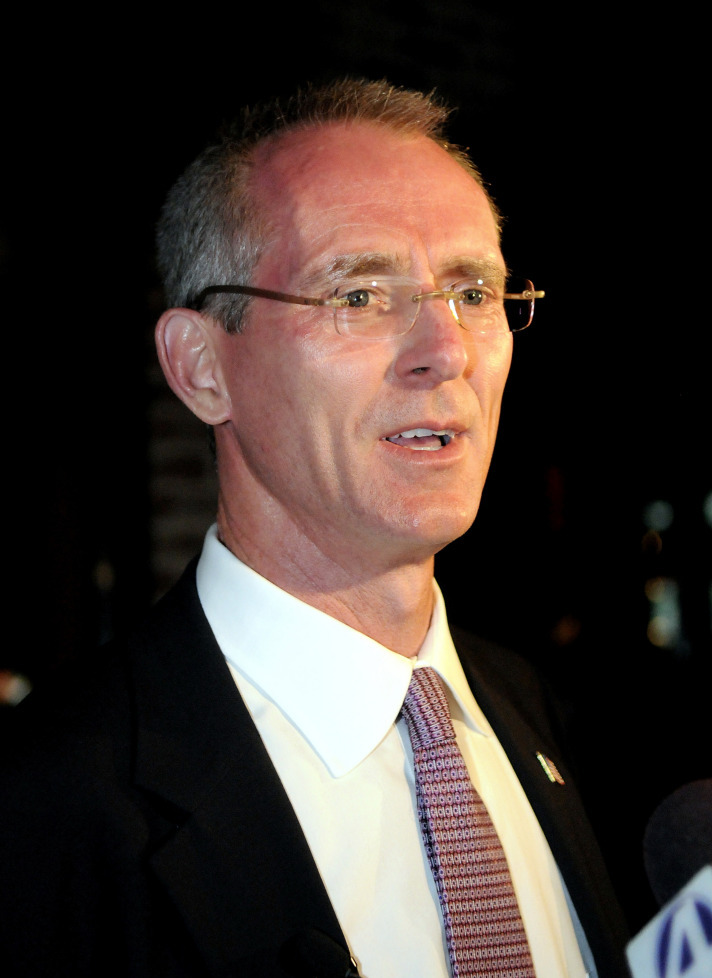
In the interview A Republican Swamped by the GOP Wave, Rep. Inglis explains how the current movement is a corruption of what he, his father, and Teddy Roosevelt understood as conservatism. His discussion reminds me of an elderly Republican lady I met at a state-wide meeting on environmental conservation about a decade ago. The keynote speaker was Massachusetts Environmental Secretary Bob Durand, a Republican official appointed by a Republican governor. As I sat with this lady at lunch, she asked why Republicans had gotten such a bad name among conservationists; apparently, she had heard other attendees expressing surprise that we would be addressed by a Republican, and she could not figure out why. After all, she knew that Republicans were among the leading conservationists in New England, and conserving the Earth was, well, conservative. As I explained to her at the time -- and she wistfully accepted my explanation -- a group of nihilists had decided to take over one political party or the other back in the 1980s, and they had chosen her party.
Rep. Inglis is among a dwindling number of Republicans to understand what "conservative" actually means. Like his father, he thinks that conserving resources is conservative, but he is being replaced by those who think it is conservative to waste resources and send other people's kids abroad to defend the right to do so. Sadly, his brand of conservatism is on the wane in Washington.
Subscribe to:
Posts (Atom)