Tuesday, November 30, 2010

Railcar Fever


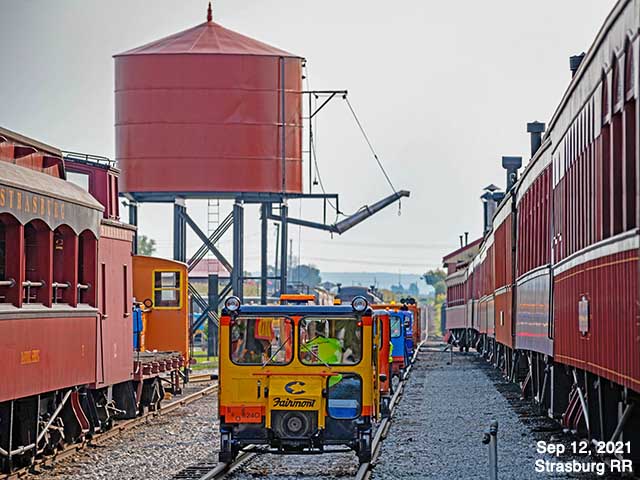
If I were to have a mid-life crisis (which I will not: my mid-life is terrific), it would be with these little railcars. I am especially wistful when I see them in this terrific location near the Cape Cod Canal. For now, I have to satisfy myself with the recent blog post I published on Wiley's GeoDiscoveries: Real Toy Trains.

Reduce Reuse Recycle

Last week, walking through my "idyllic" campus, I found a lot of plastic, including this bottle near a storm drain. What really caught my eye was the cigarette right on the edge, ready to become part of the local stream network. I posted the photo on the Wiley Concept Caching site, to which I am a regular contributor, hoping to get students nationwide to think about this problem. 

I am not terribly optimistic, however, since the offending litter was just feet away from the building in which we do much of the environmental education on our campus. Moreover, we seem to be losing the educational battle around plastic, as we actually encourage the sale of beverages wrapped in plastic -- five minutes of refreshment followed by centuries of degradation.

The Reduce. Reuse. Recycle. mantra is well known, but it is not widely understood that with respect to plastic (and many other materials) this is a best-to-worst ranking. The only real way to eliminate plastic from the oceans, land, and waterways is simply not to produce it. Reusing plastic items delays the path to the hydrosphere. Recycling shortens the polymers, making them progressively less useful, but does not eliminate them.

Certainly, once something has been produced, reuse and recycling are to be encouraged, but they are not really sufficient measures to protect oceans, and institutions that do environmental education have an obligation to reduce demand where possible.

Brazil Grows Westward

See interactive map on Globo.com
My 1998 dissertation analyzes the urbanization of Rondonia, a state in the western Amazon region of Brazil. I chose Rondonia because it was experiencing extremely rapid rates of deforestation and urbanization at the same time, and I wanted to examine connections between the two. Among my conclusions were that the cities themselves were not contributing substantially to the growth of the forest and that the cities had taken on a life of their own and were poised for substantial further growth.

That early work led eventually to the establishment of the U.S.-Brazil Consortium on Urban Development, which I founded with fellow geographers at four universities in both countries (none of them in the Amazon). One of the first student participants was Rodrigo Capelani, whom I count among my many amazing friends in Brazil. After finishing our semester program, he graduated in Brazil and then completed his master's at Miami University of Ohio, where I had received my master's twenty years earlier. This evening, this came full circle, as Rodrigo showed me this map based on the work of the Brazilian Institute for Geography and Statistics (IBGE), and pointed out that it shows the remarkable growth of population in the western Amazon.

very preliminary look suggests that this bears out my conclusion growth in the region. The greens of the map show population gains, while the reds show losses. Porto Velho, the urban area where I lived during my 1997 field work, gained over 27 percent in the past decade -- almost 100,000 more residents. That increase alone exceeds the population of the entire state of Rondonia in 1960. Some other municipalities even farther from the historic core of the country have increased even more rapidly. The data in this form cannot validate my hunch that most of this growth is urban; I look forward to examining the data to find out.

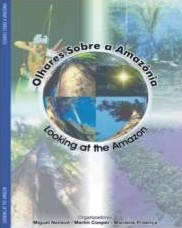
More importantly, I look forward to revisiting the region (which I last saw in 2003), and especially the later frontiers in the far northwestern Amazon, to see for myself. I plan to do so when my friend Miguel and I publish a second edition of our book about perceptions of the Amazon region. Both perceptions and reality have changed significantly since we first published Olhares Sobre a Amazonia a decade ago!

Monday, November 29, 2010

Geography of Coffee Tables

The So Sylvie design/culture/babel blog has a great little craft project that brings together the three words in this title. What is more perfect than a coffee table in a coffee shop, covered in maps? I've actually seen variations on this in a few places, most notably in the original Ben Linder Cafe in Leon. I hope that Sylvie's post encourages more people to try this. I also like that Sylvie supports her local coffee shop!

Shopping Saturday, not Friday

I am happy to say that I have never stood in the pre-dawn cold, waiting for a store to open. For many years, in fact, my (immediate) family has done no shopping at all on the day after Thanksgiving. What others call "Black Friday" we have called "Buy Nothing Day." We did make an exception to buy medicine for our daughter once, but we take this pretty seriously, making sure on Wednesday that we were prepared to avoid buying anything for the rest of the week. (For those confused by the term: it refers to the idea that businesses would reach profitability on this date, moving from "in the red" to "in the black" as sales grew, with sales for the rest of the year representing annual profit margins.)

This is, in fact, a movement that has now been around long enough that the original posters are called BND Classic. We knew it was a major movement, but it was not covered much, and we heard relatively little about it from our friends or colleagues. Even NPR, which prides itself on independence from advertising, we can count on a flurry of reports about shopping on this holiday weekend, with little, if any, mention of those who are purposely opting out.

We did notice, however, that the day after Thanksgiving is no longer the busiest shopping day of the year -- despite all the hype -- and we were thinking that people like us might be part of the reason. Of course, a bigger factor is the growth of online shopping, of which we do a fair bit (but not on Thanksgiving or the day after). Again, NPR and other media have focused on every possible cause except for the Buy Nothing Day movement.

Today I received a message from Heifer International, mentioning that the Black Friday haul probably exceeded $10,000,000,000, and suggesting an alternative way to give gifts. We have enjoyed giving and receiving Heifer International gifts over the years, and I recommend it as the perfect gift for people who already have everything they need (which is myself and most people I know, honestly).

This year, it seems to be different. We have heard more this year than ever before about people choosing not to participate in "Black Friday." We think this is something more than the usual, echo-chamber effect of surrounding ourselves with like-minded people. As people in the United States are just beginning to believe that an economic recovery may be occurring, it seems that more thought is going into purchases -- not only in terms of household solvency but also in terms of the broader implications of consumerism. I am especially proud -- and encouraged -- to see this thoughtfulness among my university students. In fact, one of my former students contacted me for more information on the movement, remembering that I had mentioned it when he took my class years ago.

We spent the Thursday holiday with friends, cooking, sitting by the fire, and enjoying great food -- much of it local -- and conversation. (In one concession to what has become the mainstream pursuit of the holiday, we were in a house with television, and did not completely ignore the football games.) We spent Friday doing not much of anything. Then we spent Saturday taking a pleasant drive to the South Coast and supporting several local and regional businesses on Small Business Saturday -- a new and welcome tradition.

We learned of the day from a local small business, the Rockin' K Cafe in Bridgewater, whose owner went out of her way to promote other local businesses to her regular customers. I have found that a lot of local business owners, especially cafe owners, are keen to support one another -- yet another way in which a local coffee shop can be the heart of a community. What surprised us was that Small Business Saturday has has a major corporate sponsor: American Express. We bought some pet supplies from a pet store just a couple blocks from our house. It does not have the volume to match the prices of the big national pet stores, but we frequent this store because of the proximity and the terrific service that has often been quite helpful to us and our menagerie.

Stretching the definition of "local" just a bit, we drove south to Westport, a town that really values its local businesses, particularly those related to agriculture. The main attraction was an open house at Westport Rivers, a vineyard where several of the staff recognize us on sight. Hmmmm. Seriously, it has been our privilege to support a winery that not only takes care of its own land and product so well, but that also supports many other local businesses, from suppliers for its excellent dinners to exhibitors at its public events. In this case, we were introduced to Golden Touch Farm, which sent its darling alpacas over to the vineyard. We are now the proud owners of a lovely alpaca basket and some truly amazing wool socks! We were winding our way home from the open house (and warming up from a brisk hayride through the 90 acres of vines), when we remembered another great business in Westport: Partners Village Store and Kitchen. We enjoyed a light lunch and bought some lovely gifts there.

We started to fantasize about retiring to a community that is part of a "Farm Coast" region that is very focused on the protection of open space and the promotion of healthy, local food. Unfortunately, retirement is a long way off, and this kind of community has become so rare that it is actually quite expensive to live there, so for the foreseeable future we will continue to work with our neighbors to try to help Bridgewater live up to its potential. The most selfish and narrow-minded interests have had the upper hand for decades, but we see some signs of hope in local efforts to promote fair trade, land protection, civic involvement, neighborhood improvement, and social justice.

Sunday, November 28, 2010

Coffee Shops and the Space Program

"Chance favors the connected mind."


Thanks are again due to my friend Carol in Texas, for sharing this intriguing video about coffee shops and innovation. Apparently I am not the only academic to have noticed the sensual dimensions of coffee. Steven Johnson calls the coffee house the "conjugal bed of ideas." His talk starts and ends with coffee houses, with interesting diversions to rural Africa and outer space along the way.

The stimulative effect of coffee houses is not so much about the caffeine (though this is certainly preferable to alcohol) as it is to the conversational networks that they foster. This has been increasingly recognized among academic architects, so that the coffee shops are now integral to a lot of academic buildings. This is even being done on my own campus, though in a very limited fashion. An innovative idea for a coffee shop in our new science center was bureaucratically trimmed to a generic shop the size of a single sheet of plywood, but we are still hoping to make the best educational use of that small space and the surrounding lobby.

Saturday, November 27, 2010

Civil War Coffee

My work on coffee comes at an ideal historic moment, in which social networks are helping to build support for fairer trading systems in coffee. Those same social networks help me to be better informed, in part because they allow for friends near and far to share coffee stories, including some rather unusual ones. (Just enter "coffee" in the search bar above to get a sampling.)

The latest is a story that is nearly 150 years old and comes from a friend who is over 2,000 miles away. The story is from CNN, and describes the peculiar geography of coffee during the civil war. Soldiers on both sides were addicted, to the point of chewing the beans when brewing was not feasible. Then, as now, suppliers were apt to cheat if they could get away with it, cutting coffee with anything to add weight -- even sand! Soldiers wisely sought whole beans, so that coffee might be the only relatively fresh ingredient in a soldier's ration. (Paula McCoach, who prepares coffee for Civil-War re-enactors. The article does not mention that any pan used for roasting should not be used to cook other foods. Garlic coffee, anyone?)

Early in the war, however, the northern army realized that the soldier-baristas were spending more time grinding and roasting that was deemed appropriate, and a "coffee essence" was devised. It was, according to the article's description, similar to -- and even a bit worse than -- the "coffee melt" that is offered in some restaurants and by Sodexo on my own campus. (Thanks to local managers and my marvelous students, Sodexo also offers some real coffee, but not campus-wide.)

As the Civil War dragged on, the coffee supply became one of the casualties, particularly south of the Mason-Dixon Line. This important commodity was blockaded, creating a black market for real coffee (with 300-fold price hikes) and a creative, if disgusting, array of alternatives. The article concludes with a positive result that occasionally followed -- soldiers would create temporary truces in order to trade coffee for tobacco, each being available only on one side of the line. 

Wednesday, November 24, 2010

Palin: Bread & Circus

Who is more frightening?
Which one of these makes you angrier: Bristol Palin or Jeff Immelt? At least one Wisconsinite was incensed enough about Bristol Palin's Dancing with the Stars coup that he shot his television set. Palin used politics to steal the spotlight, Immelt is trying to steal $25,000,000 from Massachusetts taxpayers in broad daylight, and Joan Vennochi asks, "Where's the outrage?"

It is a classic example of Bread and Circus -- diversions that keep people focused on frivolities and meaningless scandals, leaving little attention for outrages that really matter. For those who missed the story, Jeff Immelt is CEO of General Electric (famous for river pollution). The company attempting to extort money from Massachusetts state government. If the protection money is paid, only 150 workers are likely to be laid off in GE's Massachusetts factories. If not, well, somebody could get hurt.


Guess which of these stories is more likely to impact fees for university students, hours at the local library, or the cost of property taxes.

True Cost of Farm Subsidies

The United States Department of Agriculture provides both price guarantees and direct subsidies to farmers in the United States. The U.S. Agency for International Development provides aid to people worldwide, in part to alleviate the problem of hunger. In her article US Farming Subsidies, blogger Guari of  the beinformed journal provides the best explanation I have yet seen on the perverse connections between the two. Her bottom line is this: the amount of aid we give is exactly the amount of their wealth that we destroy.

Beginning in the 1940s, the Green Revolution exported the model of highly productive, research-centered agriculture from the United States and Western Europe to developing countries in Asia, Africa, and Latin America. The purpose to decrease starvation and malnourishment by helping farmers to produce more food locally. In some places, this goal was reached and even exceeded, as famine-prone countries such as China eventually became food exporters. Some of the negative consequences stemmed from the expansion of monocultures in mainly tropical locations, with single crop species replacing intercropping and single varieties replacing mixed strains of a given species. This led to a heavy reliance on pesticides. Other negative consequences arose from the increased yields themselves, which were often supported by increased mechanization, increased use of artificial fertilizers, and increased demand for irrigation.

Throughout the Tropics, the net result of all this has been a consolidation of farmland and a steady increase of urbanization. Subsistence farming has been replaced by commercial farming at a much larger scale, and many urban dwellers are people who would have been food producers but have become food customers instead. In some situations, this might not have been such a bad thing. After all, most people I know are food customers. In combination with our own heavy subsidies and trade policies, however, this situation has been disastrous, because the farmers in developing countries are dependent on urban customers in their own countries who can now buy food more cheaply from the United States. This is hard to believe, but efficiency and subsidies make it all-too true.
As the film King Corn makes clear, subsidies that were meant to ensure food security in the United States contribute to poor health while enriching a small number of wealthy corporate farmers and flooding the market with corn, corn syrup, and other products that are already dangerously abundant. Blogger Guari continues the story, showing how the damage goes beyond our our tax bills, waistlines, and diabetes cases. The efficiency of U.S. agriculture combine with the subsidies to allow corn, wheat, and other basic grains much more cheaply than even the lowest-paid farmers working some of the cheapest land on the planet.

Because politicians from across the rather narrow Republican-Democrat spectrum in the United States have  become true believers in the superiority of "free markets," those rich farmers are now in direct competition with poor farmers worldwide. As she demonstrates, all of the money we give in foreign aid to farmers is lost through this unfair trade.  I put the phrase "free markets" in quotes because a single, critical piece is missing from the discourse. As told in the coffee film Black Gold, the United States and other rich countries define the term to the disadvantage of developing countries, forcing them to accept terms of trade that are neither free nor fair.

See a 2004 report from Amber Waves for a more detailed explanation of how this has impacted corn farmers in Mexico. I spent the summer of 1989 in the Valley of Puebla, where corn was first domesticated, and where corn farmers can no longer compete against federally-funded corporate farms in Iowa. A villager in Cholula will pay less to have corn shipped over 1,000 miles from a rich farmer than he would pay to get corn from a poor farmer he goes to church with every Sunday. This is what "free trade" has come to mean.

"Securing borders" would be much easier without the added pressure, but it is politically more expedient to fund the border wall and corporate farm subsidies than it is to reduce funding for both.

Thanks to Thetis Sammons of Food Fight fame for pointing out the subsidies article.

Peruvian Cocaine

I play a lot of music in my classes, particularly in my Geography of Latin America course, and I often learn of interesting songs from my students as a result. Thanks to my student Heather for sharing this song from  Immortal Beloved, in which a variety of characters represent differing perspectives on the problem of violence related to the drug trade in Peru (see lyrics at A-Z Lyrics). Also see the Time to Debate a Change analysis from the Council on Hemispheric Affairs.

Blog Ideas

coffee (25) GEOG381 (24) GEOG388 (23) GEOG470 (18) climate change (18) GEOG130 (16) geography (16) GEOG332 (13) GEOG431 (12) musica (11) GEOG 332 (9) GEOG 381 (9) Mexico (9) Brazil (8) GEOG286 (8) Texas (8) education (8) migration (8) GEOG298 (7) borderlands (7) GEOG199 (6) GEOG331 (6) Massachusetts (6) US-Mexico (6) deBlij04 (6) immigration (6) GEOG 130 (5) GEOG 286 (5) GEOG287 (5) climate justice (5) cultural geography (5) fair trade (5) food (5) geographic education (5) nicaragua (5) water (5) Arizona (4) GEOG 171 (4) GEOG171 (4) GEOG295 (4) Safina (4) africa (4) deBlij05 (4) land protection (4) music (4) politics (4) Bolivia (3) Boston (3) COVID-19 (3) Detroit (3) Ethiopia (3) Managua (3) Obama (3) border (3) cartography (3) drought (3) libraries (3) pesticides (3) suburban sprawl (3) trade (3) unemployment (3) Alaska (2) Amazon (2) Bridgewater (2) Canada (2) Chiapas (2) China (2) Colonialism (2) EPA (2) EarthView (2) Economy (2) Environment (2) GEOG 199 (2) GEOG 287 (2) GEOG 388 (2) Google Maps (2) Government (2) Hawaii (2) India (2) Lexington (2) Maldives (2) Mozambique (2) NOLA (2) NPR (2) National Monuments (2) National Parks (2) New Orleans (2) Religion (2) Rio Grande (2) Taunton River Wild and Scenic (2) Tex-Mex (2) The View from Lazy Point (2) United States (2) Venezuela (2) anthropocene (2) cape verde (2) censorship (2) central america (2) chocolate (2) corn (2) deBlij07 (2) deforestation (2) demographic transition (2) demography (2) education reform (2) employment (2) environmental geography (2) film (2) forest fire (2) global warming (2) islands (2) landscape ecology (2) librarians (2) maps (2) organic (2) peak oil (2) refugees (2) sense of place (2) soccer (2) sustainability (2) television (2) water rights (2) whales (2) #bbc (1) #nicaragua (1) #sosnicaragua (1) #sosnicaragua #nicaragua (1) 100 Years of Solitude (1) ACROSS Lexington (1) Accents (1) Adam at Home (1) Alice (1) Alt.Latina (1) American Hustle (1) April (1) Association of american Geographers (1) Audubon (1) Aunt Hatch's Lane (1) BBC (1) BSU (1) Baby Boomers (1) Banda Aceh (1) Bay Circuit Trial (1) Bechtel (1) Beleza Tropical (1) Belize (1) Beloit College (1) Ben Linder Cafe (1) Bet The Farm (1) Bhopal (1) Biafra (1) Bikeway (1) Bikini (1) Bill Gates (1) Bill Moyers (1) Boeing 777 (1) Brazilian (1) Brazilianization (1) Bridge (1) British Columbia (1) Brockton (1) Bus Fare (1) Bush (1) Cabo Verde (1) California (1) Cambridge (1) Cape Cod Bay (1) Carl Stafina (1) Catholic (1) Ceuta (1) Chalice (1) Chipko (1) Citgo (1) Climate risks (1) Cochabamba (1) Colombia (1) Common Core (1) Commuter (1) Computers (1) Cuba (1) Cups and Summits (1) Dallas (1) David Byrne (1) Deans Beans (1) Delaware Valley (1) Dunkin Donuts (1) Earth Day (1) Earth View (1) Easton (1) El Salvador (1) Elizabeth Warren (1) Ellicott City (1) Emilia Laime (1) English-only (1) Environmental History (1) Euphrates (1) European Union (1) Evo Morales (1) FIFA (1) FYS (1) Fades Out (1) Farms (1) First-Year Seminar (1) Food Trade (1) Frederick Kaufman (1) French press (1) Fresh Pond Mall (1) GEOG 431 (1) GEOG 441 (1) GEOG213 (1) GEOG490 (1) Gabriel García Márquez (1) Garden of Gethsemane (1) Gas wells (1) Gateway Cities (1) General Motors (1) Gini Coefficient (1) Girl in the Cafe (1) Google (1) Gordon Hempton (1) Gravina Island Bridge (1) Great Migration (1) Great Molasses Flood (1) Guy Lombardo (1) Haiti (1) Hawks (1) Heart (1) Higher Education (1) History (1) Holyhok Lewisville (1) Homogenous (1) Honors (1) How Food Stopped Being Food (1) Hugo Chavez (1) IMF (1) Iditarod (1) Imperial Valley (1) Income Inequality (1) Indonesia (1) Iraq (1) Irish (1) Japan (1) Junot Diaz (1) Kenya (1) Ketchikan (1) Key West (1) Kindergarden Students (1) King Corn (1) Kiribati (1) Latin America (1) Limbaugh (1) Literature (1) Living On Earth (1) Louisiana (1) Love Canal (1) Luddite (1) M*A*S*H (1) MCAS (1) MacArthur Genius (1) Maersk (1) Malawi (1) Malaysia (1) Malaysian Air Flight 370 (1) Mali (1) Manu Chao (1) Map (1) Marblehead (1) Mary Robinson Foundation (1) Maryland (1) Massachusetts Bay Colony (1) Math (1) Maxguide (1) May (1) Maya (1) Mayan (1) Mayan Gold (1) Mbala (1) McDonald's (1) Melilla (1) Mexicans (1) Michael Pollan (1) Michelle Obama (1) Micronesia (1) Military (1) Military Dictatorship (1) Minuteman Trail (1) Mongolia (1) Monsanto (1) Montana (1) Morocco (1) Mount Auburn Cemetery (1) Muslim (1) NPS (1) Nantucket (1) National Education Regime (1) Native American (1) Native Americans (1) New Bedford (1) New Hampshire (1) New York City (1) New York Times (1) Nigeria (1) No Child Left Behind Act (1) Norquist (1) North Africa (1) Nuts (1) Oakland (1) Oaxaca (1) Occupeligo (1) Occypy (1) Oklahoma (1) Oklahoma City (1) Oppression (1) PARCC (1) Pakistan (1) Pascal's Wager (1) Peanut (1) Pearson Regime (1) Philadelphia (1) Philippines (1) Pink Unicorns (1) Poland (1) Portuguese (1) Protest (1) Public Education (1) Puebla (1) Puritans (1) Quest University (1) Rachel Carson (1) Reading (1) Republican (1) Retro Report (1) Robert Reich (1) Rock Legend (1) Ronald Reagan (1) Rondonia (1) Rosa Parks (1) SEXCoffee (1) Safety (1) Samoza (1) Sandino (1) Sara Vowell (1) Save the Children (1) Scotch (1) Scotland (1) Seinfeld (1) Senegal (1) Sergio Mendes (1) Severin (1) Sharrod (1) Silent Spring (1) Sinatra (1) Slope (1) Smokey the Bear (1) Somalia (1) Sombra (1) Sonora (1) Sonoran desert (1) Sonoran hot dog (1) South America (1) Spain (1) Stairway to Heaven (1) Storm (1) Suare Inch of Silence (1) Sumatra (1) Swamp (1) Tacloban (1) Tanzania (1) The Amazon (1) The Amazon Trail (1) Tigris (1) Tucson (1) Tufts (1) U.S Federal Reserve (1) U.S Government (1) U.S. economy (1) USDA (1) USLE Formula (1) Uganda (1) Unfamiliar Fishes (1) Union Carbide (1) Vacation (1) Vexillology (1) Vietnam (1) ViralNova (1) WNYC Data News (1) Wall Street (1) Walsenburg (1) Walt Disney (1) Walt and El Grupo (1) Ward's Berry Farm (1) West (1) Whaling (1) Wilson (1) Winter Storm Saturn (1) Wisconsin (1) World Bank (1) Xingu (1) YouTube (1) Zombies (1) agriculture (1) antitrust (1) aspen (1) austerity (1) aviation (1) banned books (1) bark beetle (1) bean (1) beavers (1) bicycle (1) bicycling (1) bike sharing (1) binary (1) biodiversity (1) bioneers (1) books (1) boston globe (1) cacao (1) cafe (1) campaign (1) campus (1) cantonville (1) capitals (1) carbon dioxide (1) carbon offsets (1) carioca (1) cash (1) cashews (1) census (1) chemex (1) chemistry (1) chronology (1) churrasco (1) civil rights (1) coffee grounds (1) coffee hell (1) coffee prices (1) coffee quality (1) college (1) compost (1) computerized test (1) congress (1) conservation commission (1) corporations (1) countries (1) cubicle (1) dams (1) deBlij06 (1) deBlij08 (1) death (1) deficit (1) development (1) dictatorship (1) distracted learning (1) distraction (1) drug war (1) dtm (1) earth (1) economic diversification (1) economic geography (1) election (1) embargo (1) energy (1) enhanced greenhouse effect (1) environmentalist (1) ethnomusicology (1) exremism (1) failed states (1) farming (1) financial crisis (1) football (1) forestry (1) forro (1) fracking (1) free market (1) free trade (1) fuel economy (1) garden (1) genocide (1) geography education (1) geography games (1) geography of chocolate (1) geography of food (1) geologic time (1) geotechnology (1) gerrymandering (1) global pizza (1) globe (1) goodall (1) green chemistry (1) ground water (1) guacamole (1) guatemala (1) habitat (1) high-frutcose (1) home values (1) hospitality (1) hourglass (1) housing (1) hydrology (1) illegal aliens (1) income (1) indigenous (1) interfaith (1) journalism (1) kitchen garden (1) labor (1) language (1) libertarianism (1) library (1) linguistics (1) little rock (1) llorona; musica (1) macc (1) maccweb (1) magic realism (1) maple syrup (1) mapping (1) masa no mas (1) massland (1) medical (1) mental maps (1) mi nina (1) microlots (1) microstates (1) mining (1) mltc (1) monopoly (1) municipal government (1) nautical (1) neoclassical economics (1) new england (1) newseum (1) newspapers (1) noise pollution (1) pandas (1) petroleum (1) piracy (1) pirates (1) poison ivy (1) police (1) political geography (1) pollution (1) provincial government (1) proxy variables (1) public diplomacy (1) quesadilla (1) rabbi (1) racism (1) real food cafe (1) regulations (1) remittances (1) resilience (1) resistance (1) respect (1) rigoberta menchu (1) rios montt (1) romance (1) roya (1) runways (1) russia (1) satellites (1) science (1) sea level (1) selva negra (1) sertao (1) sertão (1) sex (1) sex and coffee (1) simple (1) sin (1) smokey (1) solar (1) solar roasting (1) south africa (1) sovereignty (1) species loss (1) sporcle (1) sports (1) state government (1) taxes (1) tea party (1) teaching (1) textile (1) texting (1) tortilla (1) training (1) transect; Mercator (1) travel (1) triple-deckers (1) tsunami (1) urban geography (1) utopia (1) vermont (1) vice (1) video (1) wall (1) water resources (1) water vapor (1) whiskey (1) whisky (1) widget (1) wifi (1) wild fire (1) wildfire (1) wildlife corridor (1) wto (1)