Wednesday, October 31, 2012

Hurricane Lance?

Big Yellow Taxi: Notice the sheen of oil on the flood waters
Charles Sykes, AP/NYT
As I wrote recently in Frosty Denial, the United States remains singularly committed to ignorance in the area of climate science. Nobody has offered a plausible alternative description of the physics that explain a growing constellation of facts, but politicians, media, and a sizable slice of the general public remain convinced that there are two sides to the question of whether humans have been changing the climate.

This week, one of the most expensive storms ever to strike the United States has ravaged New Jersey and New York City a week before a presidential election that will decide whether the next four years will bring relative inaction or absolute inaction on climate change. (Sadly, our range of choices is not very wide, excepting Jill Stein.)

In much of the world -- even in some circles in the United States -- people who have actual planning responsibilities recognize that they can no longer afford to pretend that the atmosphere is not changing in problematic ways. I am working in a small way with the tea industry, for example, as tea scientists and policy makers try to discern the best way to advise farmers whose plants should remain productive over a period of decades. Closer to home, state governors have long been ahead of their more partisan counterparts at the federal level. Neither insurance companies nor the investors who set their stock prices can afford to deny the obvious, as has already been made clear by Hurricane Sandy.

This image is not genuine. I should have checked Snopes, which
refutes a lot of the images currently circulating.
Stark images abound that illustrate the unusual scope of Hurricane Sandy -- a slow-moving storm almost a thousand miles wide -- but a couple from New York are especially poignant. Not since Hurricane Katrina have images of rising water been so prominent within the United States. The automobiles sitting helpless in the flood waters, covered with a film of oil, remind us that our individual dependence on fossil fuels contributes to a growing assortment of collective risks. The (apparently false) image shared by Occupy Wall Street -- of a Scuba diver under Times Square -- reminding me of the similarly outfitted cabinet meeting held in Maldives in 2009.


This morning, a BBC announcer openly questioned the long-term viability of New York City as a human settlement, and although that reaction might seem a bit premature, it is certainly the case that large population centers near sea level (which is where most of the world's large population centers are) will are now subject to increasingly frequent and severe threats.

Bill McKibben and the 350.org movement have been using a "connect the dots" metaphor for the past couple of years, encouraging people to draw the most plausible -- and useful -- conclusions they can from a rapidly growing body of evidence.

Hurricane Sandy -- and the attendant blizzards, storm surges, power outages, and deaths -- have proven to be such a large DOT that it is actually bringing discussions of climate change back into political discourse (where it rightly belongs). The policy questions that are emerging fall into two categories. The New York Times, for example, has cited the need for a strong federal role in disaster response. Governors and mayors -- most notably Gov. Christie of New Jersey seem grateful that FEMA has adequate funding and a director with actual qualifications.

At this point, some readers might be wondering why the title of this post suggests a renaming of the hurricane. The idea is inspired by a collection of excerpts relating the super storm to climate change, which appeared during the storm on Treehugger. I recommend reading it for all of the interesting questions and analogies it raises, but the most intriguing is this:
Like a baseball player on steroids, our climate system is breaking records at an unnatural pace. And like a baseball player on steroids, it’s the wrong question to ask whether a given home run is “caused” by steroids.
In light of recent attention to bicyclist Lance Armstrong, this is particularly apt. Just as the distinction between his individual performance and the enhancement of that performance cannot be clearly made, the contribution of climate change to this week's mayhem cannot be calculated in detail. The timing of the storm probably contributed as much to the catastrophic coastal flooding as did sea-level rise, but the fact is that both contributed.
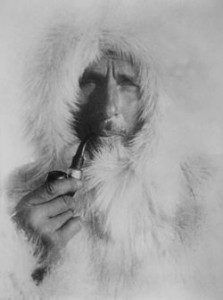
Of everything I have read this week, however, it is a speech based on the work of Alfred Wegener that I found most interesting. A century ago this month, Wegener began to revolutionize the study of geology with a seemingly elementary observation. The coastlines of eastern South America and western Africa appear to have been connected at some point in the past. From this simple observation arose the theory of plate tectonics, which initially earned Wegener nothing but scorn. Beyond the usual, healthy skepticism about new theories, he endured scorn from those for whom his ideas were inconvenient.

In New Frontiers, Wegener biographer David Lawrence gives an eloquent -- and alarming -- description of America as a nation that has always been conflicted about science. We gladly accept the productive innovations that arise from science, but are too quick to dismiss scholarship that conflicts with our profits or ideologies. Quoting Isaac Asimov, Lawrence calls out the now widespread notion that "my ignorance is just as good as your knowledge."

Last-minute addition: Today the radio program Fresh Air included a very informative interview with Radley Horton, a scientist who serves on New York City's climate-change panel. He does not claim that climate change "caused" the storm, but he does talk about some ways that the general trend and the specific event are related. Later in the day, All Things Considered aired an equally important interview with Andrew Hoerling, who explains that climate change does not seem to be changing the frequency, intensity, or track of hurricanes, though it is correlated with many other kinds of extreme weather. Both interviews bear careful listening, because it is easy to extrapolate too far from either set of statements.

Tuesday, October 23, 2012

Frosty Denial

As I mentioned in my Hot or Not post this summer, neither major political party in the United States advocates a serious response to climate change, even as the urgency of the problem becomes increasingly obvious. Quite simply, substantial doubt about climate change exists only in the United States, while most of the rest of the world (aside from China) has moved on to trying either to slow it down, to adapt to it, or both.

Climate of Doubt is new Frontline documentary that describes how public opinion in the United States has been manipulated to support inaction in the face of mounting evidence. Not surprisingly, the documentary has already drawn vociferous objections in online forums from those whose delusions it describes.

In the face of mounting evidence that humans have seriously altered the climate, all manner of strange theories are angrily espoused, either denying that the change is occurring or blaming the change on natural factors, or both.

The statistical evidence for human-induced climate change was -- until recently -- somewhat subtle, and the denial theories focus on the aspects of the evidence that are most complicated. The physics involved are quite simple, however, and I have never seen the basic physical processes explained away.

:How simple is the problem? Have a look at Frosty.

Thanks to The Haunted Closet for the Frosty screen captures.
What material does the magician employ as he pursues his dastardly scheme to melt the snowman? Glass.

Just like the glass on my south-facing porch, greenhouse glass is nearly transparent to visible light, but somewhat opaque to infrared (infra-red) energy. Most of what is emitted by the sun is visible; most of what is emitted by the earth (and objects at earth-like temperatures) is infrared.

Because of gases such as carbon dioxide, methane, and water vapor, the earth's atmosphere behaves in a similar fashion. Most incoming solar radiation (visible or shortwave) gets in, but some of the outgoing terrestrial radiation (infrared or longwave) gets trapped. This greenhouse effect occurs without humans, and we should be grateful for it!

What humans began to do about two hundred years ago, though, is to increase the concentrations of greenhouse gases in the atmosphere by taking the elements out of long-term storage and putting them in short-term storage -- for example converting coal that had accumulated over millions of years into gases that were released in dozens of years.

The effect is like thickening the glass on a greenhouse, or adding a blanket to a bed. It does not create heat, but it increases temperature in a specific location -- inside the greenhouse, under the covers, or in the case of the planet as a whole, within the troposphere. Those who decide that they do not "believe" in climate change are not able to explain this away, just as no other explanation can be offered for Frosty's puddleness.


For more information and resources, see my climate change web site, or see all climate change articles on this blog.

Sunday, October 07, 2012

Hawaiian Beauty


This morning my friends at Mirasol's CafĂ© posted this landmark video by Israel Kamakawiwo'ole, a reminder to slow down and enjoy some beauty -- of the human spirit and the natural world -- on this beautiful morning. We first learned of Iz a couple of years ago, and included a link to a nice interview with him on our Celebrating the States project. So even if you are not having Hawaiian coffee this morning, you can have a beautiful slice of Hawaii with your coffee.

Monday, October 01, 2012

Elite Coffee Limits

Most of my friends and acquaintances -- and even people who happen to see the family car -- know that I care a lot about coffee. In fact, a favorite part of my web site is the Caring for Coffee page, where I provide details about how to get the best flavor from the brew. I must admit that I care about the coffee for some of the same reasons I care about other foods and beverages -- I have learned to appreciate differences that result from the selection of ingredients and approaches to preparation for many foods. Our food blog celebrates many of those discoveries.

As with foods, however, the appreciation of good coffee also has a lot to do with wanting a better life for farmers and a better relationship with the land. If coffee tastes terrible, it is probably grown and traded under conditions that were not good for soil, water, or farmers. Conversely, if the coffee is very good, the chances are improved that the farmer and the land have been treated fairly.

For a variety of reasons that I discuss in some detail in my courses (and elsewhere on this blog), the free market does not always (or even often) treat labor and land fairly. For that reason, social and environmental certifications have emerged that create "fair" markets that can often improve the treatment of both. These have empowered us to act as consumers where we have failed as citizens. That is, where the political process has not succeeded in protecting human rights and the environment, we can "vote with our wallets" to affect change far from home.

The limitations of this approach are three-fold: first, those with an interest in justice have far fewer dollars to spend than those who either do not care or those who have an active interest in injustice. Second, and related to the first, the certifications themselves are susceptible to being "captured" by those who are thriving in the free market. Witness recent changes in Fair Trade certification brought about by Starbucks and other heavyweights.

Third -- and the impetus for this post -- certification programs help commodity producers only by taking them out of commodity markets. This is helpful for those producers of coffee, tea, cocoa, and the like who are in a position to improve their quality and therefore their livelihoods, but it does nothing to change the lives of millions for whom these products will always be commodities. And it does even less for the people and places responsible for all of the goods that will almost certainly remain commodities -- corn, wheat, copper, and the like. 

I have seen first-hand the ways in which attention to quality has helped farm families and the land, so I remain committed to good coffee and the good it can do. But I am also convinced by the argument of blogger @nickcho, who argues that an extreme focus on the pinnacles of coffee quality can turn coffee advocates into coffee snobs, members of the One Percent (or, really, the Point Zero One Percent), for whom boutique coffee can become an end, rather than a means.

Where does all this lead us? Coffee paralysis? I do not think so. In the short run, we should get to know as much as we can about our roasters. What have they had to say about changes in fair trade? What are they actually doing in the field? 

In the long run, however, we need to take more responsibility as citizens than we do as consumers. We need to push politicians -- regardless of party -- to prioritize human rights and the environment when they negotiate trade agreements and other areas of domestic and international law and diplomacy.

Tuesday, September 18, 2012

Tea Time

At this week's Intersessional Meeting of the FAO Intergovernmental Group on Tea in Washington, the hotel provides hot water and cups, and the "captains of tea" from all over the tea-growing world bring samples.


I had the great privilege of joining this two-day meeting as part of my sabbatical, during which I am working on a two-volume reference book entitled Geography of Coffee & Tea for ABC-CLIO, publishers. I have a lot to learn about the geography of coffee and even more to learn about the geography of tea.


Having no diplomatic credentials, I was very grateful to be admitted to the meeting as an observer, and gratified to be included in one of the Working Group on Climate Change, whose official members are shown above at our (covered) poolside meeting. I was able to participate as a geographer with this group of top tea researchers from Sri Lanka, India, and Kenya (shown left to right).

We developed a report (based on our chair's discussion paper) that will guide the FAO-IGG on tea as it prepares to help tea growers around the world adapt to climate change. Building on the PRECIS regional climate model from the British Hadley Centre. Climate change and tea production are spatially quite variable, and climate varies temporally as well. Because a given cultivar of tea remains in place for 40 years or more, climate adaptation means mapping the best tea cultivars for future conditions. We have taken a small step toward using GIS to provide decision support for farmers adapting to change.

I had been doing most of my recent writing on the teas of Sri Lanka, so I was delighted to meet quite a few Sri Lankans, and to ask directly about the uses of :"Ceylon" and "Sri Lanka." The colonial name (Ceylon) of the country had so much global recognition that it is still used to refer to the tea, even though the country itself has reverted to its pre-colonial name (Sri Lanka).
Map & legend:
Almar Teas

As I was discussing this, Sri Lanka's trade minister invited me to a tea seminar and tasting later in the week, to hosted by the only ambassador at our meeting, the Hon. Jaliya Wickramasuriya. The event was both informative and enjoyable.

We learned about the trade in Ceylon tea, the care that is taken with protecting its reputation, and its importance to the Sri Lankan economy. We also learned about Walter's Bay, a U.S. company that maintains as much of the tea commodity chain as possible inside of Sri Lanka.This is a cost-effective way to promote social sustainability in tea processing.

At the end, we were treated to a tasting that included all of the Sri Lanka's regional appellations.

2018 Updates: I eventually had to abandon the encyclopedia project -- a semester off from teaching was not nearly enough time to complete it. But the experience did expand my beverage horizons and let to a new colloquium on tea and climate change.

The group I met with in D.C. continued its work, and though it took a different shape than originally envisioned, it has led to a comprehensive report on climate change in the tea industry, which includes thoughtful ideas on both cause and effect.


Tuesday, September 11, 2012

The Road (?) to Belmopan

Always looking ahead to the next adventure when I should be finishing the current one, I have started looking at maps that will help us to plan our Geography of Chocolate course (actually called Mayan Gold) in Belize next year. When doing quick look-ups of travel distances online, I was surprised that it could take so long to get around in what I thought of as a fairly small country.

As I investigated further, I was reminded of the New England adage -- often repeated with a fake-Maine accent like the Pepperidge Farm man -- that "You can't get there from here."

Click the image below to see that Mapquest's error message is almost identical to our regional cliche, even though it appears next to a clearly-marked highway joining two small towns less than 20 miles apart.


Google Maps proved a bit more intrepid -- if software can be said to have an adventurous spirit -- when I queried the same trip. Apparently avoiding a washed-out bridge on the Western Highway, it suggested the use of remote, unimproved roads requiring five hours to cover 120 miles.


It is a good reminder of the value of a healthy dose of skepticism and solid geographic skills, even in an age when computers seem to have all the answers. A new colleague at ISIS (where we will be teaching, in San Ignacio) was able to confirm that the direct route actually is open. Important bridges are sometimes lost, such as the 2008 washout of the Kendal Bridge in southern Belize in Tropical Storm Arthur, and apparently the major databases have erroneous information about a lost bridge between Belmopan and San Ignacio.

Many of our BSU colleagues and students have visited Belize for study or service trips, and we have met quite a few educators and students from Belize as part of several partnerships in the country. We are very much looking forward to our chance to get to know the country formerly known as British Honduras. We love quiet adventures, so a country whose three largest cities have barely 100,000 residents between them is quite attractive. Belmopan is, in fact, among the smallest capital cities in the world. Only the capitals of Vatican City and about three dozen island nations and dependencies have smaller capitals.

Ironically, one of the major bonuses of visiting Belize will be the chance to visit a site in Guatemala that we missed on our 2008 coffee trip there. Many people suggested a "side trip" to the Maya ruins at Tikal -- which would have required a flight or a truly inordinate amount of bus travel. From our digs (no pun intended) in San Ignacio, however, this will be a brief jaunt.

Mainly, however, we look forward to meeting our students and traveling with them to the cacaolands of the south, and as time allows, exploring the Cayo district, which includes Mayan ruins of its own at Xunantunich.


And for all of this, the Hawksworth Bridge will ensure that we really can "get there from here!"


Monday, September 10, 2012

Sortin' for Dunkin'

From my travels to the coffeelands of Nicaragua, I have learned that there is a market for every bean. From planting to pruning to harvest, and through the many stages of drying, milling, and roasting, coffee beans in are sorted.

Several years ago, I was with students on a sorting area at Selva Negra when a student asked what would happen to the rejected beans. "Dunkin' Donuts" was he answer, only half in jest. This came to mind while I was hand-milling pergamino coffee that was from Finca Mil Flores in Nicaragua. Among the many excellent beans, I noticed one inferior bean, enough to ruin a batch -- or to start a perfectly normal batch at DD.

Tuesday, September 04, 2012

Geography of Chocolate


When I was shown these cacao husks being composted on a small farm in Nicaragua, I could not help but admire the surprising variety of colors. I was visiting the farm with students as part of my 2010 Geography of Coffee study tour in Jinotega and Matagalpa. Although Coffea arabica and Theobroma cacao are not close botanical relatives, the geography of chocolate is remarkably similar to that of cacao.

All of my visits to Nicaragua have included Castillo Cacao, an artisanal factory in Matagalpa, and as the cultivation of cacao (from which chocolate is made) continues to expand in Nicaragua's coffeelands, we intend to make cacao farms a regular part of the program with Matagalpa Tours, as we will in January 2013.

And just as my interest in the geography of coffee has now led me to work on the geography of tea, librarian Pamela Hayes-Bohanan and I have now been invited to teach an entire course on the geography of chocolate at the Institute for Sustainable International Study in Cayo, Belize. Our two-week class -- Mayan Gold -- will combine Pam's expertise on Mayan culture with my growing understanding of the global trade in chocolate and cacao (the food and the crop, respectively), and is available for easily transferred credits.

Interested students can contact me for details at jhayesboh@bridgew.edu, or contact ISIS directly.

Tuesday, August 28, 2012

Under the Skywalk

Late-afternoon sun illuminates the supports for the old railroad bridge that has been transformed
into the Walkway Over the Hudson.
Last Thursday was a perfect day to enjoy exploring sites both new and familiar -- a wonderful afternoon and evening spent about halfway between our home and a very important errand in Toronto.

The first part of the journey was zooming along the familiar Massachusetts Turnpike (the driveway of my summer, as it turns out), exiting a bit earlier than usual to take I-84 into western Connecticut. Because I'm writing this, it is apparent that we survived passage through Hartford. In my experience, Hartford is a scary pocket of daredevil driving in Connecticut, which has by far the best driving conditions in southern New England. (This is like having the best swimming conditions in Hell, but I digress from my digression.)

As part of our Bridgewaters Project (the lifelong pursuit of places sharing the name of our adopted hometown), we wandered off of I-84, through horse country and into the bucolic (though recently somewhat sordid) village of Bridgewater, Connecticut (population: 1,824).

After a wonderfully surprising coffee-shop visit along Route 9, we came to the real highlight of our evening -- a visit with our friend Jeff Anzevino, a friend from our undergraduate days as geography students at UMBC. The Hudson River has captivated Jeff, who works as a planner for Scenic Hudson by day, sleeps in a cozy home high above the river by night, and takes masterful photos of its tugboats in between. Jeff lives about halfway between our home and the homes of our extended families, allowing us sporadic visits through which he has passed along his passion for this river.

On this particular visit, we trawled from bank to bank with Jeff and a fellow river booster, enjoying the fish, the trains, and the unique human and physical geography of the river and shoreline in the vicinity of Highland and Poughkeepsie. The most remarkable part of that view is the Walkway Over the Hudson, the result of  successful collaboration among countless visionaries in the region, Jeff not least among them. The abandoned railroad bridge whose pier is shown above now supports one of the world's highest and longest pedestrian bridges, a walkway that allows pedestrians to enjoy a view from the sky above a remarkable river. Moreover, the bridge greatly increases the ability of people to commute by bicycle, so that many people can now get across the river, onto a train, and into New York City or Albany without ever getting in an automobile. (Read more about the importance of this in my How We Ride post.)


The bridge is visible in the background of this somewhat hazy photograph, along with a vessel that is itself another important facet of the river's story. Jeff's avocation as a musician connects him to a much more famous champion of this river: Pete Seeger, whose ship the Clearwater has long served -- quite literally -- as a vessel for environmental education along the Hudson. The converted coal ship was being tended at the of of a sailing day when we found it berthed in Poughkeepsie.

I am thankful also to my friend Hilary -- another geographer -- for pointing that proposed hydrofracking -- in the pursuit of supposedly "clean" natural gas -- is a threat to the Hudson River. The Marcellus Shale where fracking is proposed lies mainly outside of the Hudson River Valley. Pete Seeger and the Clearwater have been among those resisting the project. Formal regulatory comments from Scenic Hudson detail some of the specific threats, while Sean Lennon (yes, that Sean Lennon explains the threat to Pennsylvania and New York landscapes, and water supplies in those regions and New York City itself). Nearly 10,000 people have joined Hilary in the No Fracking Way group on Facebook, which continues to work to protect water and land from what would be the equivalent of a slow, massive spill underground.

A few years back -- before I had seen much of it up close -- I enjoyed the stories of the Hudson that begin William Least Heat-Moon's Riverhorse: A Voyage Across America. In some ways, it is like a riparian version of Zen and the Art of Motorcycle Maintenance. Read more about the Hudson in my Tappan Zee birthday post.

That errand, by the way? We were picking up our kid, who had been on a service trip to China with Me to We, a Canadian youth organization.

Saturday, August 18, 2012

Cups and Summits

SPOILER ALERT. This is an article about two terrific films, each of which connects coffee to political economy. My best advice is to watch them (you will not regret it) and then perhaps read what I have to say. That said, in the comments below, I will refrain from giving away the details of the fictional work.

The films discussed are The Girl in the CafĂ© (HBO feature film, 2005) and  Black Gold (documentary, 2006). Viewers of both films should watch (and carefully listen) through the end of the closing credits.

For some reason, I learned about the 2005 film The Girl in the CafĂ© only recently, during one of my frequent searches for films related to coffee and anything related to coffee shops or to the romantic side of coffee. Kelly Macdonald (Gina -- a young woman, not a girl) and Bill Nighy (Lawrence) bring all this and more to a film that works on many levels, so I am glad finally to have found it.

The first level is a nerd-meets-nerd romantic comedy, heavier on the romance than the comedy, the romance unfolding at an excruciating pace. From a chance meeting in a crowded London café, the May-December couple tip-toed around their mutual attraction until our DVD timer read 54 minutes before the first kiss. By then I was yelling at the screen like that old man next door in It's A Wonderful Life.

As the pair moves toward resolution of the film's romantic tension, a deeper tension emerged, along with the film's real purpose. Lawrence is a British finance official who is part of his country's negotiating team at the 2008 G8 meeting. For the purpose of the film, the meeting was chaired by the United Kingdom but held in Reykjavik. The 2008 meeting was actually held in Scotland, but it was indeed chaired by the UK.

The G8 meetings are gatherings of the heads of state and finance ministers from eight large countries (known as large "economies" for the purposes of those who view the world primarily in economic terms). Since 1975 (when they began as a G6 meeting), these meetings have been a place where a small roomful of heads of state make commitments on finance and trade policy that have profound implications for all the people on the planet. For the past decade or so, the summits have made rhetorical commitments to improvements in the lives of poor people -- promising to reduce the number of childhood deaths related to malnutrition, for example. They are part of a similar cycle of summits in which economic power tends to be consolidated while democratic power becomes increasingly peripheral.

In the film, this is signaled as the couple's romantic getaway passes transitions from the awkward moment with coworkers at the airport to the gradual realization of their arrival in the security bubble. It is at this moment that viewers of another coffee film will begin to notice parallels. As in the 2006 documentary Black Gold, our introduction to the meeting of the most powerful people on the planet is the revelation of the police and military power used to keep ordinary people out of the meeting.

And young Gina's accidental status as an ordinary person inside this extraordinary security bubble becomes the central conflict of the film. As reviewer Alessandra Stanley so aptly describes her role, the young girlfriend is the id of both a member of the negotiating team who usually divides his humanity from his profession and of the screenwriter, who wishes that his film could transform politics in the way that the character he created does within the film.

Clearly, it has not happened yet. And the 2008 presidential election has not changed the behavior of the United States in such settings. In both The Girl and Black Gold, negotiators give lip service to humanitarian goals, while arrogantly insisting that the free-market absolutism will have better results than actual changes improvements in aid, debt, and trade for impoverished countries.

I conclude this post with an example that arrived in this week's mail. Among the varied excerpts in the September issue of Harper's magazine is a piece described as Editing and entitled Brazil Nots. It shows the changes that President Obama's representatives at the June 2012 Rio+20 conference requested to a summit declaration entitled "The Future We Want." Some of the changes are more subtle than others, but all reveal a stronger commitment to ideological purity than to tangible results for the world's poor. (Bold words are additions; strikethroughs are deletions. I have put the entire excerpt in italics)

Eradicating poverty is the greatest global challenge facing the world today and an indispensable requirement for sustainable development. In this regard we are committed to free humanity from extreme poverty and hunger as a matter of urgency.

We recognize that promoting universal access to social services can make an important contribution to consolidating and achieving development gains.

We strongly encourage initiatives at all levels aimed at providing enhancing social protection for all people.

We appeal to invite all States, relevant international organizations, the private sector, and all major groups to enhance their efforts to achieve sustainable changes in consumption and production patterns while creating new economic opportunities and decent work, and securing good enhancing living standards and protection of vulnerable groups.

We reaffirm the urgent need to deepen the reform of the global financial system and architecture based on the principles of equity, sovereign equality, independence, common interest, cooperation and solidarity among all States.

We urge developed countries to undertake significant changes in the lifestyles of their people to move towards a more sustainable future for all.


Each of these paragraphs is from a different part of a 53-page document. A quick perusal of the final draft document suggests that the Obama Administration got some but not all of the changes is requested. Having seen both Black Gold and The Girl in the CafĂ©, I can easily envision the negotiators justifying each of these changes, and I would love to see Gina take these characters down!

Blog Ideas

coffee (25) GEOG381 (24) GEOG388 (23) GEOG470 (18) climate change (18) GEOG130 (16) geography (16) GEOG332 (13) GEOG431 (12) musica (11) GEOG 332 (9) GEOG 381 (9) Mexico (9) Brazil (8) GEOG286 (8) Texas (8) education (8) migration (8) GEOG298 (7) borderlands (7) GEOG199 (6) GEOG331 (6) Massachusetts (6) US-Mexico (6) deBlij04 (6) immigration (6) GEOG 130 (5) GEOG 286 (5) GEOG287 (5) climate justice (5) cultural geography (5) fair trade (5) food (5) geographic education (5) nicaragua (5) water (5) Arizona (4) GEOG 171 (4) GEOG171 (4) GEOG295 (4) Safina (4) africa (4) deBlij05 (4) land protection (4) music (4) politics (4) Bolivia (3) Boston (3) COVID-19 (3) Detroit (3) Ethiopia (3) Managua (3) Obama (3) border (3) cartography (3) drought (3) libraries (3) pesticides (3) suburban sprawl (3) trade (3) unemployment (3) Alaska (2) Amazon (2) Bridgewater (2) Canada (2) Chiapas (2) China (2) Colonialism (2) EPA (2) EarthView (2) Economy (2) Environment (2) GEOG 199 (2) GEOG 287 (2) GEOG 388 (2) Google Maps (2) Government (2) Hawaii (2) India (2) Lexington (2) Maldives (2) Mozambique (2) NOLA (2) NPR (2) National Monuments (2) National Parks (2) New Orleans (2) Religion (2) Rio Grande (2) Taunton River Wild and Scenic (2) Tex-Mex (2) The View from Lazy Point (2) United States (2) Venezuela (2) anthropocene (2) cape verde (2) censorship (2) central america (2) chocolate (2) corn (2) deBlij07 (2) deforestation (2) demographic transition (2) demography (2) education reform (2) employment (2) environmental geography (2) film (2) forest fire (2) global warming (2) islands (2) landscape ecology (2) librarians (2) maps (2) organic (2) peak oil (2) refugees (2) sense of place (2) soccer (2) sustainability (2) television (2) water rights (2) whales (2) #bbc (1) #nicaragua (1) #sosnicaragua (1) #sosnicaragua #nicaragua (1) 100 Years of Solitude (1) ACROSS Lexington (1) Accents (1) Adam at Home (1) Alice (1) Alt.Latina (1) American Hustle (1) April (1) Association of american Geographers (1) Audubon (1) Aunt Hatch's Lane (1) BBC (1) BSU (1) Baby Boomers (1) Banda Aceh (1) Bay Circuit Trial (1) Bechtel (1) Beleza Tropical (1) Belize (1) Beloit College (1) Ben Linder Cafe (1) Bet The Farm (1) Bhopal (1) Biafra (1) Bikeway (1) Bikini (1) Bill Gates (1) Bill Moyers (1) Boeing 777 (1) Brazilian (1) Brazilianization (1) Bridge (1) British Columbia (1) Brockton (1) Bus Fare (1) Bush (1) Cabo Verde (1) California (1) Cambridge (1) Cape Cod Bay (1) Carl Stafina (1) Catholic (1) Ceuta (1) Chalice (1) Chipko (1) Citgo (1) Climate risks (1) Cochabamba (1) Colombia (1) Common Core (1) Commuter (1) Computers (1) Cuba (1) Cups and Summits (1) Dallas (1) David Byrne (1) Deans Beans (1) Delaware Valley (1) Dunkin Donuts (1) Earth Day (1) Earth View (1) Easton (1) El Salvador (1) Elizabeth Warren (1) Ellicott City (1) Emilia Laime (1) English-only (1) Environmental History (1) Euphrates (1) European Union (1) Evo Morales (1) FIFA (1) FYS (1) Fades Out (1) Farms (1) First-Year Seminar (1) Food Trade (1) Frederick Kaufman (1) French press (1) Fresh Pond Mall (1) GEOG 431 (1) GEOG 441 (1) GEOG213 (1) GEOG490 (1) Gabriel García Márquez (1) Garden of Gethsemane (1) Gas wells (1) Gateway Cities (1) General Motors (1) Gini Coefficient (1) Girl in the Cafe (1) Google (1) Gordon Hempton (1) Gravina Island Bridge (1) Great Migration (1) Great Molasses Flood (1) Guy Lombardo (1) Haiti (1) Hawks (1) Heart (1) Higher Education (1) History (1) Holyhok Lewisville (1) Homogenous (1) Honors (1) How Food Stopped Being Food (1) Hugo Chavez (1) IMF (1) Iditarod (1) Imperial Valley (1) Income Inequality (1) Indonesia (1) Iraq (1) Irish (1) Japan (1) Junot Diaz (1) Kenya (1) Ketchikan (1) Key West (1) Kindergarden Students (1) King Corn (1) Kiribati (1) Latin America (1) Limbaugh (1) Literature (1) Living On Earth (1) Louisiana (1) Love Canal (1) Luddite (1) M*A*S*H (1) MCAS (1) MacArthur Genius (1) Maersk (1) Malawi (1) Malaysia (1) Malaysian Air Flight 370 (1) Mali (1) Manu Chao (1) Map (1) Marblehead (1) Mary Robinson Foundation (1) Maryland (1) Massachusetts Bay Colony (1) Math (1) Maxguide (1) May (1) Maya (1) Mayan (1) Mayan Gold (1) Mbala (1) McDonald's (1) Melilla (1) Mexicans (1) Michael Pollan (1) Michelle Obama (1) Micronesia (1) Military (1) Military Dictatorship (1) Minuteman Trail (1) Mongolia (1) Monsanto (1) Montana (1) Morocco (1) Mount Auburn Cemetery (1) Muslim (1) NPS (1) Nantucket (1) National Education Regime (1) Native American (1) Native Americans (1) New Bedford (1) New Hampshire (1) New York City (1) New York Times (1) Nigeria (1) No Child Left Behind Act (1) Norquist (1) North Africa (1) Nuts (1) Oakland (1) Oaxaca (1) Occupeligo (1) Occypy (1) Oklahoma (1) Oklahoma City (1) Oppression (1) PARCC (1) Pakistan (1) Pascal's Wager (1) Peanut (1) Pearson Regime (1) Philadelphia (1) Philippines (1) Pink Unicorns (1) Poland (1) Portuguese (1) Protest (1) Public Education (1) Puebla (1) Puritans (1) Quest University (1) Rachel Carson (1) Reading (1) Republican (1) Retro Report (1) Robert Reich (1) Rock Legend (1) Ronald Reagan (1) Rondonia (1) Rosa Parks (1) SEXCoffee (1) Safety (1) Samoza (1) Sandino (1) Sara Vowell (1) Save the Children (1) Scotch (1) Scotland (1) Seinfeld (1) Senegal (1) Sergio Mendes (1) Severin (1) Sharrod (1) Silent Spring (1) Sinatra (1) Slope (1) Smokey the Bear (1) Somalia (1) Sombra (1) Sonora (1) Sonoran desert (1) Sonoran hot dog (1) South America (1) Spain (1) Stairway to Heaven (1) Storm (1) Suare Inch of Silence (1) Sumatra (1) Swamp (1) Tacloban (1) Tanzania (1) The Amazon (1) The Amazon Trail (1) Tigris (1) Tucson (1) Tufts (1) U.S Federal Reserve (1) U.S Government (1) U.S. economy (1) USDA (1) USLE Formula (1) Uganda (1) Unfamiliar Fishes (1) Union Carbide (1) Vacation (1) Vexillology (1) Vietnam (1) ViralNova (1) WNYC Data News (1) Wall Street (1) Walsenburg (1) Walt Disney (1) Walt and El Grupo (1) Ward's Berry Farm (1) West (1) Whaling (1) Wilson (1) Winter Storm Saturn (1) Wisconsin (1) World Bank (1) Xingu (1) YouTube (1) Zombies (1) agriculture (1) antitrust (1) aspen (1) austerity (1) aviation (1) banned books (1) bark beetle (1) bean (1) beavers (1) bicycle (1) bicycling (1) bike sharing (1) binary (1) biodiversity (1) bioneers (1) books (1) boston globe (1) cacao (1) cafe (1) campaign (1) campus (1) cantonville (1) capitals (1) carbon dioxide (1) carbon offsets (1) carioca (1) cash (1) cashews (1) census (1) chemex (1) chemistry (1) chronology (1) churrasco (1) civil rights (1) coffee grounds (1) coffee hell (1) coffee prices (1) coffee quality (1) college (1) compost (1) computerized test (1) congress (1) conservation commission (1) corporations (1) countries (1) cubicle (1) dams (1) deBlij06 (1) deBlij08 (1) death (1) deficit (1) development (1) dictatorship (1) distracted learning (1) distraction (1) drug war (1) dtm (1) earth (1) economic diversification (1) economic geography (1) election (1) embargo (1) energy (1) enhanced greenhouse effect (1) environmentalist (1) ethnomusicology (1) exremism (1) failed states (1) farming (1) financial crisis (1) football (1) forestry (1) forro (1) fracking (1) free market (1) free trade (1) fuel economy (1) garden (1) genocide (1) geography education (1) geography games (1) geography of chocolate (1) geography of food (1) geologic time (1) geotechnology (1) gerrymandering (1) global pizza (1) globe (1) goodall (1) green chemistry (1) ground water (1) guacamole (1) guatemala (1) habitat (1) high-frutcose (1) home values (1) hospitality (1) hourglass (1) housing (1) hydrology (1) illegal aliens (1) income (1) indigenous (1) interfaith (1) journalism (1) kitchen garden (1) labor (1) language (1) libertarianism (1) library (1) linguistics (1) little rock (1) llorona; musica (1) macc (1) maccweb (1) magic realism (1) maple syrup (1) mapping (1) masa no mas (1) massland (1) medical (1) mental maps (1) mi nina (1) microlots (1) microstates (1) mining (1) mltc (1) monopoly (1) municipal government (1) nautical (1) neoclassical economics (1) new england (1) newseum (1) newspapers (1) noise pollution (1) pandas (1) petroleum (1) piracy (1) pirates (1) poison ivy (1) police (1) political geography (1) pollution (1) provincial government (1) proxy variables (1) public diplomacy (1) quesadilla (1) rabbi (1) racism (1) real food cafe (1) regulations (1) remittances (1) resilience (1) resistance (1) respect (1) rigoberta menchu (1) rios montt (1) romance (1) roya (1) runways (1) russia (1) satellites (1) science (1) sea level (1) selva negra (1) sertao (1) sertão (1) sex (1) sex and coffee (1) simple (1) sin (1) smokey (1) solar (1) solar roasting (1) south africa (1) sovereignty (1) species loss (1) sporcle (1) sports (1) state government (1) taxes (1) tea party (1) teaching (1) textile (1) texting (1) tortilla (1) training (1) transect; Mercator (1) travel (1) triple-deckers (1) tsunami (1) urban geography (1) utopia (1) vermont (1) vice (1) video (1) wall (1) water resources (1) water vapor (1) whiskey (1) whisky (1) widget (1) wifi (1) wild fire (1) wildfire (1) wildlife corridor (1) wto (1)