The dining version of a classroom. Meals and classes should be considered a brief vacation from constant distraction. The lulls in conversation are when the best ideas are allowed to flourish.
Lagniappe
A recent article in Forbes includes social-media addition as Habit #9 of 14 habits that can get a person fired. This is a bit tricky, since mastery of social media is often important in finding a job and in advancing the goals of an organization. But it can very easily get out of hand, and interfere with the all-important matter of being present.
November 2017 update: Writing for the New York Times, Professor Susan Dynarski makes a strong case for excluding laptops from classes and meetings, even if they are being used primarily for note-taking.
Geography asks three questions:
Where is it? Why is it there? So what?
~~~
Geographers apply spatial understanding to the real world.
Wednesday, October 28, 2015
Something About the Coffee ...
At one point in our lives we were reading a lot of Dave Barry, the Miami-based humorist. (Humorist means a comedian who is only somewhat funny, or funny to older people.) Our favorite essay is "Some of the Pluses of Having a Pet..." in which he describes the exploits of his "auxiliary dog" Zippy. Read the essay now if you want to avoid the spoiler below.
Dot... dot... dot...
While you are gone I'll mention that this post is really about Facebook, not Dave Barry. Specifically, it is about the placement of ads, which show that so far we have little to worry about from whatever algorithms bring us those ads. "We think you'd like a blue bathrobe!" is not very brilliant insight if I have just bought one. Which I have.
You're back? If so, you know that Zippy destroyed a rug despite being admonished not to. Repeatedly. In the tiny dog's tiny brain, all it could remember was "something about the rug." Leading him to rush to the rug with no clear idea what they had been saying about it.
And thus it is with Facebook, coffee and me. The tiny brain of its ad algorithm sees a lot about coffee on my feed, and therefore decides I will want opportunities such as this one:
Yes, indeed: I have the opportunity to buy the "highest rated K-Cups" and I must be interested, because I seem to have a thing about coffee. Heck, I even have a thing about K-Cups, though not exactly as a fan of the technology.
Aside from the ecological concerns, clearly the algorithm has not caught on to my concern for coffee care and the impossibility of getting good quality from this technology. As the ad indicates, the coffee will have been ground a week before it reaches a customer.
I have seen the nitrogen-flush packaging machines that fill the K-Cups, and they are indeed impressive. We used a similar process when I was in the rations business, and we could keep foods shelf-stable for up to three years. But coffee acts as a sponge, and fine grinding makes it stale quite quickly. This does not matter much for mediocre coffee like Dunkin' Donuts, but for "gourmet" coffee it does make a difference.
And any coffee that costs $23 a pound should be a specialty coffee, though I have my doubts about these. The offer above is equivalent to paying $23 for a $10 bottle of champagne, but having it opened and recapped a week ahead of time. Not quite a bargain.
I know these will sell, though, perhaps to people in offices on my own campus, where the coffee "bargains" are even less favorable. Keurigs and vending machines have been placed throughout so-called "green" buildings, even as students have worked with me to propose a much better alternative.
Monday, October 26, 2015
Semana de los Muertos
![]() |
| The Smithsonian Latino Center offers cool teaching resources through the Día de Muertos theatrical interface and even more resources through the Latino Virtual Museum. |
It seems that each year I begin to anticipate El Día de Muertos a bit earlier, and to learn new things about the cultural implications of the Day of the Dead. In fact, it is now my theme for an entire week -- my very own Semana de los Muertos.
Before adding a few new items, I am listing some of the posts from recent years:
- A perfect vacation at a cooking school in Mexico that has a special lessons for Día de Muertos
- The tragic story of Murder City, in which the drug lords of Ciudad Juarez have developed a very specific set of rituals and icons surrounding death
- PRESENTES! describes how traditions surrounding death have been incorporated into my coffee travel course in Nicaragua, and how this relates to our proposal for an ethical cafe on our campus
- Days of the Deads highlights -- and maps -- comparable festivals and traditions throughout the world
- Finally, my Alt-dot-musica post introduces the NPR program Alt-Latino, which captures the multitude of fascinating musical tendencies current in Latin America. After writing quite a bit about its work with my hero Manu Chao, I turn to a discussion of its special episode on Dia de los Muertos. Give a listen -- you won't regret it!
All of this is by way of background for a couple of short pieces that came to my attention recently, and that are not nearly as provocative. Those not very familiar with the tradition, in fact, might to best to start with these short videos.
From the Film School Shorts series of the Ringling College of Arts and Design comes a delightful introduction to the tradition. At first "Dia de los Muertos" (s2e5, 3mins) resembles the 2014 feature film Book of Life, which I discussed at length in Dia de los Libros. That film was intended to capture the essence of the holiday, but quickly got caught up in the pressures to conform to Hollywood norms that even "indie" films face. The short production from Ringling students is much more successful in its representation of a young girl encountering her dead relatives with a fearlessness and joy that would be out of place in many cultures.
![]() |
| Dia de los Muertos |
Finally, the indispensable Tish Hinojosa describes the Day of the Dead in Hasta Los Muertos Salen a Bailar (When the Dead Come Out to Dance), from her children's album Cada Niño (Every Child). As with most of her music, this song is English/Spanish bilingual in the sense that entire verses are sung in one language and then the other, so everyone gets the message. This particular video version really captures the whimsy of the holiday by putting an obscure Disney short to Hinojosa's tune.
Of course, Casa Hayes-Boh and Whaling House are festooned for the week, and after years of acquaintance with the Mexican traditions, we do honor the dead in our own lives a bit differently that we otherwise would.
![]() |
| Photo by Pamela Hayes-Bohanan. Sugar skulls by the whole family. Miniature figures by artisans in Mexico. Candy bowl most likely from China. |
Climate Injustices
A single hour that changed my life came in 2012, when I had the honor of being present in a hotel conference room with Dr. Mary Robinson, former president of Ireland and former UN Commissioner for Human Rights. It was for her pioneering work in these roles -- and for her even greater contributions after leaving government service -- that my professional organization was presenting her with our highest award. As with many such awards, she was really doing us a greater favor by accepting the Atlas Award than we were doing her by presenting it. Nonetheless, it was an important moment for our entire discipline, and I hope others in the audience were as affected as I was.
It was from her acceptance speech that I learned of the concept of Climate Justice, as she challenged the geography profession to rise to the challenges presented by global injustices related to climate change. Specifically, she pointed out that we have the tools to understand and explain the geographies of responsbility, vulnerability, and power that lead to profoundly unfair relationships between the causes and effects of climate change.
I was so moved by her presentation that I now offer an entire course on the topic, and more importantly her admonition to my colleagues and me infuses much of what I do in all of my academic work.
Just after a very productive session of my Climate Justice course this afternoon, two of the stories I heard on PRI's The World struck me as particularly relevant. From opposite sides of the world, listeners learned of two very different stories of injustice with complicated relationships to climate change.
The first was the story of indigenous Mexican farm workers who have been displaced from work because of drought in California, and their inability to collect any kind of unemployment insurance because of their status as essential but undocumented workers. What makes this especially complicated is that many were in California precisely because they had been displaced by drought -- and the pernicious effects of NAFTA (not mentioned in the story) -- in their home regions of Oaxaca, Puebla, and Guerrero.
Then, from the other side of the world and the other side of the climate coin came the story of toxic wildfires in Indonesia causing severe respiratory illnesses throughout Southeast Asia. In addition to the severe health consequences and fatalities in the short run, in just a few days the fires have rivaled major economic powers in their unwelcome contribution of greenhouse gases.
It was from her acceptance speech that I learned of the concept of Climate Justice, as she challenged the geography profession to rise to the challenges presented by global injustices related to climate change. Specifically, she pointed out that we have the tools to understand and explain the geographies of responsbility, vulnerability, and power that lead to profoundly unfair relationships between the causes and effects of climate change.
I was so moved by her presentation that I now offer an entire course on the topic, and more importantly her admonition to my colleagues and me infuses much of what I do in all of my academic work.
![]() |
| Haze obscuring skyscrapers and Ferris wheel in Singapore. |
The first was the story of indigenous Mexican farm workers who have been displaced from work because of drought in California, and their inability to collect any kind of unemployment insurance because of their status as essential but undocumented workers. What makes this especially complicated is that many were in California precisely because they had been displaced by drought -- and the pernicious effects of NAFTA (not mentioned in the story) -- in their home regions of Oaxaca, Puebla, and Guerrero.
Then, from the other side of the world and the other side of the climate coin came the story of toxic wildfires in Indonesia causing severe respiratory illnesses throughout Southeast Asia. In addition to the severe health consequences and fatalities in the short run, in just a few days the fires have rivaled major economic powers in their unwelcome contribution of greenhouse gases.
Sunday, October 25, 2015
Iemanja Is Yemaya
I always begin my course on the Geography of Latin America with Carlos Santana's Africa Bamba, which I also use to open my 2012 post No se olviden Mexico. Santana ends the song with this admonition meaning "don't forget Mexico," but I like to play it because it highlights the multiplicity of Latin American identities, including relatively recent connections with Asia and the very deep influence of Africa in music, food, religion, and more.
Those connections are also evident in Mama Africa, a song by the inimitable Chico Cesar that was the soundtrack of my 1996 visit to Rondonia. His family introduces him in a video version that I featured in a 2011 post on our EarthView blog.
All of this is to set the context for my introduction of the idea of syncretic religious traditions in the Americas -- whereby Catholicism was blended in various ways with the traditions of the indigenous people who were being conquered or with those of people brought in bondage. In either case, the brutality of conquest and slavery has left a legacy of religious expression that is -- to say the least -- complicated.
For me, a favorite example is the story of Iemanja, which I always present as a spoken-word story, after listening to Angelique Kidjo's ode to this goddess of the sea.
For those who do not know the story of Iemanja -- also known as Yemaya -- this music offers a nice introduction, and this particular video also demonstrates the variety of ways that this deity is represented, from West Africa to Brazil and Cuba.
Iemanja has an important off-screen role in the otherwise silly 2000 romantic comedy Woman on Top, in which Penelope Cruz plays a cook in a seaside restaurant. When she leaves the restaurant for reasons essential to a romantic-comedy plot, the restaurant suffers from her absence. More specifically, it suffers from the absence of the rituals by which she had been showing her devotion to Iemanja.
Known as Iemanja in Brazil, this Orisha is known as Yemaya in Cuba, where she is strongly associated with the port town of Regla, near Havana. I was fortunate that during my one visit (so far) to Regla in 2003, a shrine was being created in her honor as part of an Afro-Cuban museum exhibit that was focused on the Orishas and on the terrible middle passage.
![]() |
| Professor Santana always begins my class |
All of this is to set the context for my introduction of the idea of syncretic religious traditions in the Americas -- whereby Catholicism was blended in various ways with the traditions of the indigenous people who were being conquered or with those of people brought in bondage. In either case, the brutality of conquest and slavery has left a legacy of religious expression that is -- to say the least -- complicated.
For me, a favorite example is the story of Iemanja, which I always present as a spoken-word story, after listening to Angelique Kidjo's ode to this goddess of the sea.
For those who do not know the story of Iemanja -- also known as Yemaya -- this music offers a nice introduction, and this particular video also demonstrates the variety of ways that this deity is represented, from West Africa to Brazil and Cuba.
Iemanja has an important off-screen role in the otherwise silly 2000 romantic comedy Woman on Top, in which Penelope Cruz plays a cook in a seaside restaurant. When she leaves the restaurant for reasons essential to a romantic-comedy plot, the restaurant suffers from her absence. More specifically, it suffers from the absence of the rituals by which she had been showing her devotion to Iemanja.
Known as Iemanja in Brazil, this Orisha is known as Yemaya in Cuba, where she is strongly associated with the port town of Regla, near Havana. I was fortunate that during my one visit (so far) to Regla in 2003, a shrine was being created in her honor as part of an Afro-Cuban museum exhibit that was focused on the Orishas and on the terrible middle passage.
Wednesday, October 21, 2015
Confluences
I have gone more than a month without posting to this blog. To keep the blog alive, I'm going to cheat a little and point to a post I recently added on our EarthView blog. Written for middle-school geographers, this should be of interest to readers and explorers of all ages.
See Wedding of the Waters or Amazon Surprise to learn about the world's most famous and unusual river confluence -- which I was lucky enough to visit in 1996 -- and to learn about several around the world that are lesser-known but equally intriguing.
Lagniappe
And because yesterday I realized that nobody in my class had heard of Mr. David Byrne, I include this thematic song as a public service. (See all of the David Byrne geography references on this blog.)
See Wedding of the Waters or Amazon Surprise to learn about the world's most famous and unusual river confluence -- which I was lucky enough to visit in 1996 -- and to learn about several around the world that are lesser-known but equally intriguing.
Lagniappe
And because yesterday I realized that nobody in my class had heard of Mr. David Byrne, I include this thematic song as a public service. (See all of the David Byrne geography references on this blog.)
Sunday, September 13, 2015
A Good Read on a Vital Topic
The latest from my Good Reads account includes a link back to several posts on this blog.
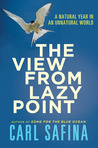
The View from Lazy Point: A Natural Year in an Unnatural World by Carl Safina
My rating: 5 of 5 stars
I learned of this book when my librarian spouse was engaged in a year-long project of reading "year of" books -- an entire genre of books whose authors dedicated a year to a particular topic or practice. This meta project involved reading two such books each month, and we shared a few of them. Since I am an environmental geographer, she read this one to me.
Around the same time, I was realizing that the textbook in my introductory environmental geography class was becoming a bit out-of-date, and in particular that it was not adequately addressing climate change. I decided to try assigning this book as the main text in that survey course, and I am very glad I did. It is the only book that large numbers of students THANK me for assigning.
This is all the more impressive because students really do struggle with this book. It is a beautifully written account of some very unpleasant -- one could say inconvenient -- truths about a rapidly changing world. Some students are offended that Safina does not do more to soften the blow, but most eventually come to appreciate his approach.
Like Rachel Carson before him, Safina is both a talented writer and a consummate scientist. He also reveals a deep love for his chosen home on Long Island sound and the many other places around the world that his work has taken him.
I should emphasize that although I use this as a textbook, it is not written that way. In the process of telling his stories and making his case, this biologist happens to cover many of the topics I feel I need to include in my geography course. He does it so beautifully that I am happy to provide a few supplements to cover those areas, so that my students and I can immerse ourselves in this important and beautiful work.
My environmental geography blog includes a number of items about Safina and this book: http://environmentalgeography.blogspo...
View all my reviews
The View from Lazy Point: A Natural Year in an Unnatural World by Carl SafinaMy rating: 5 of 5 stars
I learned of this book when my librarian spouse was engaged in a year-long project of reading "year of" books -- an entire genre of books whose authors dedicated a year to a particular topic or practice. This meta project involved reading two such books each month, and we shared a few of them. Since I am an environmental geographer, she read this one to me.
Around the same time, I was realizing that the textbook in my introductory environmental geography class was becoming a bit out-of-date, and in particular that it was not adequately addressing climate change. I decided to try assigning this book as the main text in that survey course, and I am very glad I did. It is the only book that large numbers of students THANK me for assigning.
This is all the more impressive because students really do struggle with this book. It is a beautifully written account of some very unpleasant -- one could say inconvenient -- truths about a rapidly changing world. Some students are offended that Safina does not do more to soften the blow, but most eventually come to appreciate his approach.
Like Rachel Carson before him, Safina is both a talented writer and a consummate scientist. He also reveals a deep love for his chosen home on Long Island sound and the many other places around the world that his work has taken him.
I should emphasize that although I use this as a textbook, it is not written that way. In the process of telling his stories and making his case, this biologist happens to cover many of the topics I feel I need to include in my geography course. He does it so beautifully that I am happy to provide a few supplements to cover those areas, so that my students and I can immerse ourselves in this important and beautiful work.
My environmental geography blog includes a number of items about Safina and this book: http://environmentalgeography.blogspo...
View all my reviews
Thursday, September 10, 2015
Archdruid Encounters
I have had a goodreads account for a while, but have used it very little. When I was prompted to write a review, this book came to mind, as it helped to change the course of my life. I still recommend it, 30+ years later.
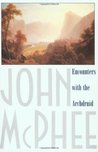
Encounters with the Archdruid by John McPhee
My rating: 5 of 5 stars
This book changed my life, I suppose. It was one of the very first environmental books I read -- assigned by professors in two different classes. By cosmic coincidence, we got to meet the "Archdruid" near the end of the course because one of the professors sat next to him on a plane. At the time, he had been drummed out of Sierra Club for being too radical, but the club eventually came around, and I met him again years later at a Sierra Club event.
The book itself set me on the path to the career I have 30 years later -- environmental geography -- and made me a fan of John McPhee and his approach to scholarship. Whatever he writes about -- and it is a wide range -- he approaches through individuals he finds who are deeply embedded in the topic.
In this case, the main individual is David Brower, champion of wilderness. Three separate segments of the book describe journeys to wild places -- an island, a mountain, and a lake -- with Brower and and engineer or developer with ideas about changing the place. It is honest and deep, and still important all these years later.
View all my reviews
Encounters with the Archdruid by John McPheeMy rating: 5 of 5 stars
This book changed my life, I suppose. It was one of the very first environmental books I read -- assigned by professors in two different classes. By cosmic coincidence, we got to meet the "Archdruid" near the end of the course because one of the professors sat next to him on a plane. At the time, he had been drummed out of Sierra Club for being too radical, but the club eventually came around, and I met him again years later at a Sierra Club event.
The book itself set me on the path to the career I have 30 years later -- environmental geography -- and made me a fan of John McPhee and his approach to scholarship. Whatever he writes about -- and it is a wide range -- he approaches through individuals he finds who are deeply embedded in the topic.
In this case, the main individual is David Brower, champion of wilderness. Three separate segments of the book describe journeys to wild places -- an island, a mountain, and a lake -- with Brower and and engineer or developer with ideas about changing the place. It is honest and deep, and still important all these years later.
View all my reviews
Sunday, September 06, 2015
Triangle Spring
News from the "Northern Triangle" of Central America has recently been full of terrible stories of such violence and corruption that parents would rather send their children north with human smugglers than to risk keeping them at home. The United States has responded poorly at best, incarcerating many children whom scriptures, laws, and conscience would mandate we take in.
It is in this context that I was glad to hear some positive news from the region -- on the political front, no less. A failed drug war and unfair trade policies are part of the problem in the region. Corruption, though, is another common problem, and it has reached dangerous -- almost unbelievable -- levels.
And public revulsion at the extreme corruption is what appears finally to be galvanizing effective social movements across the region. As reported by The Guardian, coalitions are being formed under a broad umbrella known as Our Central American Spring. Some corrupt officials -- past and present -- are actually being held accountable as a result of recent public pressure.
Activists and journalists are still at some risk, however, if they expose the wrong culprits. Washington is beginning to offer some support, but seems reluctant to abandon allies on the far right that it has trained and supported over many decades. See my posts With Christians Like This ... and September 11, 1973 for just a couple examples from the past, and Outsourced Horrors for a more recent example misplaced U.S. priorities in the region. This is a time to pay close attention to the region, and to whether Washington keeps human rights at the forefront of its policy-making.
For more scholarly analysis of the current situation in the Northern Triangle, see the Wilson Center report Organized Crime in Central America.
The Northern Triangle of Guatemala, Honduras, and El Salvador is a subregion with geopolitical problems distinct from the very real but somewhat less critical problems of its neighbors.
It is in this context that I was glad to hear some positive news from the region -- on the political front, no less. A failed drug war and unfair trade policies are part of the problem in the region. Corruption, though, is another common problem, and it has reached dangerous -- almost unbelievable -- levels.
And public revulsion at the extreme corruption is what appears finally to be galvanizing effective social movements across the region. As reported by The Guardian, coalitions are being formed under a broad umbrella known as Our Central American Spring. Some corrupt officials -- past and present -- are actually being held accountable as a result of recent public pressure.
Activists and journalists are still at some risk, however, if they expose the wrong culprits. Washington is beginning to offer some support, but seems reluctant to abandon allies on the far right that it has trained and supported over many decades. See my posts With Christians Like This ... and September 11, 1973 for just a couple examples from the past, and Outsourced Horrors for a more recent example misplaced U.S. priorities in the region. This is a time to pay close attention to the region, and to whether Washington keeps human rights at the forefront of its policy-making.
For more scholarly analysis of the current situation in the Northern Triangle, see the Wilson Center report Organized Crime in Central America.
Of course, daily life is much more nuanced -- and ultimately more important -- than political movements. Those who are interested in learning about one small corner of the Northern Triangle can read Mi Aventura Hondureña, the blog of a young friend of mine who spent the better part of the last two years teaching in a small community on northwest Honduras.
I want also to point out that Nicaragua -- though it has its share of problems, including corruption -- is not part of the Northern Triangle. The problems that Nicaragua does have stem from a much different historical trajectory, one result of which is relatively safe conditions in recent years. This has allowed me to take more than 100 students to Matagalpa, Nicaragua over the past decade, in an annual exploration of the geography of coffee. I mention this only because the geographic proximity leads many to assume that all of the countries in the region have the same set of conditions, discouraging many from experiences that would be valuable.
Saturday, August 29, 2015
Not One Human
When I was a high school student in Kansas City, Missouri, our history class included a great deal about the importance of Missouri in the Civil War. To hear my teacher tell it, Missouri is where the outcome really was determined. During my time in the Show Me State, I spent a couple of weeks in Columbia ... long enough to know that "Cruisin' the Loop" was the main weekend activity.
These Missouri memories came together for me today, as I learned about a very geographic scandal in the capital.
The scandal involves a peculiar case of gerrymandering, an all-too-common phenomenon by which politicians try to choose their voters instead of risking the opposite. I have written about the practice extensively on this blog, especially in the 2010 post Article One: Enumeration.
The Columbia case goes far beyond the usual tricks in which geographic skills are put to sinister uses. The usual idea is to create legislative districts that will maximize the numeric advantage of incumbents. This is reprehensible and counter to the intent of the Framers of the Constitution. It turns elections into a game, a game in which the odds are stacked in favor of the house. But at least it is a game that allows humans to vote.
The Missouri scheme tried to go a step further. Business "leaders" along the Loop in Columbia conspired to draw a boundary around a "community improvement district" in such a way that humans would not be able to vote at all. If they could achieve that, Missouri law would allow the right to vote to transfer to the businesses themselves. The fact that Missouri allows voting to default to businesses if no humans are available suggests that this scheme might have a precedent.
The reasons for the scheme were complicated, and apparently they hoped nobody would notice. They formed the district in order to make some shared capital improvements. They even used it to levy a small property-tax surcharge on themselves.
The bulk of the improvements, though, would be paid (or more accurately, repaid -- they already spent the money) by a special sales tax. In addition to shifting the cost of capital improvements to retail customers in this way, the businesses (some of which would not even have customers affected by the tax) would be able to pay an executive director with those funds.
It was because they feared voters would not approve such a regressive form of taxation -- Robin Hood in reverse, really -- they conspired to make sure no humans would get to vote on the matter.
It is that executive director who comes out looking the worst when they discovered that the evil clever geographers involved in this scheme might have been evil enough, but they were not clever enough. They allowed a single, pesky human to be included in the district. Jen Henderson is a student renting an apartment in the district who is not only a voter, but also an informed voter. She was pressured to disenfranchise herself so that "voting" would revert to businesses. (Scare quotes used because I still believe voting is something that only human citizens can do.) Once she learned what a serious game she was now part of, this young citizen took her civic duty very seriously and learned all she could about the issues involved. She has not announced how she will vote, but she has made it very clear she WILL vote.
Politicians who seek to disenfranchise voters are sometimes called "conservatives," but they really have no interest in conserving "American values" of democracy. Rather, they eschew Lincoln's words about the purpose of the Civil War, which was to ensure
"that government of the people, by the people, for the people, shall not perish from the earth."
Although the Columbia case could be dismissed as a quirky story with only very localized impact, it is indicative of a political climate in which the humanity of individuals is systematically separated from what they can provide in practical terms. The rights to vote, express opinions, organize, and peaceably assemble are essential aspects of our humanity.
They are increasingly separated, however, from our ability to provide work or, as it turns out, pay taxes and fees. My essays on immigration and the human sieve describe this phenomenon in the arena of immigration policy, in which labor somehow crosses the border, but civil rights remains on the other side.
These Missouri memories came together for me today, as I learned about a very geographic scandal in the capital.
The scandal involves a peculiar case of gerrymandering, an all-too-common phenomenon by which politicians try to choose their voters instead of risking the opposite. I have written about the practice extensively on this blog, especially in the 2010 post Article One: Enumeration.
![]() |
| This quasi-governmental business district includes just one voter. But its goal was to include zero. |
The Missouri scheme tried to go a step further. Business "leaders" along the Loop in Columbia conspired to draw a boundary around a "community improvement district" in such a way that humans would not be able to vote at all. If they could achieve that, Missouri law would allow the right to vote to transfer to the businesses themselves. The fact that Missouri allows voting to default to businesses if no humans are available suggests that this scheme might have a precedent.
The reasons for the scheme were complicated, and apparently they hoped nobody would notice. They formed the district in order to make some shared capital improvements. They even used it to levy a small property-tax surcharge on themselves.
The bulk of the improvements, though, would be paid (or more accurately, repaid -- they already spent the money) by a special sales tax. In addition to shifting the cost of capital improvements to retail customers in this way, the businesses (some of which would not even have customers affected by the tax) would be able to pay an executive director with those funds.
It was because they feared voters would not approve such a regressive form of taxation -- Robin Hood in reverse, really -- they conspired to make sure no humans would get to vote on the matter.
![]() |
| Taxation without representation. We had a little set-to about that in Boston a while back. |
Politicians who seek to disenfranchise voters are sometimes called "conservatives," but they really have no interest in conserving "American values" of democracy. Rather, they eschew Lincoln's words about the purpose of the Civil War, which was to ensure
"that government of the people, by the people, for the people, shall not perish from the earth."
Although the Columbia case could be dismissed as a quirky story with only very localized impact, it is indicative of a political climate in which the humanity of individuals is systematically separated from what they can provide in practical terms. The rights to vote, express opinions, organize, and peaceably assemble are essential aspects of our humanity.
They are increasingly separated, however, from our ability to provide work or, as it turns out, pay taxes and fees. My essays on immigration and the human sieve describe this phenomenon in the arena of immigration policy, in which labor somehow crosses the border, but civil rights remains on the other side.
Subscribe to:
Posts (Atom)
Blog Ideas
coffee
(25)
GEOG381
(24)
GEOG388
(23)
GEOG470
(18)
climate change
(18)
GEOG130
(16)
geography
(16)
GEOG332
(13)
GEOG431
(12)
musica
(11)
GEOG 332
(9)
GEOG 381
(9)
Mexico
(9)
Brazil
(8)
GEOG286
(8)
Texas
(8)
education
(8)
migration
(8)
GEOG298
(7)
borderlands
(7)
GEOG199
(6)
GEOG331
(6)
Massachusetts
(6)
US-Mexico
(6)
deBlij04
(6)
immigration
(6)
GEOG 130
(5)
GEOG 286
(5)
GEOG287
(5)
climate justice
(5)
cultural geography
(5)
fair trade
(5)
food
(5)
geographic education
(5)
nicaragua
(5)
water
(5)
Arizona
(4)
GEOG 171
(4)
GEOG171
(4)
GEOG295
(4)
Safina
(4)
africa
(4)
deBlij05
(4)
land protection
(4)
music
(4)
politics
(4)
Bolivia
(3)
Boston
(3)
COVID-19
(3)
Detroit
(3)
Ethiopia
(3)
Managua
(3)
Obama
(3)
border
(3)
cartography
(3)
drought
(3)
libraries
(3)
pesticides
(3)
suburban sprawl
(3)
trade
(3)
unemployment
(3)
Alaska
(2)
Amazon
(2)
Bridgewater
(2)
Canada
(2)
Chiapas
(2)
China
(2)
Colonialism
(2)
EPA
(2)
EarthView
(2)
Economy
(2)
Environment
(2)
GEOG 199
(2)
GEOG 287
(2)
GEOG 388
(2)
Google Maps
(2)
Government
(2)
Hawaii
(2)
India
(2)
Lexington
(2)
Maldives
(2)
Mozambique
(2)
NOLA
(2)
NPR
(2)
National Monuments
(2)
National Parks
(2)
New Orleans
(2)
Religion
(2)
Rio Grande
(2)
Taunton River Wild and Scenic
(2)
Tex-Mex
(2)
The View from Lazy Point
(2)
United States
(2)
Venezuela
(2)
anthropocene
(2)
cape verde
(2)
censorship
(2)
central america
(2)
chocolate
(2)
corn
(2)
deBlij07
(2)
deforestation
(2)
demographic transition
(2)
demography
(2)
education reform
(2)
employment
(2)
environmental geography
(2)
film
(2)
forest fire
(2)
global warming
(2)
islands
(2)
landscape ecology
(2)
librarians
(2)
maps
(2)
organic
(2)
peak oil
(2)
refugees
(2)
sense of place
(2)
soccer
(2)
sustainability
(2)
television
(2)
water rights
(2)
whales
(2)
#bbc
(1)
#nicaragua
(1)
#sosnicaragua
(1)
#sosnicaragua #nicaragua
(1)
100 Years of Solitude
(1)
ACROSS Lexington
(1)
Accents
(1)
Adam at Home
(1)
Alice
(1)
Alt.Latina
(1)
American Hustle
(1)
April
(1)
Association of american Geographers
(1)
Audubon
(1)
Aunt Hatch's Lane
(1)
BBC
(1)
BSU
(1)
Baby Boomers
(1)
Banda Aceh
(1)
Bay Circuit Trial
(1)
Bechtel
(1)
Beleza Tropical
(1)
Belize
(1)
Beloit College
(1)
Ben Linder Cafe
(1)
Bet The Farm
(1)
Bhopal
(1)
Biafra
(1)
Bikeway
(1)
Bikini
(1)
Bill Gates
(1)
Bill Moyers
(1)
Boeing 777
(1)
Brazilian
(1)
Brazilianization
(1)
Bridge
(1)
British Columbia
(1)
Brockton
(1)
Bus Fare
(1)
Bush
(1)
Cabo Verde
(1)
California
(1)
Cambridge
(1)
Cape Cod Bay
(1)
Carl Stafina
(1)
Catholic
(1)
Ceuta
(1)
Chalice
(1)
Chipko
(1)
Citgo
(1)
Climate risks
(1)
Cochabamba
(1)
Colombia
(1)
Common Core
(1)
Commuter
(1)
Computers
(1)
Cuba
(1)
Cups and Summits
(1)
Dallas
(1)
David Byrne
(1)
Deans Beans
(1)
Delaware Valley
(1)
Dunkin Donuts
(1)
Earth Day
(1)
Earth View
(1)
Easton
(1)
El Salvador
(1)
Elizabeth Warren
(1)
Ellicott City
(1)
Emilia Laime
(1)
English-only
(1)
Environmental History
(1)
Euphrates
(1)
European Union
(1)
Evo Morales
(1)
FIFA
(1)
FYS
(1)
Fades Out
(1)
Farms
(1)
First-Year Seminar
(1)
Food Trade
(1)
Frederick Kaufman
(1)
French press
(1)
Fresh Pond Mall
(1)
GEOG 431
(1)
GEOG 441
(1)
GEOG213
(1)
GEOG490
(1)
Gabriel García Márquez
(1)
Garden of Gethsemane
(1)
Gas wells
(1)
Gateway Cities
(1)
General Motors
(1)
Gini Coefficient
(1)
Girl in the Cafe
(1)
Google
(1)
Gordon Hempton
(1)
Gravina Island Bridge
(1)
Great Migration
(1)
Great Molasses Flood
(1)
Guy Lombardo
(1)
Haiti
(1)
Hawks
(1)
Heart
(1)
Higher Education
(1)
History
(1)
Holyhok Lewisville
(1)
Homogenous
(1)
Honors
(1)
How Food Stopped Being Food
(1)
Hugo Chavez
(1)
IMF
(1)
Iditarod
(1)
Imperial Valley
(1)
Income Inequality
(1)
Indonesia
(1)
Iraq
(1)
Irish
(1)
Japan
(1)
Junot Diaz
(1)
Kenya
(1)
Ketchikan
(1)
Key West
(1)
Kindergarden Students
(1)
King Corn
(1)
Kiribati
(1)
Latin America
(1)
Limbaugh
(1)
Literature
(1)
Living On Earth
(1)
Louisiana
(1)
Love Canal
(1)
Luddite
(1)
M*A*S*H
(1)
MCAS
(1)
MacArthur Genius
(1)
Maersk
(1)
Malawi
(1)
Malaysia
(1)
Malaysian Air Flight 370
(1)
Mali
(1)
Manu Chao
(1)
Map
(1)
Marblehead
(1)
Mary Robinson Foundation
(1)
Maryland
(1)
Massachusetts Bay Colony
(1)
Math
(1)
Maxguide
(1)
May
(1)
Maya
(1)
Mayan
(1)
Mayan Gold
(1)
Mbala
(1)
McDonald's
(1)
Melilla
(1)
Mexicans
(1)
Michael Pollan
(1)
Michelle Obama
(1)
Micronesia
(1)
Military
(1)
Military Dictatorship
(1)
Minuteman Trail
(1)
Mongolia
(1)
Monsanto
(1)
Montana
(1)
Morocco
(1)
Mount Auburn Cemetery
(1)
Muslim
(1)
NPS
(1)
Nantucket
(1)
National Education Regime
(1)
Native American
(1)
Native Americans
(1)
New Bedford
(1)
New Hampshire
(1)
New York City
(1)
New York Times
(1)
Nigeria
(1)
No Child Left Behind Act
(1)
Norquist
(1)
North Africa
(1)
Nuts
(1)
Oakland
(1)
Oaxaca
(1)
Occupeligo
(1)
Occypy
(1)
Oklahoma
(1)
Oklahoma City
(1)
Oppression
(1)
PARCC
(1)
Pakistan
(1)
Pascal's Wager
(1)
Peanut
(1)
Pearson Regime
(1)
Philadelphia
(1)
Philippines
(1)
Pink Unicorns
(1)
Poland
(1)
Portuguese
(1)
Protest
(1)
Public Education
(1)
Puebla
(1)
Puritans
(1)
Quest University
(1)
Rachel Carson
(1)
Reading
(1)
Republican
(1)
Retro Report
(1)
Robert Reich
(1)
Rock Legend
(1)
Ronald Reagan
(1)
Rondonia
(1)
Rosa Parks
(1)
SEXCoffee
(1)
Safety
(1)
Samoza
(1)
Sandino
(1)
Sara Vowell
(1)
Save the Children
(1)
Scotch
(1)
Scotland
(1)
Seinfeld
(1)
Senegal
(1)
Sergio Mendes
(1)
Severin
(1)
Sharrod
(1)
Silent Spring
(1)
Sinatra
(1)
Slope
(1)
Smokey the Bear
(1)
Somalia
(1)
Sombra
(1)
Sonora
(1)
Sonoran desert
(1)
Sonoran hot dog
(1)
South America
(1)
Spain
(1)
Stairway to Heaven
(1)
Storm
(1)
Suare Inch of Silence
(1)
Sumatra
(1)
Swamp
(1)
Tacloban
(1)
Tanzania
(1)
The Amazon
(1)
The Amazon Trail
(1)
Tigris
(1)
Tucson
(1)
Tufts
(1)
U.S Federal Reserve
(1)
U.S Government
(1)
U.S. economy
(1)
USDA
(1)
USLE Formula
(1)
Uganda
(1)
Unfamiliar Fishes
(1)
Union Carbide
(1)
Vacation
(1)
Vexillology
(1)
Vietnam
(1)
ViralNova
(1)
WNYC Data News
(1)
Wall Street
(1)
Walsenburg
(1)
Walt Disney
(1)
Walt and El Grupo
(1)
Ward's Berry Farm
(1)
West
(1)
Whaling
(1)
Wilson
(1)
Winter Storm Saturn
(1)
Wisconsin
(1)
World Bank
(1)
Xingu
(1)
YouTube
(1)
Zombies
(1)
agriculture
(1)
antitrust
(1)
aspen
(1)
austerity
(1)
aviation
(1)
banned books
(1)
bark beetle
(1)
bean
(1)
beavers
(1)
bicycle
(1)
bicycling
(1)
bike sharing
(1)
binary
(1)
biodiversity
(1)
bioneers
(1)
books
(1)
boston globe
(1)
cacao
(1)
cafe
(1)
campaign
(1)
campus
(1)
cantonville
(1)
capitals
(1)
carbon dioxide
(1)
carbon offsets
(1)
carioca
(1)
cash
(1)
cashews
(1)
census
(1)
chemex
(1)
chemistry
(1)
chronology
(1)
churrasco
(1)
civil rights
(1)
coffee grounds
(1)
coffee hell
(1)
coffee prices
(1)
coffee quality
(1)
college
(1)
compost
(1)
computerized test
(1)
congress
(1)
conservation commission
(1)
corporations
(1)
countries
(1)
cubicle
(1)
dams
(1)
deBlij06
(1)
deBlij08
(1)
death
(1)
deficit
(1)
development
(1)
dictatorship
(1)
distracted learning
(1)
distraction
(1)
drug war
(1)
dtm
(1)
earth
(1)
economic diversification
(1)
economic geography
(1)
election
(1)
embargo
(1)
energy
(1)
enhanced greenhouse effect
(1)
environmentalist
(1)
ethnomusicology
(1)
exremism
(1)
failed states
(1)
farming
(1)
financial crisis
(1)
football
(1)
forestry
(1)
forro
(1)
fracking
(1)
free market
(1)
free trade
(1)
fuel economy
(1)
garden
(1)
genocide
(1)
geography education
(1)
geography games
(1)
geography of chocolate
(1)
geography of food
(1)
geologic time
(1)
geotechnology
(1)
gerrymandering
(1)
global pizza
(1)
globe
(1)
goodall
(1)
green chemistry
(1)
ground water
(1)
guacamole
(1)
guatemala
(1)
habitat
(1)
high-frutcose
(1)
home values
(1)
hospitality
(1)
hourglass
(1)
housing
(1)
hydrology
(1)
illegal aliens
(1)
income
(1)
indigenous
(1)
interfaith
(1)
journalism
(1)
kitchen garden
(1)
labor
(1)
language
(1)
libertarianism
(1)
library
(1)
linguistics
(1)
little rock
(1)
llorona; musica
(1)
macc
(1)
maccweb
(1)
magic realism
(1)
maple syrup
(1)
mapping
(1)
masa no mas
(1)
massland
(1)
medical
(1)
mental maps
(1)
mi nina
(1)
microlots
(1)
microstates
(1)
mining
(1)
mltc
(1)
monopoly
(1)
municipal government
(1)
nautical
(1)
neoclassical economics
(1)
new england
(1)
newseum
(1)
newspapers
(1)
noise pollution
(1)
pandas
(1)
petroleum
(1)
piracy
(1)
pirates
(1)
poison ivy
(1)
police
(1)
political geography
(1)
pollution
(1)
provincial government
(1)
proxy variables
(1)
public diplomacy
(1)
quesadilla
(1)
rabbi
(1)
racism
(1)
real food cafe
(1)
regulations
(1)
remittances
(1)
resilience
(1)
resistance
(1)
respect
(1)
rigoberta menchu
(1)
rios montt
(1)
romance
(1)
roya
(1)
runways
(1)
russia
(1)
satellites
(1)
science
(1)
sea level
(1)
selva negra
(1)
sertao
(1)
sertão
(1)
sex
(1)
sex and coffee
(1)
simple
(1)
sin
(1)
smokey
(1)
solar
(1)
solar roasting
(1)
south africa
(1)
sovereignty
(1)
species loss
(1)
sporcle
(1)
sports
(1)
state government
(1)
taxes
(1)
tea party
(1)
teaching
(1)
textile
(1)
texting
(1)
tortilla
(1)
training
(1)
transect; Mercator
(1)
travel
(1)
triple-deckers
(1)
tsunami
(1)
urban geography
(1)
utopia
(1)
vermont
(1)
vice
(1)
video
(1)
wall
(1)
water resources
(1)
water vapor
(1)
whiskey
(1)
whisky
(1)
widget
(1)
wifi
(1)
wild fire
(1)
wildfire
(1)
wildlife corridor
(1)
wto
(1)