Friday, February 23, 2018

A Modest Proposal

(With apologies to Jonathan Swift.)

In a hail of bullets, students at the Stoneman Douglas High School in Parkland, Florida were thrust into the role of activists. Within hours, it became clear that they were to become the most determined, effective, and articulate public citizens we have seen in our country in a very long time.

The fact that they were responding to a terror attack in our most politically benighted state made their achievements all the more remarkable. They drew attention to Senator Marco Rubio's misplaced priorities more effectively than anybody of my generation has done, shaming him into endorsing a reduced limit on ammunition magazines. They caused the famously inflexible Gov. Rick "Skeletor" Scott to make a small concession on the question of whether someone too young to buy a Bud Light should be able to buy an assault rifle. The even convinced the president of the United States to speak out in favor of universal background checks, so that terrorists would no longer be able to hide behind private gun sales, and a ban on bump stocks. It remains to be seen whether any of these statements were sincere, and whether they will be enacted while Wayne LaPierre still walks the earth and signs the big checks.

But these young people moved the debate on gun violence, and were not intimidated by the scurrilous smear campaigns that predictably ensued. Politicians who are known to be on the industry payroll had the nerve to suggest that these young people were being paid to speak, as if watching the deaths of their friends and siblings and teachers were not enough. They watched as their state legislators ignored their pleas and their courage, voting down all relevant legislation before voting to codify the empty rhetoric of "thoughts and prayers" in the form of a clearly unconstitutional requirement to install "In God We Trust" signs in all of the schools of the Sunshine State.
Image: New York Times
All of this has me thinking about the voting age. When the Founders of our nation established ages for voting and for holding certain offices, they could not have foreseen the Baby Boomers. There have been more of us than any prior or subsequent generation, and we have made some pretty big mistakes. We have allowed voting districts to be gerrymandered to the very limits of mathematics, ensuring the repeated election of people who are not only unqualified for the jobs they hold, but in some cases not honest enough to hold any job I can think of.

We have allowed -- nay, encouraged -- those politicians to be ruled by the political fetishes of Grover Norquist, a privileged, unelected counter-patriot who somehow gained the allegiance of both major parties, resulting in broken infrastructure, unfunded education, declining life expectancy, and the increasing concentration of wealth.

The Parkland youth are setting an example of
civic engagement for all of us. 
In short, as a group we have had our chance at governing the country, and we have not shown ourselves very capable. If Lincoln is to have his wish that "government of the people, by the people, for the people, shall not perish from the earth" we need to do something drastic.

Which leads to my proposal.

The 26th Amendment was passed in 1971, when Boomers were showing our political prowess and actually getting some things done (shortening wars, cleaning the environment, broadening civil rights). It lowered the minimum voting age from 21 to 18, though it left the maximum voting age in place, because the problem of a completely dysfunctional electorate was not foreseen.

It is time to lower the minimum again, and to impose a maximum. Some local elections are already open to 16 year olds, and I would support making that the minimum for federal elections. I think a maximum of 35 or 40 would be appropriate, so that people with a bit more life experience are included, while still avoiding the excesses of the Baby Boomers. At the very most, voting should not be extended to those born prior to 1965.

As for the age restrictions on federal office, I would lower the minimums by 5 years and make the maximum age double the minimum age. So, instead of:

  • Congress Critter: currently eligible from 25 until promised bribes and kickbacks have accumulated to ensure a seven-figure income for life
  • Senator: currently eligible from 30 through rigor mortis
  • President: currently eligible from 35 until golf or brush-clearing consumes every waking moment
... I would suggest:
  • Congressional Representative: 20 to 40
  • Senator: 25 to 50
  • President: 30 to 60 (but this would make me eligible, so we'd better keep this at 52 until the Boomers have aged a bit more)
Under this scheme, those of a certain age can participate, just as those under 18 do now. We can pose in photos when our children or students run for office, we can hold signs on street corners or stuff envelopes. Our financial involvement would need to be similarly limited: donating no more to a campaign than we can carry to a campaign rally in coins with our bare hands, like a kid donating their allowance.

#28thAmendment 

Monday, February 12, 2018

The Gini Is Out of the Bottle

PRI journalist Jason Margolis reports that even with recently rising wages, the United States remains one of the world's most inequitable nations, by several measures.

The report alludes to two prominent measures of income inequality -- the Gini coefficient and ratios of executive pay to that of average workers. By either measure, the United States is either in poor company or in no company at all.

That is to say, a broad measure of income distribution puts the United States in the company of relatively underdeveloped countries -- certainly not any of the countries of Europe. And the stratospheric pay of CEOs compared to ordinary workers cannot be found anywhere in the world.

As other studies have found, sharp inequalities are bad for public health. In countries with highly concentrated wealth, increased stress and other factors mean that even the wealthy are less healthy than they would be in more equitable societies.

The problem in the United States, of course, is that "equitable" is immediately presumed to be the same as "equal." Lingering fears of the deleterious effects of Communism on gumption have resulted in generations of policy-makers -- and voters -- who chose wealth-concentrating policies at every opportunity, from the free-speech rights of corporations to tax and wage policies to the rules for organizing unions.
Hard work is no longer associated with prosperity or even with economic security.
The result is a society in which hard work is now completely disconnected from economic security.

Caveat: The report uses one common term to which I always object: unskilled labor. Use of the term reinforces the myth that executive pay is correlated solely with high levels of skill, discounting the effect of executives staffing each other's compensation committees. It also is used to justify such anti-worker nonsense as "training wages" in place of living wages by which work leads to dignity. Those who use the term "unskilled labor" should spend some time actually trying to do the jobs they think the term covers.

Sunday, February 04, 2018

Ill Eagle

Library of Congress researcher Shameema Rahman discusses several failed efforts to count federal laws, and does not offer an estimate. Blogger Dave Kowal argues that there are "too many" and provides a rough estimate of 4,500 criminal violations, with thousands of additional laws throughout the U.S. Code. Neither writer estimates the number of state and municipal laws, but presumably they number in the tens or hundreds of thousands.

Image:
Puntifications
In other words, many things are illegal (adj.) in our country -- literally more than we can count. And yet ... and yet! There is one very narrow category of legal violations that will cause the perpetrator to be known as an illegal.

As if the word were a noun. It is not rape, murder, jaywalking, tax evasion, burglary, arson, or treason. People who do these things are described by very specific nouns usually ending in -ist or -er. But the perpetrators of these crimes are understood as distinct from the crimes themselves.

What is the exception? What is the one kind of crime so serious that its perpetrators are labeled as the crime itself? The answer of course, is the breaking of rules related to migration. Sneak across the border, and you are an illegalCross with a visa but violate its terms, and you are an illegal.

Not a trespasser or a paperwork-not-filler-outer, but an illegal (n.). The same does not apply, incidentally, to those who hire undocumented workers -- only to those who are undocumented.

If the economy is growing and unemployment is low, this is not such a big issue. But if an economy is shrinking, or if it is growing slowly, or if it is growing quickly but not providing jobs -- then perpetrators of these crimes are castigated as the illegals and become the target of ire, vitriol, and of course demagoguery.

Even so, during the 2016 presidential campaign, the far right invoked the specter of undocumented migrants who have committed other crimes -- such as murder -- as the focus of eventual stepped-up enforcement. But as Slate journalist Jamelle Bouie writes in ICE Unbound, the distinction between criminality in the narrow sense of being undocumented and criminality in the more common-sense sense of committing crimes against people or property is now guiding federal enforcement actions.

Even people who have documents and are required to check in with immigration agencies are now being arrested and deported, rending families apart. Perhaps this is why we do not hear the phrase "family values conservative" so much these days -- the hypocrisy would be too obvious, even on Fox.

Bouie mentions a sharp shift away from "border removals" -- which strict enforcement under President Obama had already sent into decline -- and toward "internal removals." He hints at one of the reasons for the shift, aside from ideology: many of the removals involve private prisons. With an Attorney General deeply invested in the prison industry and growing number of politicians using it as a source of donations, raids throughout the interior of the country are needed to keep the funds flowing to this sector.

Nationalism

What is often really at work in discussions of immigration is confusion between the notions of patriotism and nationalism. The positive kind of patriotism is something I remember witnessing in the days and weeks -- but not so much the months and years -- following the attacks of September 11, 2001. For a short while, people even in New England started driving more courteously. They treated neighbors more kindly, donated more to charities, and volunteered more in their communities. They even appreciated the outpouring of sympathy from people throughout the world that lasted from the time of the attack until the re-invasion of Iraq.

But in tough times the good energy of patriotism can easily cross over to the bad energy of nationalism, and the bankster-led economic meltdown of 2008 seems to have ushered in just that kind of bad energy. Searching for scapegoats, too many victims of financiers have turned their attention to "others" in their midst and seeking isolation from the "others" outside.
Source: Found online; I'm seeking the name of the cartoonist
Related Stories

As I mentioned several years ago on this blog, my old neighbors in Tucson have long recognized that migrants frequently die in the desert. While this seems to please some of my fellow citizens, others find the compassion to maintain life-saving water stations near the border. Attention has returned to these efforts as news emerged that some border agents have sabotaged water stations. In a recent interview, the Tucson section chief argued that this is against the protocols of the agency itself, and that many agents are actually trained in emergency medicine.

NPR journalist Claudio Sanchez recently reported that among hundreds of thousands of residents currently waiting for relief under DACA are almost 9,000 teachers. The deportations that were discussed during the 2016 presidential campaigns were to be of "bad hombres" who were threats to public safety. Caught in the dragnet, though, are military veterans, teachers, and others who live in and serve the only country they call home: the U.S. of A.

As the White House expands its anti-immigrant program from the "bad hombres" to all undocumented migrants to migrants from places he does not like, the consequences are beginning to emerge in the broader economy. As reported by Forbes journalist Chris Morris, California Crops Rot as Immigration Crackdown Creates Farmworker Shortage.

Writing for Common Dreams, Juan Escalante goes a step further. Citing the influence of white nationalists in the current administration, he plausibly argues that the DACA compromise now under discussion amount to a "racist ransom note" because it ties the fate of DACA applicants to a wish list of policies that would have the effect of whitening the population.

Roger Rocha, president of League of United Latin American Citizens, the oldest Latino civil rights organization, did support the administration's position in recent days, as he explains in an interview with NPR journalist Ari Shapiro. He withdrew his letter to the president, however, after significant backlash from members of his organization. In explaining his reasons for supporting the administration, it is clear that the administration positions have been shifting frequently. More troubling is that even in explaining points of agreement, he describes the Dreamer population as hostages to the legislative process.

Consent of the Governed

Extreme measures to limit the rights of migrants are part of a set of strategies by which politicians endeavor to select their constituents, rather than allowing the reverse to happen. Long-term resident of the country are -- clearly -- among the governed, and they are among those who pay taxes. Measures that unduly deny them citizenship and personhood run counter to the ideals of the original (and illegal at the time) American Revolution. We had a bit of set-to with King George, after all, about taxation without representation, and enshrined "consent of the governed" in our Declaration of Independence.

2024 Follow-up: This has only gotten worse

Sadly, I still have to stand by this post six years after I wrote it. I could add another small book here, but I'll point out just a couple of things.
  • I mentioned treason among the crimes one can commit withiout being called illegal. I had no way of knowing about the events of January 6, 2021. If any kind of sanity prevailed in our country, the perpetrators and fomenters of those attacks would be the ones known as illegals. But instead they continue to run for high office.
  • As mentioned above, inflation tends to correlate with the scapegoating of migrants, even though they have nothing to do with it.
  • Shortly after I wrote this post, the government of Nicaragua turned on its people. Shortly after that, some of my dear friends started to make the journey north and some of them are here now -- legally awaiting asylum hearings, but assumed to be illegal by many because they are bilingual and have brown skin.
  • Migrants of all kinds continue to Make America Great.
And finally, some patriotic thoughts from Emma Lazarus and Irving Berlin, along with a sculpture Édouard de Laboulaye. Patriots are proud of both of these. 


Give me your tired, your poor
Your huddled masses yearning to breathe free
The wretched refuse of your teeming shore
Send these the homeless tempest-tost to me
I lift my lamp beside the golden door!
Give me your tired, your poor
Your huddled masses yearning to breathe free
The wretched refuse of your teeming shore
Send these the homeless tempest-tost to me
I lift my lamp beside the golden door!

Saturday, February 03, 2018

Hot Island Hotspot

Avery Island, Louisiana is very high on the list of places I have never been but to which I feel a strong connection. Since I started getting serious about chili in middle school, I have never been far from a bottle of Tabasco. One of the nice things about my three-year stint in the specialty food industry is that our packaging plant always had hundreds of thousands of tiny (1/8-ounce) bottles of the pepper-mash sauce, because we put one in every Meal, Ready-to-Eat that we packaged. When we had meetings in the office, it was often the case that every man in the room was wearing a Tabasco necktie, as we each had a small collection. I remember my boss there admonishing me when I returned from a meeting in New England and complained about the bland food. "What were you doing traveling up there without Tabasco in your pocket?" she scolded.

Its Louisiana home has loomed large in my imagination for years. Even though my parents have visited -- and they did bring me some nice gifts -- I have not yet been closer than a quick zip along Interstate 10 during our 1997 move from Texas to Massachusetts.

I recently learned a lot about the environmental geography of the island from a beautifully illustrated essay by Times-PIcayune journalist Tristan Baurick. As the title implies, his article Tabasco's homeland fights for survival in Louisiana against storms and rising seas is in part the all-too common story of a coastal community defending against the effects of climate change. It is also, however, a richer story of a family that has developed a complex relationship with its land for a century and a half.

The island is more of a hill, a salt dome that is one of the highest points along the Gulf coast, and that continues to provide not only a home for the production of Tabasco Sauce but also one of its three ingredients: salt. Its status as an island is as vague as the land-sea boundary of Louisiana itself, about which I wrote in Tough Shape a couple of years ago.

Image: Justin Secrist USDA
Baurick's profile of the island includes a biographical history of the family business and several stories about the good and bad results of its efforts in the area of wildlife management. It is one of several places where the South American nutria (a varmint similar to a groundhog) was raised for its fur. At a particular point in the 20th century, the economics of the fur industry and the mathematics of nutria reproduction made this a very tempting business prospect. Nutria are apparently adept at escaping confinement, however, and their rapid reproduction makes them quite an aggressive invasive species. The damage done to coastal wetlands -- including those the McIlhenny family have long tried to protect -- is incalculable. I first learned of nutria farming far from Louisiana, when I visited the Blackwater Wildlife Refuge on the edge of the Chesapeake Bay. It gives the McIlhenny family a small bit of comfort to know that they were not the only culprits in the century-long nutria fiasco.

The family may have redeemed itself in the wildlife area with its efforts on behalf of the snowy egret, whose feathers were once in such demand that it was hunted nearly to extinction. It would not have been the first abundant bird to have been extirpated by overuse, as was the fate of Martha and the passenger pigeons. The family's introduction of egrets and its ban on hunting them in just its small Louisiana property is credited with the eventual restoration of the species.

At the time of this writing, an even more important "ark" for birds is under threat elsewhere on the Gulf Coast. The Santa Ana National Wildlife Refuge -- near my former home on the Rio Grande -- is currently threatened by hostility toward wild lands in general and a foolhardy plan to build a border wall in particular.

Our cooking blog Nueva Receta makes fairly frequent mention
of the sauce, most recently as a very minor ingredient
in a baked scallop dish.


Thursday, January 25, 2018

Blowing for Good

Graph: U.S. Energy Information Administration
In recent years, I have noticed wind turbines in a lot of new locations, and it is not my imagination that generation of electricity by wind has been increasing rapidly. A recent report from the U.S. Energy Information Administration confirms that wind is poised to overtake hydroelectric power this year, with each generating about 250,000 megawatts hours of electricity per day.

The report provides some interesting insights into the geography of renewable energy generation (note: some parts of the site label hydroelectric as separate from renewables, though geographers would consider it part of the renewables mix). Month-to-month changes in each are a combination of differences in built capacity and potential that varies with climatic factors. Because hydroelectric construction has all but ceased in the U.S. (most optimal sites already being in use), fluctuations in this sector have to do with season and secular trends in rainfall, snowmelt and evaporation. Winds vary seasonally, too, of course, but rapid expansion in infrastructure dominates the wind-power curve.

Overall electricity generation in the United is projected to remain remarkable steady at around 11 million megawatt hours per day. To me this suggests that conservation efforts are just keeping pace with economic and population growth, which is better than not keeping pace, but suggest that conservation alone will not lead to actual reductions in electricity-related greenhouse emissions.
Graphic: U.S. EIA
Although overall production is expected to continue at the same level, analysts expect two recent tendencies to continue: a gradual increase in the use of natural gas at the expense of coal and a gradual increase in still-small contribution of renewables, mainly wind.


Accountability versus Voter Suppression

Congress has finally gotten around to doing something about sexual harassment by its own members, but true accountability remains elusive. In an unusual act of decency, the usually unprincipled Speaker Paul Ryan named a commission to expose, among other things, the heretofore secretive practice of using public money to settle claims by victims.

The work of the commission soon exposed one of its own members, Rep. Patrick Meehan (R-PA). It is not clear whether he simply hoped that the commission would not be bright enough to discover his transgressions, or whether he volunteered for the post in an effort to keep covering his tracks.

I first noticed the story because of Adam Peck's reporting on Meehan's convoluted rationalization, which included blaming President Obama's healthcare legislation. One phrase in Peck's report piqued my geographic interest, though. I decided I needed to learn more about his "heavily gerrymandered district to the west of Philadelphia." 

Pennsylvania's 7th District, which NRP reporting describes as "suburban Philadelphia" nearly surrounds the City of Brotherly Love, carefully avoiding its left-leaning neighborhoods. Encompassing carefully selected neighborhoods in five counties and in the direction of the four winds, the district is considered one of the ten most egregiously contrived districts in these United States.
Map: Ballotpedia
This contorted shape of District 7 is the embodiment of what is wrong with extreme gerrymandering, which undermines both the Preamble and Article 1 of the U.S. Constitution, which was written in a space encircled by -- and excluded from -- this particular district.
The story broke just as Pennsylvania's highest court joined a number of other courts around the United States in rejecting voting districts that have clearly been contrived so that politicians could choose their voters, rather than risk the reverse. As I have written previously, gerrymandering was invented in Massachusetts almost immediately after the Constitution was ratified. It has been employed by politicians of many stripes throughout the history of the Republic, but never with the sophistication that has been brought to bear by malfeasant geographers in recent years.

It is just one part of a multi-pronged approach to voter suppression that journalist Ari Berman writes is being used quite effectively in combination with dark money and voter-ID laws. Only in such an insulated environment would a person of Rep. Meehan's caliber have the audacity to run for re-election.

Lagniappe

Voter suppression efforts are not limited to the drawing of boundaries, of course. In North Carolina, arcane rules about the composition of local election boards were designed to give incumbents an advantage in choosing who would likely show up to vote. The rules did not strictly exclude any particular voters, but a court agreed that they were contrived to push turnout in a predictable direction. The geographic argument here is subtle but persuasive -- see the bar charts in the map below, depicting driving distances to polls under different scenarios.
Image: Daily Kos
Still More...
Some of the worst examples. Maps: Washington Post

In a May 2014 article, journalist Christopher Ingraham wrote about some of America's most gerrymandered districts, and described some of the counterintuitive goals of what he called "crimes against geography." 

Sunday, January 14, 2018

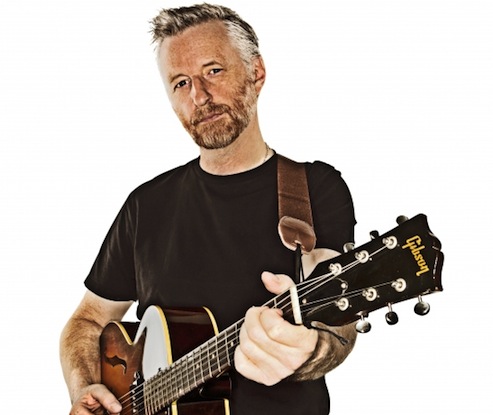
Billy Bragg's World

I sometimes hear it suggested that musicians and other artists should keep politics out of their work and "just" perform. More than once I have heard this from fans who have somehow heard their favorite musicians for years without ever listening to them. Music does not have to be about something, but quite often it is -- and quite often it makes a difference.

Billy Bragg
(LA Review of Books)
To start the new year, Boston radio journalist Christopher Lydon decided to reprise a fascinating and wide-ranging discussion he had had in 2017 with British troubadour Billy Bragg. Those familiar with Lydon's earlier program The Connection will be pleasantly surprised to hear that he now knows how to interview with a few deft questions. The result is Billy Bragg's Guide to the Music of Dissent -- a relaxed conversation about the relationship between music and social change, from the blues to punk to anti-fascism. In addition to uncovering a lot of interesting connections among musicians, Bragg offers thought-provoking ideas about the role of music listeners.

The discussion is based on Bragg's book Roots, Radicals and Rockers: How Skiffle Changed the World, which is also the subject of a print interview with Scott Timberg of the Los Angeles Review of Books.

Saturday, December 16, 2017

Putting Voter Suppression on the Map

As I mentioned in Dying to Vote after watching Selma last year, fear of black voters was the main motivator of those who violently opposed the civil-rights movement. Overcoming obstacles to the vote likewise became the chief concern of the movement. A half-century after the shameful events in Alabama, we all celebrate a narrow victory over bigotry in Alabama that would have been won by a wider margin, had the spirit of Bull Conner not continued to guide the state's political leadership.

The current "Weekend Read" article by the Southern Poverty Law Center is essential reading for anybody who is interested in the foundational concept of one person, one vote. That is, it should be essential reading for everybody. It details the many ways in which political elites in Alabama continue to work against the voting rights of African Americans. It is a very well-researched article, full of links to careful documentation of its alarming claims.

The 2013 reversal of key provisions of the Voting Rights Act led to predictable -- and predicted --outcomes. Alabama was among the first states to follow the Supreme Court's dog whistle, and to enact rules touted as preventing voter fraud but calculated to suppress votes.

An example can be found on the map of states in which a required photo-ID cannot be obtained, because of the closure of licensing offices. The U.S. Department of Transportation has confirmed what those who know Alabama can discern right away: this map disproportionately favors white voters.
Map: Kyle Whitmire
As blogger Kyle Whitmire of AL.com discerned by making his own map, the closure of licensing offices was guided by race. Just as a driver's license became essential to exercising one's Constitutional right to vote, the state closed licensing facilities in 8 of the 10 counties with the greatest proportion of minority voters, including many counties in the state's famed Black Belt, a region (shown in blue below) that voted most heavily for Doug Jones in the recent special election for the U.S. Senate.
Narrow victory over voter suppression.
Map: New York Times
The state did not limit its voter suppression to the one-two punch of requiring drivers licenses and then selectively closing the offices where they could be obtained. Ironically, Secretary of State John Merrill argued against the automatic voter registration that many states now attach to those very same licenses. Apparently in complete ignorance of the 26th Amendment to the U.S. Constitution, he argued that "just because you turned 18 doesn't give you the right to do anything."

Alabama is not the sole exponent of voter suppression in the U.S., of course, nor has the practice historically been limited to one party or the other. As the demographics of the country shift toward more racial diversity, however, the use of maps, registration rules, immigration law, and criminal law to suppress votes increases.

All of these tools are increasingly favored as ways for politicians to choose their voters, rather than taking the risk of allowing the reverse to happen. My Bad Salamander post cites some particularly egregious examples of mapping with political intent; my Embattled Borderlands and Human Sieve posts, while not specifically about voting, hint at the political uses of immigration policies.

Lagniappe

Although many of Roy Moore's partisan supporters argued that the "voters of Alabama" should settle the question of whether the accused pedofile should serve as a U.S. Senator, they are now working feverishly to suppress those voters for just long enough to preclude their input on a "tax bill" that will restructure wealth distribution, environmental protection, health care, reproductive rights, and much more. Sen. Mitch McConnell -- who initially opposed Roy Moore -- is now rushing the bill through the senate, while delaying the seating of Senator Jones, a well-known nemesis of the KKK.

Tuesday, December 12, 2017

Ventura's Second Burn


As reported by CNBC, recent fires in California have been quite startling when viewed in satellite images, most dramatically in the December 5 image above, captured by the European Space Agency Sentinel-2. The report includes the long-archaic superlative "visible from space," which is also true of objects as small as my garage on publicly-available imagery and as small as my dog's eyelashes with spy satellites. (Well, maybe I exaggerate; I have no way of knowing.)

Back to the original story -- the reporting provides several examples of the use of geotechnologies on the part of NASA and other agencies both for monitoring climate change and other changes in earth systems, and to guiding responses to disasters. It may be in part because the monitoring verifies uncomfortable truths about human interactions with the environment, that NASA is being directed to return its focus to lunar exploration.

Using clear-sky imagery -- from NASA by way of Google -- the same area of Ventura County can be seen to include not only seascapes, hilly scrubland, and urban areas, but also active petroleum exploration. Into the area between Dulah and Route 33 to see that each of the speckles in that part of the image is a parking pad around a petroleum well.


Lagniappe: Artistic Relief

Like many people of a certain age, I cannot hear the words "Ventura County" without this song playing in my head, as it has been doing now for a couple of weeks. The YouTube user "Stay Tuned" has done us the favor of creating a slideshow that pays homage to the beauty of the area in more settled times.

Monday, December 11, 2017

Finity

I write this post from our family's "Whaling House" near the historic whaling port of New Bedford, where we are members of the Whaling Museum. I am also an active member Whaling City Rowing and the Azorean Maritime Heritage Society, where I have learned how to row whaleboats. We even have a harpoon leaning in the corner. 

Like many others in the area, I enjoy the stories of Moby-Dick and the Essex, and learning about the lives of those who worked in this most gruesome of trades for more than a century. I have learned that I need to be careful, as my enthusiasm has occasionally given students the impression that I actually hunt whales myself. That became clear when I showed a class this image of spermaceti oil that was recovered from a beached sperm whale on Nantucket.  
Pure spermaceti oil at the Whaling Museum of Nantucket; for a brief time,  this snapshot I took was the official WikiMedia image of the historic material. 
I had to assure the class that I had not hunted the whale from which these samples were collected, and that I fully support the end of whale-hunting. Indeed, the institutions I mention above all support the protection of whales, though some whaling nations continue to block protection measures.

All of this is prelude to two important stories that I heard on the radio yesterday that I see as related to each other, and to the problem of the finity of natural resources. Both stories were reported by the talented science journalists Dr. Heather Goldstone and Elsa Parton on Living Lab Radio.

I recommend taking the time to listen to each story carefully, and to contemplate what they teach us about the interactions among perpetual, renewable, and finite resources. (Vocabulary note: Some geographers, including this one, consider "renewable" the appropriate term for biological resources that can be renewed but whose overuse can lead to their decline. More common usage also applies the term "renewable" to resources we would call "perpetual," such as wind and solar power.)

The first story is an interview with Frank O'Sullivan, who has co-authored important studies on the futures of natural gas and of solar energy. In Can We Skip?, he and Heather Goldstone spend 15 minutes carefully comparing the two and addressing whether one can be viewed as a bridge to the other. The reasons that natural gas is environmentally better than coal are explained, as are recent and expected trends in its use, particularly in New England. The conversation also details why natural gas is neither a permanent solution nor something we can easily abandon right now.
Image: Smithsonian Ocean Portal
From this story about 21st-century energy resources, the program moved to the latest of several it has aired on the plight of the right whale, whose demise was part of the story of energy a century ago. The name of this whale (actually three related species of baleen whale) reveals something about its plight. 

A source of both baleen (the plastic of pre-petroleum days) and lamp oil, whalers referred to these species as the "right" ones to hunt. A vast, renewable, and seemingly infinite resource was thus hunted to a small fraction of its prior population.  The official marine mammal of Massachusetts now numbers only 450 individuals, which are dying at a steady rate because of collisions with ships and entanglement in fishing gear, especially lobster pots. A conversation with Woods Hole expert Mark Baumgartner explains what has made this great whale so vulnerable, and promising technology to help save it from extinction.

I was interested to hear these two stories together, because of two earlier posts on this blog that connect fossil fuels and whaling -- Peak Whale (2011) and Plank to the Future (2013).

Blog Ideas

coffee (25) GEOG381 (24) GEOG388 (23) GEOG470 (18) climate change (18) GEOG130 (16) geography (16) GEOG332 (13) GEOG431 (12) musica (11) GEOG 332 (9) GEOG 381 (9) Mexico (9) Brazil (8) GEOG286 (8) Texas (8) education (8) migration (8) GEOG298 (7) borderlands (7) GEOG199 (6) GEOG331 (6) Massachusetts (6) US-Mexico (6) deBlij04 (6) immigration (6) GEOG 130 (5) GEOG 286 (5) GEOG287 (5) climate justice (5) cultural geography (5) fair trade (5) food (5) geographic education (5) nicaragua (5) water (5) Arizona (4) GEOG 171 (4) GEOG171 (4) GEOG295 (4) Safina (4) africa (4) deBlij05 (4) land protection (4) music (4) politics (4) Bolivia (3) Boston (3) COVID-19 (3) Detroit (3) Ethiopia (3) Managua (3) Obama (3) border (3) cartography (3) drought (3) libraries (3) pesticides (3) suburban sprawl (3) trade (3) unemployment (3) Alaska (2) Amazon (2) Bridgewater (2) Canada (2) Chiapas (2) China (2) Colonialism (2) EPA (2) EarthView (2) Economy (2) Environment (2) GEOG 199 (2) GEOG 287 (2) GEOG 388 (2) Google Maps (2) Government (2) Hawaii (2) India (2) Lexington (2) Maldives (2) Mozambique (2) NOLA (2) NPR (2) National Monuments (2) National Parks (2) New Orleans (2) Religion (2) Rio Grande (2) Taunton River Wild and Scenic (2) Tex-Mex (2) The View from Lazy Point (2) United States (2) Venezuela (2) anthropocene (2) cape verde (2) censorship (2) central america (2) chocolate (2) corn (2) deBlij07 (2) deforestation (2) demographic transition (2) demography (2) education reform (2) employment (2) environmental geography (2) film (2) forest fire (2) global warming (2) islands (2) landscape ecology (2) librarians (2) maps (2) organic (2) peak oil (2) refugees (2) sense of place (2) soccer (2) sustainability (2) television (2) water rights (2) whales (2) #bbc (1) #nicaragua (1) #sosnicaragua (1) #sosnicaragua #nicaragua (1) 100 Years of Solitude (1) ACROSS Lexington (1) Accents (1) Adam at Home (1) Alice (1) Alt.Latina (1) American Hustle (1) April (1) Association of american Geographers (1) Audubon (1) Aunt Hatch's Lane (1) BBC (1) BSU (1) Baby Boomers (1) Banda Aceh (1) Bay Circuit Trial (1) Bechtel (1) Beleza Tropical (1) Belize (1) Beloit College (1) Ben Linder Cafe (1) Bet The Farm (1) Bhopal (1) Biafra (1) Bikeway (1) Bikini (1) Bill Gates (1) Bill Moyers (1) Boeing 777 (1) Brazilian (1) Brazilianization (1) Bridge (1) British Columbia (1) Brockton (1) Bus Fare (1) Bush (1) Cabo Verde (1) California (1) Cambridge (1) Cape Cod Bay (1) Carl Stafina (1) Catholic (1) Ceuta (1) Chalice (1) Chipko (1) Citgo (1) Climate risks (1) Cochabamba (1) Colombia (1) Common Core (1) Commuter (1) Computers (1) Cuba (1) Cups and Summits (1) Dallas (1) David Byrne (1) Deans Beans (1) Delaware Valley (1) Dunkin Donuts (1) Earth Day (1) Earth View (1) Easton (1) El Salvador (1) Elizabeth Warren (1) Ellicott City (1) Emilia Laime (1) English-only (1) Environmental History (1) Euphrates (1) European Union (1) Evo Morales (1) FIFA (1) FYS (1) Fades Out (1) Farms (1) First-Year Seminar (1) Food Trade (1) Frederick Kaufman (1) French press (1) Fresh Pond Mall (1) GEOG 431 (1) GEOG 441 (1) GEOG213 (1) GEOG490 (1) Gabriel GarcĂ­a MĂ¡rquez (1) Garden of Gethsemane (1) Gas wells (1) Gateway Cities (1) General Motors (1) Gini Coefficient (1) Girl in the Cafe (1) Google (1) Gordon Hempton (1) Gravina Island Bridge (1) Great Migration (1) Great Molasses Flood (1) Guy Lombardo (1) Haiti (1) Hawks (1) Heart (1) Higher Education (1) History (1) Holyhok Lewisville (1) Homogenous (1) Honors (1) How Food Stopped Being Food (1) Hugo Chavez (1) IMF (1) Iditarod (1) Imperial Valley (1) Income Inequality (1) Indonesia (1) Iraq (1) Irish (1) Japan (1) Junot Diaz (1) Kenya (1) Ketchikan (1) Key West (1) Kindergarden Students (1) King Corn (1) Kiribati (1) Latin America (1) Limbaugh (1) Literature (1) Living On Earth (1) Louisiana (1) Love Canal (1) Luddite (1) M*A*S*H (1) MCAS (1) MacArthur Genius (1) Maersk (1) Malawi (1) Malaysia (1) Malaysian Air Flight 370 (1) Mali (1) Manu Chao (1) Map (1) Marblehead (1) Mary Robinson Foundation (1) Maryland (1) Massachusetts Bay Colony (1) Math (1) Maxguide (1) May (1) Maya (1) Mayan (1) Mayan Gold (1) Mbala (1) McDonald's (1) Melilla (1) Mexicans (1) Michael Pollan (1) Michelle Obama (1) Micronesia (1) Military (1) Military Dictatorship (1) Minuteman Trail (1) Mongolia (1) Monsanto (1) Montana (1) Morocco (1) Mount Auburn Cemetery (1) Muslim (1) NPS (1) Nantucket (1) National Education Regime (1) Native American (1) Native Americans (1) New Bedford (1) New Hampshire (1) New York City (1) New York Times (1) Nigeria (1) No Child Left Behind Act (1) Norquist (1) North Africa (1) Nuts (1) Oakland (1) Oaxaca (1) Occupeligo (1) Occypy (1) Oklahoma (1) Oklahoma City (1) Oppression (1) PARCC (1) Pakistan (1) Pascal's Wager (1) Peanut (1) Pearson Regime (1) Philadelphia (1) Philippines (1) Pink Unicorns (1) Poland (1) Portuguese (1) Protest (1) Public Education (1) Puebla (1) Puritans (1) Quest University (1) Rachel Carson (1) Reading (1) Republican (1) Retro Report (1) Robert Reich (1) Rock Legend (1) Ronald Reagan (1) Rondonia (1) Rosa Parks (1) SEXCoffee (1) Safety (1) Samoza (1) Sandino (1) Sara Vowell (1) Save the Children (1) Scotch (1) Scotland (1) Seinfeld (1) Senegal (1) Sergio Mendes (1) Severin (1) Sharrod (1) Silent Spring (1) Sinatra (1) Slope (1) Smokey the Bear (1) Somalia (1) Sombra (1) Sonora (1) Sonoran desert (1) Sonoran hot dog (1) South America (1) Spain (1) Stairway to Heaven (1) Storm (1) Suare Inch of Silence (1) Sumatra (1) Swamp (1) Tacloban (1) Tanzania (1) The Amazon (1) The Amazon Trail (1) Tigris (1) Tucson (1) Tufts (1) U.S Federal Reserve (1) U.S Government (1) U.S. economy (1) USDA (1) USLE Formula (1) Uganda (1) Unfamiliar Fishes (1) Union Carbide (1) Vacation (1) Vexillology (1) Vietnam (1) ViralNova (1) WNYC Data News (1) Wall Street (1) Walsenburg (1) Walt Disney (1) Walt and El Grupo (1) Ward's Berry Farm (1) West (1) Whaling (1) Wilson (1) Winter Storm Saturn (1) Wisconsin (1) World Bank (1) Xingu (1) YouTube (1) Zombies (1) agriculture (1) antitrust (1) aspen (1) austerity (1) aviation (1) banned books (1) bark beetle (1) bean (1) beavers (1) bicycle (1) bicycling (1) bike sharing (1) binary (1) biodiversity (1) bioneers (1) books (1) boston globe (1) cacao (1) cafe (1) campaign (1) campus (1) cantonville (1) capitals (1) carbon dioxide (1) carbon offsets (1) carioca (1) cash (1) cashews (1) census (1) chemex (1) chemistry (1) chronology (1) churrasco (1) civil rights (1) coffee grounds (1) coffee hell (1) coffee prices (1) coffee quality (1) college (1) compost (1) computerized test (1) congress (1) conservation commission (1) corporations (1) countries (1) cubicle (1) dams (1) deBlij06 (1) deBlij08 (1) death (1) deficit (1) development (1) dictatorship (1) distracted learning (1) distraction (1) drug war (1) dtm (1) earth (1) economic diversification (1) economic geography (1) election (1) embargo (1) energy (1) enhanced greenhouse effect (1) environmentalist (1) ethnomusicology (1) exremism (1) failed states (1) farming (1) financial crisis (1) football (1) forestry (1) forro (1) fracking (1) free market (1) free trade (1) fuel economy (1) garden (1) genocide (1) geography education (1) geography games (1) geography of chocolate (1) geography of food (1) geologic time (1) geotechnology (1) gerrymandering (1) global pizza (1) globe (1) goodall (1) green chemistry (1) ground water (1) guacamole (1) guatemala (1) habitat (1) high-frutcose (1) home values (1) hospitality (1) hourglass (1) housing (1) hydrology (1) illegal aliens (1) income (1) indigenous (1) interfaith (1) journalism (1) kitchen garden (1) labor (1) language (1) libertarianism (1) library (1) linguistics (1) little rock (1) llorona; musica (1) macc (1) maccweb (1) magic realism (1) maple syrup (1) mapping (1) masa no mas (1) massland (1) medical (1) mental maps (1) mi nina (1) microlots (1) microstates (1) mining (1) mltc (1) monopoly (1) municipal government (1) nautical (1) neoclassical economics (1) new england (1) newseum (1) newspapers (1) noise pollution (1) pandas (1) petroleum (1) piracy (1) pirates (1) poison ivy (1) police (1) political geography (1) pollution (1) provincial government (1) proxy variables (1) public diplomacy (1) quesadilla (1) rabbi (1) racism (1) real food cafe (1) regulations (1) remittances (1) resilience (1) resistance (1) respect (1) rigoberta menchu (1) rios montt (1) romance (1) roya (1) runways (1) russia (1) satellites (1) science (1) sea level (1) selva negra (1) sertao (1) sertĂ£o (1) sex (1) sex and coffee (1) simple (1) sin (1) smokey (1) solar (1) solar roasting (1) south africa (1) sovereignty (1) species loss (1) sporcle (1) sports (1) state government (1) taxes (1) tea party (1) teaching (1) textile (1) texting (1) tortilla (1) training (1) transect; Mercator (1) travel (1) triple-deckers (1) tsunami (1) urban geography (1) utopia (1) vermont (1) vice (1) video (1) wall (1) water resources (1) water vapor (1) whiskey (1) whisky (1) widget (1) wifi (1) wild fire (1) wildfire (1) wildlife corridor (1) wto (1)