Geography asks three questions:
This post is a bit longer than usual because I am both describing a recent teaching collaboration and including the thoughtful work that our students produced. Because the post is rather long, I am going to open with the conclusions -- what some might call the take-away findings.
Introduction and Conclusions
This post elaborates on a presentation my geography colleague Dr. Boah Kim and I presented at the BSU-CARS Symposium in May 2022. We were among faculty members from several departments who were describing our recent experiences in several parts of the world with Collaborative Online International Learning, or COIL. Specifically, we reported on our COIL experience with colleagues at TEC-Monterrey in Mexico.
My conclusions:
- COIL is a valid and valuable international experience, both for those who have additional international opportunities and for those who may lack access to -- or even interest in -- conventional international experiences.
- Small is beautiful: a short-term assignment of limited scope can produce very positive results.
- Experience helps: partners with previous COIL experience helped this project to succeed, even though we had not worked together previously.
- Language: the high level of English proficiency among the students in our partner institution was essential to the success of the project.
- Collaborating with students in another country helped local students to deepen their curiosity about and understanding of Gateway Cities in Massachusetts.
Background
I had no international academic experiences until the summer after I completed my master's degree, but providing international experiences for undergraduates later became a big part of my career. I have led or co-led short-term programs in Nicaragua, Cape Verde, Cuba, Costa Rica, Panama, and Brazil. I also helped to establish a program of long-term exchanges in Brazil that provided semester-long international experiences for more than a dozen students.

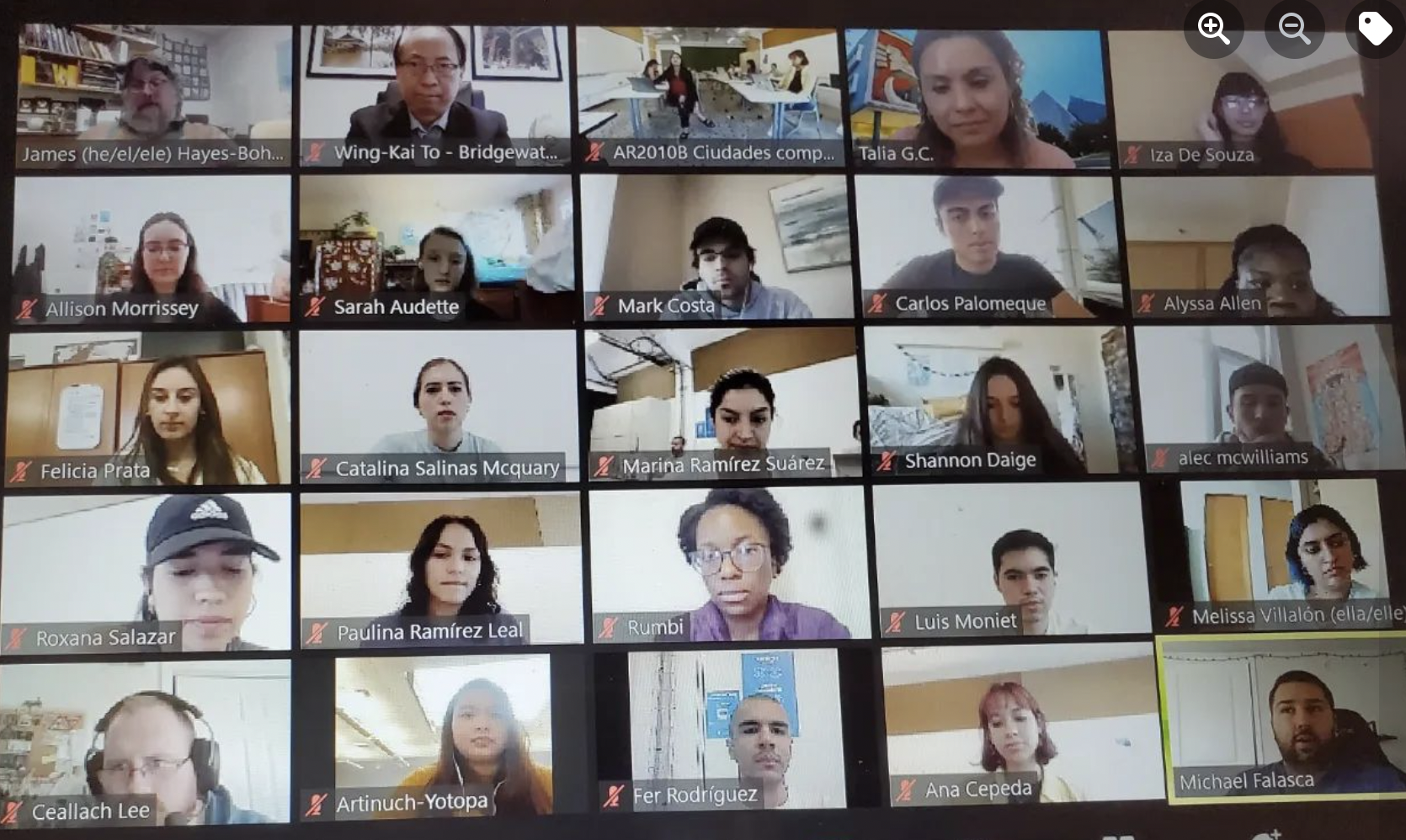
- Synchronous meetings that would include faculty input and also small-group break-out rooms for the students.
- Structured "ice breaker" activities -- low-stakes but relevant questions that required students to start talking and writing together during the first meeting.
- Asynchronous collaborations in the same small groups, working for a week or two on more focused questions and with the goal of combined work products.


I thought this was an absolutely incredible experience that was unlike anything I have ever experienced. I learned a whole lot about the country of Mexico and the town of Monterrey, as well as the students, their academic experience in Mexico, and their cultural problems.It helped me not only learn a lot about them as students and the area in which they live, but also taught me a lot about myself, and the differences we have in our everyday American culture. I would definitely like to do this with my students when I am a teacher as well.