Wednesday, September 28, 2022

Buffalo and Other Climate Havens

Buffalo, New York declared itself a climate have in 2019 and has an Office of New Americans to facilitate its role as a place of welcome. In yesterday's episode of On Point, journalist Kimberly Atkins Stohr brings together an impressive array of guests -- from planners and scholars to a recent climate refugee in Buffalo itself -- to examine the many geographic implications of climate migration in America.

America’s Climate Havens of the Future begins with the story of Maria Agosto, a refugee from the eponymous hurricane that drove her from her home in Puerto Rico to her new home in western New York. On  Point is always worth listening to; this episode is worth listening to twice -- and taking notes. Some of its lessons are in my own notes below.

This photo from Isle of Jean Charles, Louisiana accompanies the podcast. As I mentioned in my 2016 article Climate Attack, this community may have been the first in the U.S. to be abandoned entirely because of climate change.

Sociology professor and demographer Matt Hauer describes lessons that are already beginning to be learned about the migration of humans because of environmental push factors. His own research focuses on migration that is likely to result from rising seal levels, and he is well aware that other consequences of climate change will also result in migration. Some patterns are counterintuitive, though: as dangerous as increased temperature itself is, a lot of migration is toward such urban heat islands as Atlanta and Austin, which exhibit pull factors that will continue to further their growth. 

His models estimate 13 million migrants resulting from rising sea level alone. During the interview, he explains why other serious hazards -- from wildfires to hurricanes -- do not necessarily drive significant migration. 

Beth Gibbons, executive director of the nonprofit American Society of Adaptation Professionals, says, "the past is no longer a good guide for what the future is going to look like." In some ways -- such as flood modeling -- the past is not even a good guide to the present.

Both Hauer and Gibbons note that a lot of migration continues to be stepwise -- people tend to move to nearby places where they might have some social capital before they make long-distance moves to places where they have little prior connection. The story of Maria Agosto and her family is an exception that may become increasingly common. Planners in Buffalo, in fact, are counting on it. 

The city is already known as a welcoming place and is embracing its potential as a climate haven. Even the most welcoming places are working to mitigate aspects of rapid growth on housing affordability, indigenous communities, suburban sprawl, and more.

During the program, Missy Stultz, sustainability manager for Ann Arbor, Michigan describes some specific ways in which her city is preparing for its role as a climate haven Geographers, by the way, are well prepared for exactly the kind of work she is doing. 

Gibbons points out that "legacy" (aka Rustbelt") cities of the north have the potential to benefit from climate-driven migration. She cites Detroit, whose population has declined from 1,200,000 to 700,000 and therefore has a lot of physical space for newcomers, but would need significant restoration of its infrastructure to return to anything like its former population.

She further describes how infrastructure investments can use both state and federal resources not only to accommodate new residents, but also to do so in more equitable and sustainable ways. Among the many specific details she mentions is the rarely discussed but increasingly dangerous problem of combined sewer overflow (CSO), which is just as nasty as it sounds. 

Lagniappe 

We have been here before, though for different reasons. The episode page includes a link to What Migrants Displaced By The Dust Bowl And Climate Events Can Teach Us, a 2018 article by Francesca Paris on Here & Now Compass.

Tuesday, August 16, 2022

Where the Party At?

 Geographers ask three questions: Where is it? Why is it there? So what? 

Followers of this blog know that I apply these questions to all kinds of things in both the human and natural realm. Today. write simply to share a "Where?" question with very little insight about the "Why?" or the implications -- at least so far.

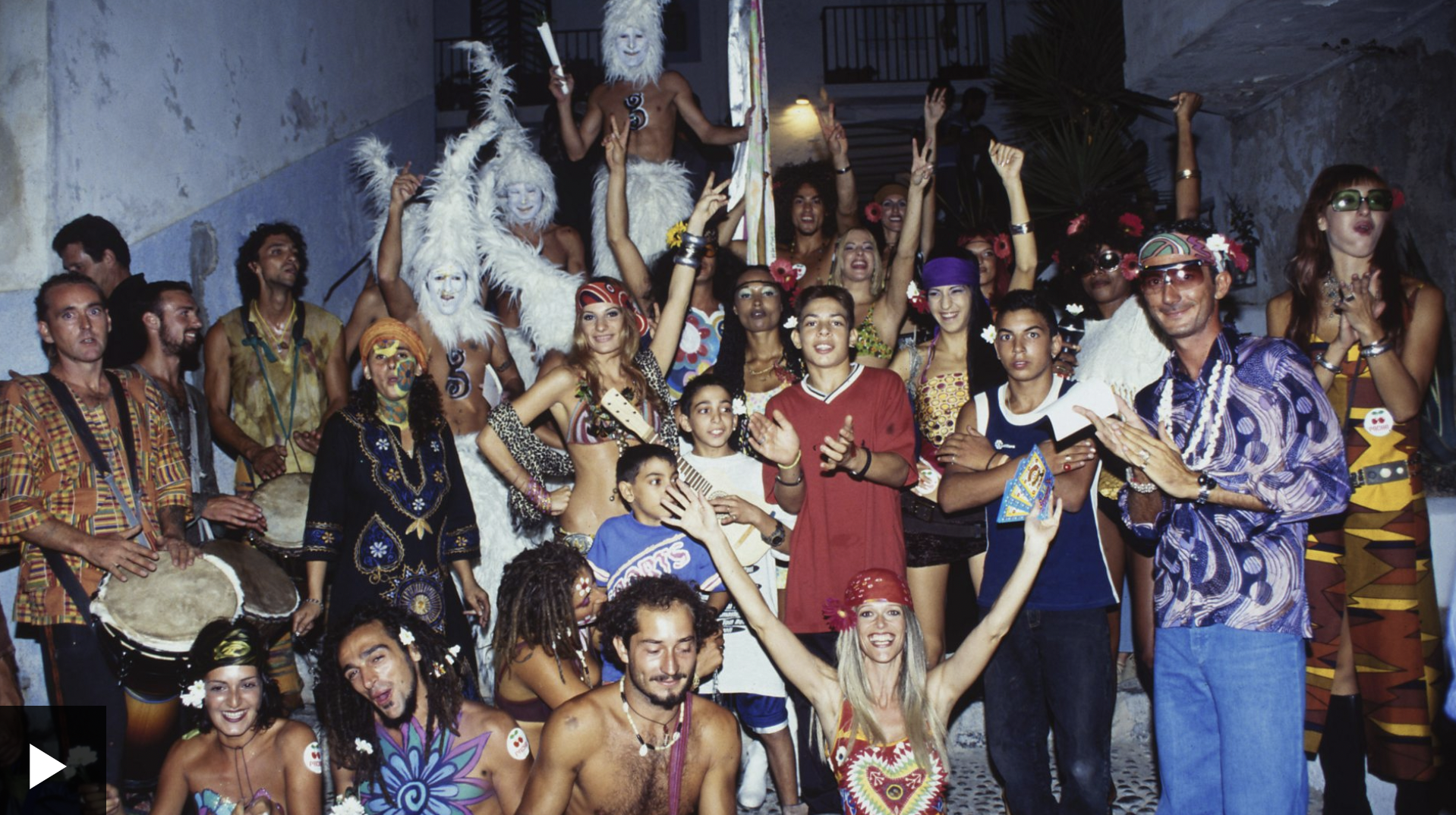
The hedonistic scene above is from a short video on BBC, representing decades of escalation in the party atmosphere of the Spanish island of Ibiza. I found it after hearing The Nightclub that Changed Ibiza, which was today's 4:50 am (Boston time) segment of Witness History. 

I think that this story got my attention because the place transitioned from a hedonistic counterculture to a place reserved for the extremely wealthy.

Since neither the audio nor the video include a map, I add one here. It does begin to address the "Why?" question. Ibiza is part of Spain, but far enough from the mainland to have served as a refuge in the Franco dictatorship. It is surrounded by water and by definition has the Mediterranean climate that is so good for relaxation: mild winters and low-humidity summers. The map also reveals that the island is part of the Balearic archipelago, which features several other party destinations.


Tuesday, August 09, 2022

Burn Pits of Iraq

On NPR's Morning Edition, journalist Leila Fadel interviewed anthropologist Kali Rubaii of Purdue University about her research into the ongoing health problems experience both by U.S. veterans and Iraqi civilians, because of the unregulated burning of mixed waste during the wars there.

In the 1970s and 1980s, newly emerging environmental laws were widely ignored on military bases in the United States. This changed at some point in the 1990s, personnel were retrained, and those bases began to come into compliance. The case of Iraq, however, highlights the long-term damage done by war.

Children in Mosul, from Professor Rubaii's 2020 article
Birth Defects and the Toxic Legacy of War in Iraq

This is a particularly difficult example that illustrates the severe damage done by long-term exposure to toxic chemicals. It is as if we either learned nothing from Love Canal or chose to ignore what we did learn.

City Champions

As I prepare a full slate of classes for the fall semester, I enjoy planning the weekly activities of Discovering Brockton, a First-Year Seminar I offer to students in the Commonwealth Honors program at Bridgewater State University. 

Class chat in Brockton City Hall. Photo: Brian Benson, BSU

In 2019, we were fortunate to have Brian Benson of our university publicity office join us for a day. His article City Champions remains the best summary of what we try to do in the class. 

For two semesters during the pandemic, I offered this class fully online. I was grateful that so many collaborators in the region helped me to have meaningful video class sessions in which they shared various facets of the community. Videoconferencing, however, did not provide the kinds of insights that arise from driving or walking around a place with a geographer. 

For that, I created a series of Windshield and Sidewalk Surveys, with the help of my artist son who happened to be visiting for a few weeks as the 2020 semester was about to begin. See the playlists Windshield Surveys, Sidewalk Surveys 1, and Sidewalk Surveys 2 to join some of the fun.

Lagniappe

Championing the City of Champions (2012)

Geographic Lens on New Bedford (2017)

Brockton Honors (2020)

Monterrey COIL Project: Livable Cities (2022)

And more news about the Department of Geography.

Students tour City Hall in 2007, the second time 
I offered this course. See my Geography of Brockton 
web page, which I can no longer update.


Sunday, August 07, 2022

Wall Street Over Haiti

 In The Ransom, NYT outlines nearly two centuries of interventions by France and the United States that -- combined with the collusion of internal elites -- have perpetuated debt and disarray in Haiti. Even coffee is implicated.

US Military in Haiti, 1920 Image: NYT


Thursday, July 28, 2022

Detroit Museum Visit

I have been teaching Detroit: Arts City for several years, without having ever been to the city. Some people are surprised, because a lot of my teaching is about places I have been. Finally getting back to Chicago and Wisconsin for family visits last week, 

I was glad when my spouse suggested a stop in Detroit. We saw as much as we could manage in just 21 hours, mostly in two of the city's many museums: Detroit Institute of Arts and Detroit Historical Museum. The former is a global treasure -- the fact that bureaucrats seriously considered selling off its contents as a "rescue" plan is what got me interested in the study of the city in the first place. My son wrote a most excellent paper arguing against this deeply flawed and ignorant plan.

These are two institutions that tell a lot of stories, so my snapshots hardly do either of them justice. Still, for those who have never been, I hope that the slides below from our quick visit will inspire an appreciation for some facets of this remarkable city and its cultural treasures. 

Please click the right arrows to advance slides, and click the ... three dots below each image to expand the captions. Apologies that Flickr "updates" do not make this a bit more user-friendly. You can also go directly to the Flickr album if that works better for you or you want to look at a single image more carefully.
Detroit: Arts City in 21 Hours
I look forward to sharing these with my honors colloquium students in the fall.

Rosa Parks, Detroiter

Rosa Parks is one of the most famous participants in the Great Migration, but most people who know her name do not know that she migrated! This included me until very recently, when I learned about her experiences in Detroit, where she spent a bit more than half of her life. 

Icon of civil disobedience: justice sometimes
requires breaking unjust laws.

Despite the success of her role reducing racial discrimination in Alabama by challenging segregation on buses in 1955 -- perhaps even because of that success -- she was unable to find work there and was forced to escape, first to Virginia and then to Detroit, Michigan. There she worked for U.S. Rep. John Conyers for many years. 

After retirement, she was assaulted in her own apartment and forced to move. Little Caesars Pizza mogul Mike Ilich privately paid her rent for many subsequent years, though this arrangement seems to have ended during her final years.

The logo I have seen in 2-D throughout
the USA is 3-D throughout Detroit,
even in the Detroit Historical Museum.


Friday, July 08, 2022

Water Deep Dive (The Takeaway)

I usually find The Takeaway from WNYC to be compelling radio. Even in the context of the general excellence of the program, the broadcast I am listening to on WGBH 89.7 is so exceptional,  that even as I listen, I am preparing this post as part of making the broadcast required listening for most of my classes.

Deep Dive: Water as a Human Right

Even if you are not in one of those courses, I strongly encourage you to listen to Water, a single episode in the program's Deep Dive series. As the title suggests, the scope of this episode is ambitious; one might even say daunting.

In just 48 minutes, journalists Melissa Harris-Perry, Dorian Warren and an impressive array of guests connect water insecurity in the United States to human concerns ranging from physical and mental health to racial inequality and political stability.

Their conversation stretches from Chicago and Detroit to the Navajo Nation and to the world beyond. The program ends with a serious of important questions about how we use water, from the global level to the level of individual households.

Lagniappe

Only one of the guests is identified as a geographer, but a geographic perspective is woven throughout the conversations. It is, in fact, a good example of political ecology, the theoretical outlook that has informed my approach to environmental geography since my doctoral studies

Sunday, July 03, 2022

Coffee Cups without the Coffee

Note: This entry is cross-posted on my new blog, Doctor Potato Head.

Many people know that my #CoffeeMaven priorities are more about the farmers than the coffee itself (though I love the coffee itself!). I use the tag #ThankTheFarmers on many of the words and images I share; this little story is an example of gratitude that extends to all kinds of farmers – not just the beloved cafeteros in my life.

Two of those farmers are Ron and Connie of Maribett Farm, with whom we have many kinds of connections, agricultural and otherwise. While helping us with some permaculture projects in our back yard, they recently left this gift on our back porch. They even sent the photos, since we were not home at the time.

The plant is Colocasia esculenta. It immediately reminded me of a plant I know as elephant ear, but I thought I was mistaken because this plant is pretty small, and the elephant ear I have seen in Nicaragua has individual leaves almost as big as I am. 

A quick internet search confirmed my original hunch, and browsing my Flickr albums of Nicaragua travels brought me to the comparison I was thinking of.


I think our farmer friends chose this plant because of the name used by the vendor: Coffee Cups. Even if they did not intend this, it was the first thing I noticed! This was the first time I had seen or heard that name. The gift is a great example of how my friends have helped me to develop my #CoffeeMaven identity – that of a completist who endeavors to learn about all possible aspects of coffee

The notes from the Proven Winners company mentions that the plant is toxic to both pets and humans, even though the Latin name of the species indicates that it is edible. In fact, Colocasia esculenta is a leading food crop throughout the tropics. The top is known as elephant ear, but the bottom is known as taro (malanga in Spanish), a root that is readily edible and resembles a potato.

It is, in fact, one of several tubers in the lineup of potato-esque roots from which the popular snack Terra Chips are made.

Lagniappe: Thirsty Plant

Long before I saw – and ate – this plant in Nicaragua, I had learned that it can be a problematic invasive plant, at least in one setting. When we took a glass-bottom boat tour of San Marcos Springs in Texas, we learned that hydrologists had calculated how much the Edwards Aquifer was losing through the evapotranspiration from the enormous leaves of plants that surrounded the spring-fed waterways along the escarpment. I do not remember the number, of course, but they were making comparisons to the water demand of a small city.


Blog Ideas

coffee (25) GEOG381 (24) GEOG388 (23) GEOG470 (18) climate change (18) GEOG130 (16) geography (16) GEOG332 (13) GEOG431 (12) musica (11) GEOG 332 (9) GEOG 381 (9) Mexico (9) Brazil (8) GEOG286 (8) Texas (8) education (8) migration (8) GEOG298 (7) borderlands (7) GEOG199 (6) GEOG331 (6) Massachusetts (6) US-Mexico (6) deBlij04 (6) immigration (6) GEOG 130 (5) GEOG 286 (5) GEOG287 (5) climate justice (5) cultural geography (5) fair trade (5) food (5) geographic education (5) nicaragua (5) water (5) Arizona (4) GEOG 171 (4) GEOG171 (4) GEOG295 (4) Safina (4) africa (4) deBlij05 (4) land protection (4) music (4) politics (4) Bolivia (3) Boston (3) COVID-19 (3) Detroit (3) Ethiopia (3) Managua (3) Obama (3) border (3) cartography (3) drought (3) libraries (3) pesticides (3) suburban sprawl (3) trade (3) unemployment (3) Alaska (2) Amazon (2) Bridgewater (2) Canada (2) Chiapas (2) China (2) Colonialism (2) EPA (2) EarthView (2) Economy (2) Environment (2) GEOG 199 (2) GEOG 287 (2) GEOG 388 (2) Google Maps (2) Government (2) Hawaii (2) India (2) Lexington (2) Maldives (2) Mozambique (2) NOLA (2) NPR (2) National Monuments (2) National Parks (2) New Orleans (2) Religion (2) Rio Grande (2) Taunton River Wild and Scenic (2) Tex-Mex (2) The View from Lazy Point (2) United States (2) Venezuela (2) anthropocene (2) cape verde (2) censorship (2) central america (2) chocolate (2) corn (2) deBlij07 (2) deforestation (2) demographic transition (2) demography (2) education reform (2) employment (2) environmental geography (2) film (2) forest fire (2) global warming (2) islands (2) landscape ecology (2) librarians (2) maps (2) organic (2) peak oil (2) refugees (2) sense of place (2) soccer (2) sustainability (2) television (2) water rights (2) whales (2) #bbc (1) #nicaragua (1) #sosnicaragua (1) #sosnicaragua #nicaragua (1) 100 Years of Solitude (1) ACROSS Lexington (1) Accents (1) Adam at Home (1) Alice (1) Alt.Latina (1) American Hustle (1) April (1) Association of american Geographers (1) Audubon (1) Aunt Hatch's Lane (1) BBC (1) BSU (1) Baby Boomers (1) Banda Aceh (1) Bay Circuit Trial (1) Bechtel (1) Beleza Tropical (1) Belize (1) Beloit College (1) Ben Linder Cafe (1) Bet The Farm (1) Bhopal (1) Biafra (1) Bikeway (1) Bikini (1) Bill Gates (1) Bill Moyers (1) Boeing 777 (1) Brazilian (1) Brazilianization (1) Bridge (1) British Columbia (1) Brockton (1) Bus Fare (1) Bush (1) Cabo Verde (1) California (1) Cambridge (1) Cape Cod Bay (1) Carl Stafina (1) Catholic (1) Ceuta (1) Chalice (1) Chipko (1) Citgo (1) Climate risks (1) Cochabamba (1) Colombia (1) Common Core (1) Commuter (1) Computers (1) Cuba (1) Cups and Summits (1) Dallas (1) David Byrne (1) Deans Beans (1) Delaware Valley (1) Dunkin Donuts (1) Earth Day (1) Earth View (1) Easton (1) El Salvador (1) Elizabeth Warren (1) Ellicott City (1) Emilia Laime (1) English-only (1) Environmental History (1) Euphrates (1) European Union (1) Evo Morales (1) FIFA (1) FYS (1) Fades Out (1) Farms (1) First-Year Seminar (1) Food Trade (1) Frederick Kaufman (1) French press (1) Fresh Pond Mall (1) GEOG 431 (1) GEOG 441 (1) GEOG213 (1) GEOG490 (1) Gabriel García Márquez (1) Garden of Gethsemane (1) Gas wells (1) Gateway Cities (1) General Motors (1) Gini Coefficient (1) Girl in the Cafe (1) Google (1) Gordon Hempton (1) Gravina Island Bridge (1) Great Migration (1) Great Molasses Flood (1) Guy Lombardo (1) Haiti (1) Hawks (1) Heart (1) Higher Education (1) History (1) Holyhok Lewisville (1) Homogenous (1) Honors (1) How Food Stopped Being Food (1) Hugo Chavez (1) IMF (1) Iditarod (1) Imperial Valley (1) Income Inequality (1) Indonesia (1) Iraq (1) Irish (1) Japan (1) Junot Diaz (1) Kenya (1) Ketchikan (1) Key West (1) Kindergarden Students (1) King Corn (1) Kiribati (1) Latin America (1) Limbaugh (1) Literature (1) Living On Earth (1) Louisiana (1) Love Canal (1) Luddite (1) M*A*S*H (1) MCAS (1) MacArthur Genius (1) Maersk (1) Malawi (1) Malaysia (1) Malaysian Air Flight 370 (1) Mali (1) Manu Chao (1) Map (1) Marblehead (1) Mary Robinson Foundation (1) Maryland (1) Massachusetts Bay Colony (1) Math (1) Maxguide (1) May (1) Maya (1) Mayan (1) Mayan Gold (1) Mbala (1) McDonald's (1) Melilla (1) Mexicans (1) Michael Pollan (1) Michelle Obama (1) Micronesia (1) Military (1) Military Dictatorship (1) Minuteman Trail (1) Mongolia (1) Monsanto (1) Montana (1) Morocco (1) Mount Auburn Cemetery (1) Muslim (1) NPS (1) Nantucket (1) National Education Regime (1) Native American (1) Native Americans (1) New Bedford (1) New Hampshire (1) New York City (1) New York Times (1) Nigeria (1) No Child Left Behind Act (1) Norquist (1) North Africa (1) Nuts (1) Oakland (1) Oaxaca (1) Occupeligo (1) Occypy (1) Oklahoma (1) Oklahoma City (1) Oppression (1) PARCC (1) Pakistan (1) Pascal's Wager (1) Peanut (1) Pearson Regime (1) Philadelphia (1) Philippines (1) Pink Unicorns (1) Poland (1) Portuguese (1) Protest (1) Public Education (1) Puebla (1) Puritans (1) Quest University (1) Rachel Carson (1) Reading (1) Republican (1) Retro Report (1) Robert Reich (1) Rock Legend (1) Ronald Reagan (1) Rondonia (1) Rosa Parks (1) SEXCoffee (1) Safety (1) Samoza (1) Sandino (1) Sara Vowell (1) Save the Children (1) Scotch (1) Scotland (1) Seinfeld (1) Senegal (1) Sergio Mendes (1) Severin (1) Sharrod (1) Silent Spring (1) Sinatra (1) Slope (1) Smokey the Bear (1) Somalia (1) Sombra (1) Sonora (1) Sonoran desert (1) Sonoran hot dog (1) South America (1) Spain (1) Stairway to Heaven (1) Storm (1) Suare Inch of Silence (1) Sumatra (1) Swamp (1) Tacloban (1) Tanzania (1) The Amazon (1) The Amazon Trail (1) Tigris (1) Tucson (1) Tufts (1) U.S Federal Reserve (1) U.S Government (1) U.S. economy (1) USDA (1) USLE Formula (1) Uganda (1) Unfamiliar Fishes (1) Union Carbide (1) Vacation (1) Vexillology (1) Vietnam (1) ViralNova (1) WNYC Data News (1) Wall Street (1) Walsenburg (1) Walt Disney (1) Walt and El Grupo (1) Ward's Berry Farm (1) West (1) Whaling (1) Wilson (1) Winter Storm Saturn (1) Wisconsin (1) World Bank (1) Xingu (1) YouTube (1) Zombies (1) agriculture (1) antitrust (1) aspen (1) austerity (1) aviation (1) banned books (1) bark beetle (1) bean (1) beavers (1) bicycle (1) bicycling (1) bike sharing (1) binary (1) biodiversity (1) bioneers (1) books (1) boston globe (1) cacao (1) cafe (1) campaign (1) campus (1) cantonville (1) capitals (1) carbon dioxide (1) carbon offsets (1) carioca (1) cash (1) cashews (1) census (1) chemex (1) chemistry (1) chronology (1) churrasco (1) civil rights (1) coffee grounds (1) coffee hell (1) coffee prices (1) coffee quality (1) college (1) compost (1) computerized test (1) congress (1) conservation commission (1) corporations (1) countries (1) cubicle (1) dams (1) deBlij06 (1) deBlij08 (1) death (1) deficit (1) development (1) dictatorship (1) distracted learning (1) distraction (1) drug war (1) dtm (1) earth (1) economic diversification (1) economic geography (1) election (1) embargo (1) energy (1) enhanced greenhouse effect (1) environmentalist (1) ethnomusicology (1) exremism (1) failed states (1) farming (1) financial crisis (1) football (1) forestry (1) forro (1) fracking (1) free market (1) free trade (1) fuel economy (1) garden (1) genocide (1) geography education (1) geography games (1) geography of chocolate (1) geography of food (1) geologic time (1) geotechnology (1) gerrymandering (1) global pizza (1) globe (1) goodall (1) green chemistry (1) ground water (1) guacamole (1) guatemala (1) habitat (1) high-frutcose (1) home values (1) hospitality (1) hourglass (1) housing (1) hydrology (1) illegal aliens (1) income (1) indigenous (1) interfaith (1) journalism (1) kitchen garden (1) labor (1) language (1) libertarianism (1) library (1) linguistics (1) little rock (1) llorona; musica (1) macc (1) maccweb (1) magic realism (1) maple syrup (1) mapping (1) masa no mas (1) massland (1) medical (1) mental maps (1) mi nina (1) microlots (1) microstates (1) mining (1) mltc (1) monopoly (1) municipal government (1) nautical (1) neoclassical economics (1) new england (1) newseum (1) newspapers (1) noise pollution (1) pandas (1) petroleum (1) piracy (1) pirates (1) poison ivy (1) police (1) political geography (1) pollution (1) provincial government (1) proxy variables (1) public diplomacy (1) quesadilla (1) rabbi (1) racism (1) real food cafe (1) regulations (1) remittances (1) resilience (1) resistance (1) respect (1) rigoberta menchu (1) rios montt (1) romance (1) roya (1) runways (1) russia (1) satellites (1) science (1) sea level (1) selva negra (1) sertao (1) sertão (1) sex (1) sex and coffee (1) simple (1) sin (1) smokey (1) solar (1) solar roasting (1) south africa (1) sovereignty (1) species loss (1) sporcle (1) sports (1) state government (1) taxes (1) tea party (1) teaching (1) textile (1) texting (1) tortilla (1) training (1) transect; Mercator (1) travel (1) triple-deckers (1) tsunami (1) urban geography (1) utopia (1) vermont (1) vice (1) video (1) wall (1) water resources (1) water vapor (1) whiskey (1) whisky (1) widget (1) wifi (1) wild fire (1) wildfire (1) wildlife corridor (1) wto (1)