One of the most important books I read in graduate school was I, Rigoberta Menchú, the 1983 autobiography of an indigenous woman whose tireless work on behalf of her people helped to end the civil was in Guatemala and earned her the Nobel Peace Prize in 1992. Even with that recognition by the international community, however, I find that her story is largely unknown.
The countries of Latin America vary widely in the proportion of European, African, and indigenous racial heritage. In Guatemala, mestizos have always formed the ruling and land-owning classes, but the vast majority of the population continues to be indigenous. In telling the story of her struggle against unbelievable violence -- 200,000 Guatemalans were killed in the war, including much of her family -- she also tells the story of her people, their beliefs, and their relationship to language.
Her story is also essential for understanding the current plight of coffee farmers in Guatemala, and in fact it was Dean Cycon's work with her and others who resisted the tyranny of the U.S.-allied elites that eventually led to his emergence as a leading purveyor of justly-traded coffee. The connection is explained in his book, Javatrekker, which is required reading in my coffee classes, and whose back cover includes endorsements from both Rigoberta Menchu and Susan Sarandon.
Learn more about Menchú and her legacy from the Western Michigan University Colonial & Post-Colonial Dialogues project, the Riboberta Menchú Tum Foundation, the Nobel Committee, and World Trek.
Geography asks three questions:
Where is it? Why is it there? So what?
~~~
Geographers apply spatial understanding to the real world.
Wednesday, October 06, 2010
Sunday, October 03, 2010
Beyond Tuskeegee
This week saw Secretary of State Hillary Clinton issuing an apology on behalf of our country to the people of Guatemala. Sadly, she was repeating a duty of her office that echoed something her husband had done 13 years before. They both were apologizing for dangerous medical experiments conducted decades before on people who were considered so marginal at the time that they were not given the chance to consent.
In President Clinton's case, it was for studies conducted from 1932 until 1972, in which 399 African American men were known to have syphilis but were given neither the diagnosis nor treatment. It is a tragic irony that the town associated with the proud history of the Tuskegee Airmen is also the location of this atrocity. The history of the Tuskegee Experiment is explored on the "Bad Blood" site at the University of Virginia, where the Claude Moore Health Sciences Library has been actively involved in documenting the experiments and their aftermath. More detail is provided in the article Research Ethics, hosted by Tuskegee University. NPR's Alex Chadwick reported on the study in his 2002 Remembering Tuskegee report.
This week, Secretary Clinton found herself in a similar position, apologizing for a similar but perhaps even greater atrocity. In the 1940s, medical researchers from the United States ran syphilis and gonorrhea experiments in Guatemala. With the cooperation of public health officials there -- perhaps in return for promises of penicillin, not all of the motives are yet clear -- they actually infected subjects without their consent or knowledge. The infection was introduced through prostitutes and through by pouring germs directly onto researcher-inflicted skin abrasions. The subjects included soldiers, prisoners, and mental patients -- that is, people seen as marginal in a country that was itself seen as peripheral. As reported in the Boston Globe, the study was discovered a few months ago by a Wellesley College historian who was studying the Tuskegee case. Secretary of State Clinton broke the news Thursday evening to Guatemala's President Alvaro Colom, to whom President Obama issued an additional apology the following day.
As I witnessed during my 2008 visit to Guatemala, most of the country's population continues to suffer unreasonable levels of poverty, largely because the United States perpetuated its peripheral economic position in the pursuit of cheap breakfast foods. We backed elites at the expense of peasants in a civil war that lasted 36 years, so we have MUCH for which we owe Guatemalans apologies.
The gruesome experiments of the 1940s, however, add significant insult to injury, and this week's apology should be only the beginning of an effort to make amends.
In President Clinton's case, it was for studies conducted from 1932 until 1972, in which 399 African American men were known to have syphilis but were given neither the diagnosis nor treatment. It is a tragic irony that the town associated with the proud history of the Tuskegee Airmen is also the location of this atrocity. The history of the Tuskegee Experiment is explored on the "Bad Blood" site at the University of Virginia, where the Claude Moore Health Sciences Library has been actively involved in documenting the experiments and their aftermath. More detail is provided in the article Research Ethics, hosted by Tuskegee University. NPR's Alex Chadwick reported on the study in his 2002 Remembering Tuskegee report.
This week, Secretary Clinton found herself in a similar position, apologizing for a similar but perhaps even greater atrocity. In the 1940s, medical researchers from the United States ran syphilis and gonorrhea experiments in Guatemala. With the cooperation of public health officials there -- perhaps in return for promises of penicillin, not all of the motives are yet clear -- they actually infected subjects without their consent or knowledge. The infection was introduced through prostitutes and through by pouring germs directly onto researcher-inflicted skin abrasions. The subjects included soldiers, prisoners, and mental patients -- that is, people seen as marginal in a country that was itself seen as peripheral. As reported in the Boston Globe, the study was discovered a few months ago by a Wellesley College historian who was studying the Tuskegee case. Secretary of State Clinton broke the news Thursday evening to Guatemala's President Alvaro Colom, to whom President Obama issued an additional apology the following day.
As I witnessed during my 2008 visit to Guatemala, most of the country's population continues to suffer unreasonable levels of poverty, largely because the United States perpetuated its peripheral economic position in the pursuit of cheap breakfast foods. We backed elites at the expense of peasants in a civil war that lasted 36 years, so we have MUCH for which we owe Guatemalans apologies.
The gruesome experiments of the 1940s, however, add significant insult to injury, and this week's apology should be only the beginning of an effort to make amends.
Saturday, September 25, 2010
American Disposables
By its name, the town of Ware, Massachusetts (pop. 9,888) has something in common with two towns in Texas. Like my former home of Pharr, Texas, it sounds like a description or question about a place: Pharr = Far and Ware = Where?
From one of WBUR's reports from Ware this morning, I learned that like Waco, Texas, Ware had a radio station with the town's name for call letters (WARE and WACO). Sadly, the casualties of outsourcing in Ware are so severe that even its namesake radio station has been moved. Though many jobs have gone farther away, WARE radio operates from nearby Palmer. The town of Ware is on the minds of many Bay Staters this week, as it was the second stop on WBUR's weeklong transect of the state.
The title of this post -- American Disposables -- refers to a company that is mentioned in one the report entitled No Work, Only Memories. As my favorite librarian pointed out to me while we were listening over our morning coffee, however, American Disposables serves as an aptonym for its own employees, such as Mike McCarthy, who worked for the company until he was laid off 15 months ago. He has done all the things the unemployed are "supposed" to do: seeking retraining, cutting back on expenses, and constantly looking for any job that he can. American Disposables was not glamorous work -- the company now specializes in training pads for house pets -- but he took pride in that work, as most working people do. His reaction is poignant and belies the stereotype of those on unemployment benefits. Of working in the factory, he said,
For example, McCarthy tried to improve his chances at employment by taking classes at the "University" of Phoenix, a for-profit university that specializes in short-term, practical training rather programs, rather than general education (hence my scare quotes around the U-word). Short-term, practical training programs, of course, should be part of the higher-education landscape, but when such programs are operated strictly for profit, poor people and taxpayers can suffer for the benefit of unscrupulous owners. In fact, UP and similar companies take public money but avoid public oversight. Meanwhile so-called public universities get less money and more interference, because of the prevailing but wrong-headed notion that private is always better.
In the story of Mr. McCarthy and his family, two destructive trends that result from flawed libertarian thinking are combined, with ruinous results. He was pursuing a training program that was federally funded but privately sold. This meant that the tuition cost was high, and would have been paid by the government if he had completed the course. Since he did not pay it, he is now responsible for the full cost, which is much higher than it would be at a publicly-operated university. Education and training are a public good, and people who seek to build their skills deserve genuine public support, not sham loan programs that subsidize private companies. (This is why I use the term "flawed libertarian thinking." Some enemies of public services -- Dick Cheney comes to mind -- are pretty adept at collecting public money.)
The second aspect of flawed libertarian thinking that contributes to the woes of the McCarthy family is the refusal to offer publicly funded health care. Again, free-market fundamentalists have managed to convince Americans that single-payer health care could somehow be worse than our current arrangement. (This apparently includes many of the good people of Ware, who voted for Senator Scott Brown in a recent special election). Mr. McCarthy dropped out of his training program because his mother got sick, taking away his hope of employment and putting him in debt to a private company. I cannot see this as anything but an indictment of free-market fundamentalism.
I am not prepared to blame a lack of government programs for all that is wrong in Ware, though. I am not a liberal: I'm a radical, meaning that I do not think government largess will not solve problems whose root causes are not addressed. And at least one root of the problems in Ware can be found at the local Walmart. Collectively, the Walton family is as rich as Bill Gates, because they found something more important to Americans than handy computers: cheap stuff. We can vilify WalMart -- and I do -- but they are giving us what we seem to want: low prices at a high cost. One family figured out how to do this relentlessly, busting unions not only in retail but also in manufacturing.
Finally, I heard several people in the story mention that a lack of transportation was preventing them from getting jobs. It was once possible to take a trolley to any job around a town like Ware. I live a hundred yards from buried trolley tracks that would have connected me to an thousand-mile-wide network of rails a couple generations ago. But the primacy of the automobile led to sprawl and auto-dependent landscapes. One of the costs is that it is in some ways easier to be homeless in America than carless, and in fact more people are.
I thank WBUR for telling the story of Ware so powerfully. In a period of increased wealth concentration, it is an incredibly important story.
From one of WBUR's reports from Ware this morning, I learned that like Waco, Texas, Ware had a radio station with the town's name for call letters (WARE and WACO). Sadly, the casualties of outsourcing in Ware are so severe that even its namesake radio station has been moved. Though many jobs have gone farther away, WARE radio operates from nearby Palmer. The town of Ware is on the minds of many Bay Staters this week, as it was the second stop on WBUR's weeklong transect of the state.
The title of this post -- American Disposables -- refers to a company that is mentioned in one the report entitled No Work, Only Memories. As my favorite librarian pointed out to me while we were listening over our morning coffee, however, American Disposables serves as an aptonym for its own employees, such as Mike McCarthy, who worked for the company until he was laid off 15 months ago. He has done all the things the unemployed are "supposed" to do: seeking retraining, cutting back on expenses, and constantly looking for any job that he can. American Disposables was not glamorous work -- the company now specializes in training pads for house pets -- but he took pride in that work, as most working people do. His reaction is poignant and belies the stereotype of those on unemployment benefits. Of working in the factory, he said,
“It makes you feel good inside, I think, you know, rather than to sit around all day and collect, I mean, who wants to do that, really?"Although this and other stories about Ware are focused closely on the day-to-day experience of people suffering in a tough economy, they hint at several of the underlying causes -- collective decisions that make poverty more likely, more painful, or both.
For example, McCarthy tried to improve his chances at employment by taking classes at the "University" of Phoenix, a for-profit university that specializes in short-term, practical training rather programs, rather than general education (hence my scare quotes around the U-word). Short-term, practical training programs, of course, should be part of the higher-education landscape, but when such programs are operated strictly for profit, poor people and taxpayers can suffer for the benefit of unscrupulous owners. In fact, UP and similar companies take public money but avoid public oversight. Meanwhile so-called public universities get less money and more interference, because of the prevailing but wrong-headed notion that private is always better.
| Suffering from hyper-privatization |
In the story of Mr. McCarthy and his family, two destructive trends that result from flawed libertarian thinking are combined, with ruinous results. He was pursuing a training program that was federally funded but privately sold. This meant that the tuition cost was high, and would have been paid by the government if he had completed the course. Since he did not pay it, he is now responsible for the full cost, which is much higher than it would be at a publicly-operated university. Education and training are a public good, and people who seek to build their skills deserve genuine public support, not sham loan programs that subsidize private companies. (This is why I use the term "flawed libertarian thinking." Some enemies of public services -- Dick Cheney comes to mind -- are pretty adept at collecting public money.)
The second aspect of flawed libertarian thinking that contributes to the woes of the McCarthy family is the refusal to offer publicly funded health care. Again, free-market fundamentalists have managed to convince Americans that single-payer health care could somehow be worse than our current arrangement. (This apparently includes many of the good people of Ware, who voted for Senator Scott Brown in a recent special election). Mr. McCarthy dropped out of his training program because his mother got sick, taking away his hope of employment and putting him in debt to a private company. I cannot see this as anything but an indictment of free-market fundamentalism.
| The Waltons use red, white, and blue, but they are no patriots! |
Finally, I heard several people in the story mention that a lack of transportation was preventing them from getting jobs. It was once possible to take a trolley to any job around a town like Ware. I live a hundred yards from buried trolley tracks that would have connected me to an thousand-mile-wide network of rails a couple generations ago. But the primacy of the automobile led to sprawl and auto-dependent landscapes. One of the costs is that it is in some ways easier to be homeless in America than carless, and in fact more people are.
I thank WBUR for telling the story of Ware so powerfully. In a period of increased wealth concentration, it is an incredibly important story.
Arabica and Arabians
Thanks to the several colleagues who pointed me toward the article America's Arabian 'Cuppa Joe' in the current issue of Saudi Aramco World. (This magazine is free online and in print by free subscription; it is a wonderful tool for teachers.)
Author Jonathan Friedlander mined his vast collection of orientalist pop-culture artifacts to illustrate a brief history of the use of "Arabic" imagery in the marketing of coffee in the United States, particularly in the decades surrounding the turn of the 19th century.
The article is a good introduction to the concept of "Orientalism," which was coined by Edward Said in his book of the same title. Said's 1978 work is said to have signaled the dawn of post-colonialism in humanities and social sciences. Learn more about orientalism from Said's book, Muslim Answers, PoCoWeb, Danielle Sered at Emory, or Jim Dexheimer at Western Michigan.
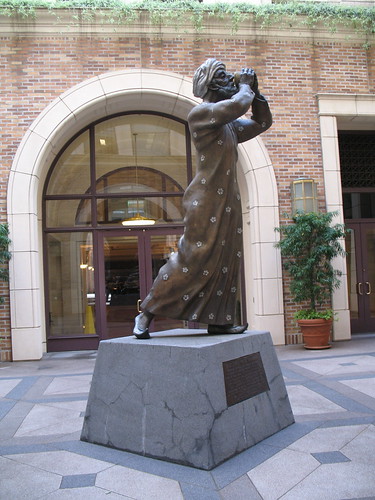
Friedlander's story includes a brief history of the expansion of the coffee trade in the United States, particularly in the western part of the country. He points out that most of the actual coffee came from Latin America, but most of the imagery came from the Near East, and helped to perpetuate a number of confused stereotypes of the region. Arab (or, more often, faux-Arab) images adorned the coffee tins and advertisements of Hills Brothers (whose San Francisco headquarters sports a statue of the "Arab gentleman," even to this day!
The messages were not limited to marketing and packaging, however: Arbuckle Coffee included trading cards with the coffee, in series that sometimes included 50 or more cards related to a single them. As Friedlander points out, some of these cards address Arabia directly and contribute to the them of orientalism that he describes. In reviewing some of the cards described by collector Jeffrey Buck, I find that the cards capture many facets -- often unflattering -- of the conventional wisdom of Middle America in the Victorian Era.
Friedlander concludes his essay by explaining how exoticism continues to sell coffee, as with Arabian Mocha Timor from Starbucks. As he indicates, words are now much more important than images in these messages, but they are present, particularly in the marketing of coffee from Yemen or nearby locations.
Author Jonathan Friedlander mined his vast collection of orientalist pop-culture artifacts to illustrate a brief history of the use of "Arabic" imagery in the marketing of coffee in the United States, particularly in the decades surrounding the turn of the 19th century.
The article is a good introduction to the concept of "Orientalism," which was coined by Edward Said in his book of the same title. Said's 1978 work is said to have signaled the dawn of post-colonialism in humanities and social sciences. Learn more about orientalism from Said's book, Muslim Answers, PoCoWeb, Danielle Sered at Emory, or Jim Dexheimer at Western Michigan.
The messages were not limited to marketing and packaging, however: Arbuckle Coffee included trading cards with the coffee, in series that sometimes included 50 or more cards related to a single them. As Friedlander points out, some of these cards address Arabia directly and contribute to the them of orientalism that he describes. In reviewing some of the cards described by collector Jeffrey Buck, I find that the cards capture many facets -- often unflattering -- of the conventional wisdom of Middle America in the Victorian Era.
Friedlander concludes his essay by explaining how exoticism continues to sell coffee, as with Arabian Mocha Timor from Starbucks. As he indicates, words are now much more important than images in these messages, but they are present, particularly in the marketing of coffee from Yemen or nearby locations.
Wednesday, September 15, 2010
Tea on the Radio
I found a few items related to tea in the National Public Radio archives that help to tell the story of the geography of tea. I am interested in the subject both because of my growing interest in tea and because my daughter is actively preparing for a service-learning trip to India in 2011.
For example, "Tea Thieves" is a Guy Raz interview of Sarah Rose about her book For All the Tea in China, about England's century-long effort that allowed India to supplant China as the world's leading producer of tea. The story focuses on Robert Fortune, an aptly named China expert, botanist, and corporate spy whose skills were employed by the East India Trading Company, with effects that remain profound two centuries later.
According to a visit reported by Daniel Zwerdlig, Cafe Kaffee Kuchh in Chandigarh, Punjab "created this cafe as an antidote to modern India," which some see as disconnected from its roots and too focused on money. The cafe is a place for young people to share tea and food, but also to cultivate community. I am glad to be finding the same thing in pockets here in the United States.
At the opposite extreme, perhaps, is Sanjiv Mehta of Mumbai by way of London, who recently purchased the intellectual property rights of the East India Company in order to apply the brand to luxury goods. In many ways, it was the first multinational corporation, associated with both the best and the worst of colonization and therefore of globalization. In his conversation with Robert Siegel, CEO Mehta clearly is proud of the legacy he has purchased and its marketing value. It might just work, his trademarks now include not only a lot of teas and jams, but also the coffee that was Napolean's final wish: the coffee of St. Helena Island.
For example, "Tea Thieves" is a Guy Raz interview of Sarah Rose about her book For All the Tea in China, about England's century-long effort that allowed India to supplant China as the world's leading producer of tea. The story focuses on Robert Fortune, an aptly named China expert, botanist, and corporate spy whose skills were employed by the East India Trading Company, with effects that remain profound two centuries later.
According to a visit reported by Daniel Zwerdlig, Cafe Kaffee Kuchh in Chandigarh, Punjab "created this cafe as an antidote to modern India," which some see as disconnected from its roots and too focused on money. The cafe is a place for young people to share tea and food, but also to cultivate community. I am glad to be finding the same thing in pockets here in the United States.
At the opposite extreme, perhaps, is Sanjiv Mehta of Mumbai by way of London, who recently purchased the intellectual property rights of the East India Company in order to apply the brand to luxury goods. In many ways, it was the first multinational corporation, associated with both the best and the worst of colonization and therefore of globalization. In his conversation with Robert Siegel, CEO Mehta clearly is proud of the legacy he has purchased and its marketing value. It might just work, his trademarks now include not only a lot of teas and jams, but also the coffee that was Napolean's final wish: the coffee of St. Helena Island.
Monday, September 13, 2010
Rethinking NAFTA
The Council on Hemispheric Affairs is known for its well-researched and cogent analyses of trends in Latin America. Its recent report, Negotiating a New NAFTA, describes negative effects of the agreement in each country, particularly relating the problem of rural unemployment to migration from Mexico. Oddly, in my view, the authors remain committed to NAFTA and free trade in principle, while showing very clearly its ill effects in practice.
The Maxwell Library at Bridgewater State University has a great new service that puts a lot of documentary films (varying links, up to one hour) online for instant use by anybody with a BSU username. One of the first short films I've found is entitled Harsh Reality: Mexico’s NAFTA Problem, a 15-minute piece that describes shortcomings of NAFTA a dozen years after its passage, particularly in the area of employment in Mexico.
My August post about labor conditions in Guatemala under CAFTA includes links to law-library articles describing NAFTA and other major trade agreements.
The Maxwell Library at Bridgewater State University has a great new service that puts a lot of documentary films (varying links, up to one hour) online for instant use by anybody with a BSU username. One of the first short films I've found is entitled Harsh Reality: Mexico’s NAFTA Problem, a 15-minute piece that describes shortcomings of NAFTA a dozen years after its passage, particularly in the area of employment in Mexico.
My August post about labor conditions in Guatemala under CAFTA includes links to law-library articles describing NAFTA and other major trade agreements.
Sunday, September 12, 2010
Coffee-Migra
When I came to Bridgewater for my a job interview in 1997, the chair of my department was proud to include the recently-refurbished Bridgewater Public Library on a quick tour he gave me of the town. We had the tremendous good fortune of renting a house directly behind the library for the following five years (and we still live within a short walk) -- so that our daughter was able as an infant to be a frequent library user. The programs there helped to make her the confident learner that she is today. The entire family has been distressed by the difficulties the library has had in recent years, and we have done our best to support the wonderful staff, trustees, and Friends group.
Over the past couple of years, the library has sold Bridgewater Brew, a private label of Dean's Beans coffee, as an ongoing fundraiser. Periodically, I have been pleased to help the Friends of the BPL in this endeavor by giving public lectures about coffee that help draw attention to the fund-raiser while educating town residents about coffee. I was especially delighted when I was invited to speak yesterday as part of the celebration of the return of Saturday hours at the library (it had been entirely closed on weekends for a couple of years).
Because many patrons had already heard some of my general presentations on coffee, I decided to choose a focus. Because migration has been on my mind a lot in the past couple of years, I decided to focus on the relationship between the Coffee Crisis and the migration of undocumented workers to the United States. Then I decided to balance the human story with an environmental tale, about the importance of coffeelands in the migration of songbirds. The presentation was very well received and stimulated a lot of good discussion. I have put some of the articles and web sites I used in preparing this presentation on a page I call coffee-migra, where "migra" is a common slang term for border-patrol agents, as popularized in Santana's song of that name on the Supernatural album.
Driest Place on Earth
| VisitChile.com |
Tuesday, September 07, 2010
Union Carbide's Hand of God
The first time I saw this image -- as a poster in my graduate advisor's office -- I assumed that it was some sort of elaborate political cartoon, drawn up following the Bhopal disaster as a dark parody of corporate arrogance. I was mistaken, however. This was actual corporate arrogance. It predates the death of thousands -- nobody knows for certain how many -- during a 1984 overnight gas leak in Bhopal, Madya Pradesh, in Central India.
I recently learned that this trumpeting of the needed "technical knowledge of the western world" was replicated in a series of ads that the "Today's Inspiration" blog describes as the "Hand o' God" series -- ads of breath-taking arrogance that could only have been made in the 1950s: an age of paternalism and confidence in technology that came after the Second World War (victory through technology) and before Silent Spring and Love Canal (extinctions and death through technology).
Protests against Union Carbide have now gone on longer than most of my university students have been alive, and the company continues to defend its response.
![]() |
| Gripping imagery of Bhopal.net |
Lagniappe
From my own kid -- currently an art student -- I learned of a very unusual artistic disruption related to the disaster and to the failure to take responsibility for it. In 2004, the BBC aired an interview in recognition of the 20th anniversary of the leak, in which an executive of Dow (the corporate successor of Union Carbide) appeared finally to take responsibility for the leak and to promise appropriate levels of financial compensation to victims and families.
The interview, it turned out, was a hoax perpetrated by an performance-artist duo known as the Yes Men. The escapade is featured on the online Museum of Hoaxes and some of its ethical implications are discussed by journalist Adela Kim in a 2014 Harvard Crimson article. The incident is also part of the 2009 documentary The Yes Men Fix the World, available from Netflix-DVD.
Wednesday, September 01, 2010
A Bit More on Target
In a previous post, I commented on the recent boycott against Target. A recent report by NBC reaches much the same conclusion: the financial impact of the boycott appears to be relatively small, but the controversy has made Target and Best Buy -- and their investors -- sufficiently nervous that much more caution about political campaigns is likely in the future.
As Rebecca Jarvis comments at the conclusion of this piece, "This experience can do what the Supreme Court did not do, which is to say 'forget about it. It's just not worth it to get involved on either side of this."
Subscribe to:
Posts (Atom)
Blog Ideas
coffee
(25)
GEOG381
(24)
GEOG388
(23)
GEOG470
(18)
climate change
(18)
GEOG130
(16)
geography
(16)
GEOG332
(13)
GEOG431
(12)
musica
(11)
GEOG 332
(9)
GEOG 381
(9)
Mexico
(9)
Brazil
(8)
GEOG286
(8)
Texas
(8)
education
(8)
migration
(8)
GEOG298
(7)
borderlands
(7)
GEOG199
(6)
GEOG331
(6)
Massachusetts
(6)
US-Mexico
(6)
deBlij04
(6)
immigration
(6)
GEOG 130
(5)
GEOG 286
(5)
GEOG287
(5)
climate justice
(5)
cultural geography
(5)
fair trade
(5)
food
(5)
geographic education
(5)
nicaragua
(5)
water
(5)
Arizona
(4)
GEOG 171
(4)
GEOG171
(4)
GEOG295
(4)
Safina
(4)
africa
(4)
deBlij05
(4)
land protection
(4)
music
(4)
politics
(4)
Bolivia
(3)
Boston
(3)
COVID-19
(3)
Detroit
(3)
Ethiopia
(3)
Managua
(3)
Obama
(3)
border
(3)
cartography
(3)
drought
(3)
libraries
(3)
pesticides
(3)
suburban sprawl
(3)
trade
(3)
unemployment
(3)
Alaska
(2)
Amazon
(2)
Bridgewater
(2)
Canada
(2)
Chiapas
(2)
China
(2)
Colonialism
(2)
EPA
(2)
EarthView
(2)
Economy
(2)
Environment
(2)
GEOG 199
(2)
GEOG 287
(2)
GEOG 388
(2)
Google Maps
(2)
Government
(2)
Hawaii
(2)
India
(2)
Lexington
(2)
Maldives
(2)
Mozambique
(2)
NOLA
(2)
NPR
(2)
National Monuments
(2)
National Parks
(2)
New Orleans
(2)
Religion
(2)
Rio Grande
(2)
Taunton River Wild and Scenic
(2)
Tex-Mex
(2)
The View from Lazy Point
(2)
United States
(2)
Venezuela
(2)
anthropocene
(2)
cape verde
(2)
censorship
(2)
central america
(2)
chocolate
(2)
corn
(2)
deBlij07
(2)
deforestation
(2)
demographic transition
(2)
demography
(2)
education reform
(2)
employment
(2)
environmental geography
(2)
film
(2)
forest fire
(2)
global warming
(2)
islands
(2)
landscape ecology
(2)
librarians
(2)
maps
(2)
organic
(2)
peak oil
(2)
refugees
(2)
sense of place
(2)
soccer
(2)
sustainability
(2)
television
(2)
water rights
(2)
whales
(2)
#bbc
(1)
#nicaragua
(1)
#sosnicaragua
(1)
#sosnicaragua #nicaragua
(1)
100 Years of Solitude
(1)
ACROSS Lexington
(1)
Accents
(1)
Adam at Home
(1)
Alice
(1)
Alt.Latina
(1)
American Hustle
(1)
April
(1)
Association of american Geographers
(1)
Audubon
(1)
Aunt Hatch's Lane
(1)
BBC
(1)
BSU
(1)
Baby Boomers
(1)
Banda Aceh
(1)
Bay Circuit Trial
(1)
Bechtel
(1)
Beleza Tropical
(1)
Belize
(1)
Beloit College
(1)
Ben Linder Cafe
(1)
Bet The Farm
(1)
Bhopal
(1)
Biafra
(1)
Bikeway
(1)
Bikini
(1)
Bill Gates
(1)
Bill Moyers
(1)
Boeing 777
(1)
Brazilian
(1)
Brazilianization
(1)
Bridge
(1)
British Columbia
(1)
Brockton
(1)
Bus Fare
(1)
Bush
(1)
Cabo Verde
(1)
California
(1)
Cambridge
(1)
Cape Cod Bay
(1)
Carl Stafina
(1)
Catholic
(1)
Ceuta
(1)
Chalice
(1)
Chipko
(1)
Citgo
(1)
Climate risks
(1)
Cochabamba
(1)
Colombia
(1)
Common Core
(1)
Commuter
(1)
Computers
(1)
Cuba
(1)
Cups and Summits
(1)
Dallas
(1)
David Byrne
(1)
Deans Beans
(1)
Delaware Valley
(1)
Dunkin Donuts
(1)
Earth Day
(1)
Earth View
(1)
Easton
(1)
El Salvador
(1)
Elizabeth Warren
(1)
Ellicott City
(1)
Emilia Laime
(1)
English-only
(1)
Environmental History
(1)
Euphrates
(1)
European Union
(1)
Evo Morales
(1)
FIFA
(1)
FYS
(1)
Fades Out
(1)
Farms
(1)
First-Year Seminar
(1)
Food Trade
(1)
Frederick Kaufman
(1)
French press
(1)
Fresh Pond Mall
(1)
GEOG 431
(1)
GEOG 441
(1)
GEOG213
(1)
GEOG490
(1)
Gabriel García Márquez
(1)
Garden of Gethsemane
(1)
Gas wells
(1)
Gateway Cities
(1)
General Motors
(1)
Gini Coefficient
(1)
Girl in the Cafe
(1)
Google
(1)
Gordon Hempton
(1)
Gravina Island Bridge
(1)
Great Migration
(1)
Great Molasses Flood
(1)
Guy Lombardo
(1)
Haiti
(1)
Hawks
(1)
Heart
(1)
Higher Education
(1)
History
(1)
Holyhok Lewisville
(1)
Homogenous
(1)
Honors
(1)
How Food Stopped Being Food
(1)
Hugo Chavez
(1)
IMF
(1)
Iditarod
(1)
Imperial Valley
(1)
Income Inequality
(1)
Indonesia
(1)
Iraq
(1)
Irish
(1)
Japan
(1)
Junot Diaz
(1)
Kenya
(1)
Ketchikan
(1)
Key West
(1)
Kindergarden Students
(1)
King Corn
(1)
Kiribati
(1)
Latin America
(1)
Limbaugh
(1)
Literature
(1)
Living On Earth
(1)
Louisiana
(1)
Love Canal
(1)
Luddite
(1)
M*A*S*H
(1)
MCAS
(1)
MacArthur Genius
(1)
Maersk
(1)
Malawi
(1)
Malaysia
(1)
Malaysian Air Flight 370
(1)
Mali
(1)
Manu Chao
(1)
Map
(1)
Marblehead
(1)
Mary Robinson Foundation
(1)
Maryland
(1)
Massachusetts Bay Colony
(1)
Math
(1)
Maxguide
(1)
May
(1)
Maya
(1)
Mayan
(1)
Mayan Gold
(1)
Mbala
(1)
McDonald's
(1)
Melilla
(1)
Mexicans
(1)
Michael Pollan
(1)
Michelle Obama
(1)
Micronesia
(1)
Military
(1)
Military Dictatorship
(1)
Minuteman Trail
(1)
Mongolia
(1)
Monsanto
(1)
Montana
(1)
Morocco
(1)
Mount Auburn Cemetery
(1)
Muslim
(1)
NPS
(1)
Nantucket
(1)
National Education Regime
(1)
Native American
(1)
Native Americans
(1)
New Bedford
(1)
New Hampshire
(1)
New York City
(1)
New York Times
(1)
Nigeria
(1)
No Child Left Behind Act
(1)
Norquist
(1)
North Africa
(1)
Nuts
(1)
Oakland
(1)
Oaxaca
(1)
Occupeligo
(1)
Occypy
(1)
Oklahoma
(1)
Oklahoma City
(1)
Oppression
(1)
PARCC
(1)
Pakistan
(1)
Pascal's Wager
(1)
Peanut
(1)
Pearson Regime
(1)
Philadelphia
(1)
Philippines
(1)
Pink Unicorns
(1)
Poland
(1)
Portuguese
(1)
Protest
(1)
Public Education
(1)
Puebla
(1)
Puritans
(1)
Quest University
(1)
Rachel Carson
(1)
Reading
(1)
Republican
(1)
Retro Report
(1)
Robert Reich
(1)
Rock Legend
(1)
Ronald Reagan
(1)
Rondonia
(1)
Rosa Parks
(1)
SEXCoffee
(1)
Safety
(1)
Samoza
(1)
Sandino
(1)
Sara Vowell
(1)
Save the Children
(1)
Scotch
(1)
Scotland
(1)
Seinfeld
(1)
Senegal
(1)
Sergio Mendes
(1)
Severin
(1)
Sharrod
(1)
Silent Spring
(1)
Sinatra
(1)
Slope
(1)
Smokey the Bear
(1)
Somalia
(1)
Sombra
(1)
Sonora
(1)
Sonoran desert
(1)
Sonoran hot dog
(1)
South America
(1)
Spain
(1)
Stairway to Heaven
(1)
Storm
(1)
Suare Inch of Silence
(1)
Sumatra
(1)
Swamp
(1)
Tacloban
(1)
Tanzania
(1)
The Amazon
(1)
The Amazon Trail
(1)
Tigris
(1)
Tucson
(1)
Tufts
(1)
U.S Federal Reserve
(1)
U.S Government
(1)
U.S. economy
(1)
USDA
(1)
USLE Formula
(1)
Uganda
(1)
Unfamiliar Fishes
(1)
Union Carbide
(1)
Vacation
(1)
Vexillology
(1)
Vietnam
(1)
ViralNova
(1)
WNYC Data News
(1)
Wall Street
(1)
Walsenburg
(1)
Walt Disney
(1)
Walt and El Grupo
(1)
Ward's Berry Farm
(1)
West
(1)
Whaling
(1)
Wilson
(1)
Winter Storm Saturn
(1)
Wisconsin
(1)
World Bank
(1)
Xingu
(1)
YouTube
(1)
Zombies
(1)
agriculture
(1)
antitrust
(1)
aspen
(1)
austerity
(1)
aviation
(1)
banned books
(1)
bark beetle
(1)
bean
(1)
beavers
(1)
bicycle
(1)
bicycling
(1)
bike sharing
(1)
binary
(1)
biodiversity
(1)
bioneers
(1)
books
(1)
boston globe
(1)
cacao
(1)
cafe
(1)
campaign
(1)
campus
(1)
cantonville
(1)
capitals
(1)
carbon dioxide
(1)
carbon offsets
(1)
carioca
(1)
cash
(1)
cashews
(1)
census
(1)
chemex
(1)
chemistry
(1)
chronology
(1)
churrasco
(1)
civil rights
(1)
coffee grounds
(1)
coffee hell
(1)
coffee prices
(1)
coffee quality
(1)
college
(1)
compost
(1)
computerized test
(1)
congress
(1)
conservation commission
(1)
corporations
(1)
countries
(1)
cubicle
(1)
dams
(1)
deBlij06
(1)
deBlij08
(1)
death
(1)
deficit
(1)
development
(1)
dictatorship
(1)
distracted learning
(1)
distraction
(1)
drug war
(1)
dtm
(1)
earth
(1)
economic diversification
(1)
economic geography
(1)
election
(1)
embargo
(1)
energy
(1)
enhanced greenhouse effect
(1)
environmentalist
(1)
ethnomusicology
(1)
exremism
(1)
failed states
(1)
farming
(1)
financial crisis
(1)
football
(1)
forestry
(1)
forro
(1)
fracking
(1)
free market
(1)
free trade
(1)
fuel economy
(1)
garden
(1)
genocide
(1)
geography education
(1)
geography games
(1)
geography of chocolate
(1)
geography of food
(1)
geologic time
(1)
geotechnology
(1)
gerrymandering
(1)
global pizza
(1)
globe
(1)
goodall
(1)
green chemistry
(1)
ground water
(1)
guacamole
(1)
guatemala
(1)
habitat
(1)
high-frutcose
(1)
home values
(1)
hospitality
(1)
hourglass
(1)
housing
(1)
hydrology
(1)
illegal aliens
(1)
income
(1)
indigenous
(1)
interfaith
(1)
journalism
(1)
kitchen garden
(1)
labor
(1)
language
(1)
libertarianism
(1)
library
(1)
linguistics
(1)
little rock
(1)
llorona; musica
(1)
macc
(1)
maccweb
(1)
magic realism
(1)
maple syrup
(1)
mapping
(1)
masa no mas
(1)
massland
(1)
medical
(1)
mental maps
(1)
mi nina
(1)
microlots
(1)
microstates
(1)
mining
(1)
mltc
(1)
monopoly
(1)
municipal government
(1)
nautical
(1)
neoclassical economics
(1)
new england
(1)
newseum
(1)
newspapers
(1)
noise pollution
(1)
pandas
(1)
petroleum
(1)
piracy
(1)
pirates
(1)
poison ivy
(1)
police
(1)
political geography
(1)
pollution
(1)
provincial government
(1)
proxy variables
(1)
public diplomacy
(1)
quesadilla
(1)
rabbi
(1)
racism
(1)
real food cafe
(1)
regulations
(1)
remittances
(1)
resilience
(1)
resistance
(1)
respect
(1)
rigoberta menchu
(1)
rios montt
(1)
romance
(1)
roya
(1)
runways
(1)
russia
(1)
satellites
(1)
science
(1)
sea level
(1)
selva negra
(1)
sertao
(1)
sertão
(1)
sex
(1)
sex and coffee
(1)
simple
(1)
sin
(1)
smokey
(1)
solar
(1)
solar roasting
(1)
south africa
(1)
sovereignty
(1)
species loss
(1)
sporcle
(1)
sports
(1)
state government
(1)
taxes
(1)
tea party
(1)
teaching
(1)
textile
(1)
texting
(1)
tortilla
(1)
training
(1)
transect; Mercator
(1)
travel
(1)
triple-deckers
(1)
tsunami
(1)
urban geography
(1)
utopia
(1)
vermont
(1)
vice
(1)
video
(1)
wall
(1)
water resources
(1)
water vapor
(1)
whiskey
(1)
whisky
(1)
widget
(1)
wifi
(1)
wild fire
(1)
wildfire
(1)
wildlife corridor
(1)
wto
(1)