Showing posts with label musica. Show all posts

Wednesday, May 19, 2021

Break It All

My initial interest in Latin America was the problem of deforestation in the Amazon. I lived in Mexico and in the U.S.-Mexico borderlands for a number of years before living in Rondônia for three months for my dissertation research in 1996. Thanks to people I met during that stay, I started to learn something about the music of Latin America. 

I took more interest in the music around me during our last year living in southmost Texas, and I started to do a bit of research on the cultural geography of the music of the entire region. A decade later, I did a small tour of Massachusetts college campuses, discussing the topic as a MaCIE Lecturer -- complete with a wheeled suitcase full of CDs so I could play examples for my audiences.

The eclectic music I have found -- much of which I have also played for a lot of my classes -- has included rock music, and some of that rock has exhibited interesting connections with traditional musical forms. So I was excited to learn that the growing catalog of original international programming from Netflix would include a six-part series on Latin rock. 

My favorite librarian (and fellow Latin Americanist) and I have now watched the first and second episodes, and almost everything we have seen and heard is new to us. In other words, the world of Latin rock music is much bigger than we realized, and the coverage of Break It All: The History of Rock in Latin America is thorough.

The second installment -- "La Represión -- is particularly poignant, as it focuses on a period in which young musicians and their fans found themselves at odds with increasingly repressive governments, most of which were closely allied with -- or even installed by -- the United States. Weaving together archival video from the first half of the 1970s and interviews with many of the musicians themselves, we learn about varying degrees of repression in Mexico, Chile, and Argentina.

Young voters and rock music were part of Salvador Allende's political success,
and he recognized their importance. He is shown here praising Victor Jara,
a musician whose assassination followed his own by just a few days.

One chilling detail is the bonfire in which Chilean soldiers burned rock music albums during the 1973 U.S.-backed coup. It reminds me of the glee with which religious extremists in the United States were destroying albums just a few years later. I witness the breaking-not-burning version at indoor rallies of Kansas City Youth for Christ. I was never tempted to go that far in my "devotion" but nor did I understand the real implications of such frenzy until reading F451 years later. It was also at KC-YFC that I first heard the name of Guatemala's dictator Ríos Montt -- whose religiosity was admired by the group.

Allende's attitude toward youth and music was in sharp contrast to those of the dictators who followed him in Chile and elsewhere. In Argentina, for example, Jorge Alberto Fraga was both a military dictator and the secretary of social welfare. When asked for his opinion of the origin of drug addiction, he did not hesitate to equate social pathologies with the very act of thinking. More work and less studying were needed, in a view echoed by anti-intellectuals to this day.


Lagniappe: Brazil

So far, the series makes very little mention of Brazil, perhaps because the producers speak Spanish but not Portuguese (I'm speculating). This episode brings to mind three Brazilian artists -- two musicians and one visual artist -- whose stories I do know and share with my students. One of them is Chico Buarque de Holanda, whose ongoing performance of the song "Calice" was a remarkably brave act of defiance during that country's dictatorship. 

Another is Sergio Mendes, who spent much of his career in the United States after being forced to flee. When he eventually went home, he named his next album simply Brasileiro, meaning Brazilian. The Grammy-winning album bursts open with 100 samba drums recorded in Rio -- where these things are decided -- and continues as a musical declaration of this refugee's right to return.

The final example is an artist I met personally -- and whose work is on the wall in front of me as I type this: Anká. My encounter with him and his art is described in the third entry of my Folha da Fronteira newsletter, written just after I visited his Amazon hermitage in 1996. I explain that he would not tell me his full name nor the place of his birth -- and I thought he was kidding when he said that these were "details for the police." It was almost 20 years later that I realized he was not kidding at all, and that it was no coincidence that a Brazilian man of a certain age without a phone, a legal name, or even a street address would also be an artist. 

Friday, June 29, 2018

Querida Tierra de Leyenda

The PRI radio program The World is -- as the name implies -- a font of geographic knowledge. Sometimes I am lucky enough to catch the entire program. Yesterday I heard only a few short bits during the broadcast and the rebroadcast. It turns out that what I heard was the last minute and later the first minute of a two-minute story. Entitled The History of Latin America in One Song. PRI has recently improved the online archive of the show, so that the segment can be found by that title at the end of the list of segments comprising the entire episode.

The story is about Mexican-Canadian musician Boogát's upbeat homage to Latin America.

The song includes a bit of slang and a lot of proper nouns, so people who only somewhat speak Spanish -- like me -- might want to consult the printed lyrics and translation on Musixmatch.

Boogát - Aquí
The song indeed celebrates history and biography, but I notice a lot of geography in these few words. The song might just push aside Santana's Africa Bamba as the selection with which I launch my Latin America geography course next semester!

It will certainly be featured in the course, because it celebrates a lot of the people and places I would be including anyway. Here I am using the lyrics as a way to provide links to some of those people and places. It will take me a while to get them all. Where possible, I will point to links on my own blogs.

Y me gusta así, querida tierra de leyenda
Ahí, todo tiene onda
Y me gusta aquí, América Latina

Frida Kahlo, Diego Maradona
Jodorowski, Liniers, La Mona
Quino, Gabriel Garcia Márquez
Pelé, Jorge Luis Borges

Iñarritu, Iguazu
Mercedes Sosa, Copacabana
Chespirito, el Popo
Victor Jara, la Cordillera

Luis Alberto del Paraná, el Paraná
Pancho Villa, el río Amazonas
Allende, el Caribe, Aguanile
Pablo Escobar, Simon Bolivar

Dj Playero, Astor Piazzola
Machu Pichu, el lago Titicaca
El desierto de sal de Atacama
Atahualpa Yupanqui, Ipacaraí

Aquí, todo tiene onda
Y me gusta así, querida tierra de leyenda
Ahí, todo tiene onda
Y me gusta aquí, América Latina

Monday, August 04, 2014

Redemption at Alice


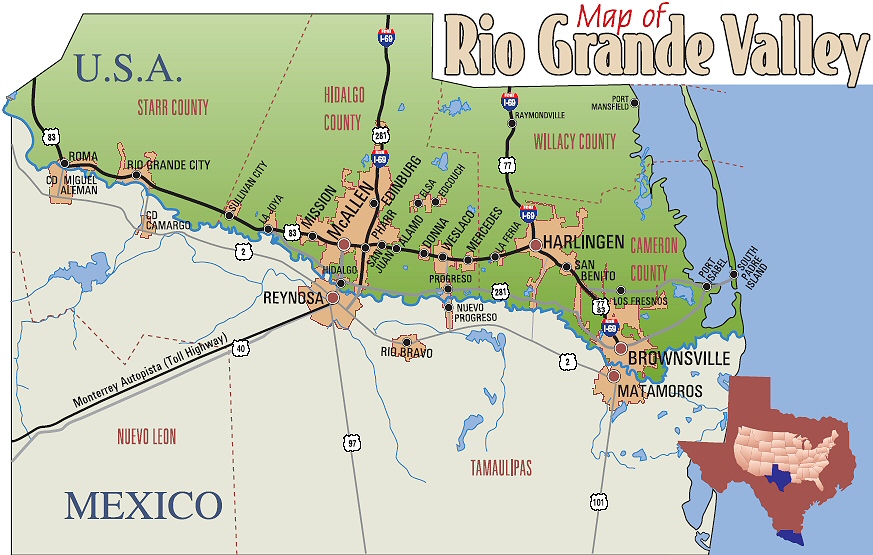
For the three years before we moved to Bridgewater in 1997, Pam and I lived in the Rio Grande Valley of Texas. It is not a valley, and the rio at that point is not grande. The river that rises in the mountains of New Mexico forms the border between arid parts of the former Republic of Texas and Old Mexico, and is rather tired by the time it reaches the delta in which we lived. But it is recognized as "The Valley" throughout Texas, and it is relatively lush compared to the deserts and grasslands that surround it.

Yes, the mascot is a scorpion!
Near the end of our stay there, I taught geography in the Valley, at a campus that is formally known as The University of Texas at Brownsville in Partnership with Texas Southmost College. Some of my students were international students living it home -- they walked over the river for class, just as I sometimes walked over the same river for lunch and shopping. Teaching there was invaluable in preparing me for the teaching I have been doing in Bridgewater ever since.

Prior to the UTB-TSC gig, though, I taught way outside the Valley, at what seems to have been the periphery of the periphery of higher education in Texas,

Texas & M University at Kingsville, Alice Extension. TAMU-K itself had been remade from Texas A &I, following a lawsuit that had failed in courts of law but succeeded in the court of public opinion.

That is to say, a class-action suit had been filed against the state of Texas over the lack of four-year universities in the area south of San Antonio. This area is just a little corner of Texas, of course, but bigger than many of the other 49 states, and home to millions of people whose access to higher education was seriously limited by the absence of the big two -- University of Texas and Texas A & M. The courts did not force the creation of new schools, but the legislature was sufficiently embarrassed to act, and each of the two big state universities created three new campuses, building on existing schools. In Kingsville, this led to a conversion of the two-year Agricultural & Industrial College into a four-year Agricultural & Mechanical University. When I visited campus, "A & I" was still on the water tower. The professor who hired me said that tradition was such that nobody would be brave enough to climb up and paint the new name, for fear of being shot at. He was joking, of course. Sort of.

All of this background is by way of explaining how we came to watch All She Can -- a movie well outside our usual range of interests -- and some of the reasons we found it so satisfying. According to an informative interview with writer-director Amy Wendel, the film was inspired by a 60 Minutes story about military recruiting in the nearby town of San Diego, Texas, where deep patriotism and limited options are equally important sides of the story of service. (My 2010 post on the belated recognition of Felix Longoria explores the legacy of military service in the region in more detail.)

Although the filmmakers come from far outside the region, they bring the viewer very close to the ground because they began the project with extensive listening. The main plotline was inspired by the very first interview with local youth -- like us, Wendel had not really heard of powerlifting as a sport for high-school girls, and was intrigued by this. Casting included a local actress in the main role, and writing avoided the cliched sequence of hardship-to-victory that makes many sports movies hard to take. The protagonist is complex, makes mistakes, and manages to make this story place-specific and universal at the same time.


The reason we found this film so effective is that it really conveys what geographers call "sense of place" -- those characteristics that people use to build identity of and around the places they live. The soundtrack features a "Benavides Born" -- a song that condenses many of these themes in just a few minutes of music. Originally the title of the film itself, the signature song has been produced with a video montage that deepens many of those connections. What is most interesting about the song -- especially as it is represented in the music video -- is that it perfectly balances pride in the place with a strong desire to get out of the place.


It was from the film that we learned of a significant upgrade in the educational landscape of Alice. Texas A&M-Kingsville was reaching out to this part of King Ranch country through a very modest extension program in which I played a very modest part; the arrival of a branch of Coastal Bend (Community) College is surely an improvement for the town, and is part of what makes it a relative metropolis.


From the film it was clear to us that the campus is housed in a former WalMart store. It is part of WalMart's scorched-earth approach to retailing that after its "regular" stores eliminate local competition, its "super" stores eliminate them. From the point of view of WalMart, it does not matter what happens to those abandoned boxes, as long as they do not become retail space. They can sit empty for years, or they can be leased or sold to local governments. One of the most storied examples has been the recent move of the McAllen Public Library (where my favorite librarian was once Head of Reference) into an abandoned WalMart. Coverage in Slate, Huffington Post, New York Times and American Libraries emphasize the creativity of the architecture -- which is indeed impressive -- rather than the overall strategy of wage suppression of which this story is a part.

Lagniappe

Just as I was finally posting this review, I found this brief audio story about the exhumation of human remains in Falfurrias, through which I drove each week that I taught in Alice. A secondary border crossing was a small annoyance for me, but for many making the journey north, it is one obstacle too many, and some do not survive their efforts to detour around it. A recent graduate in forensic science applied her skills to the removal of bodies buried anonymously in the scrublands, and shares what she learned from the experience.

Wednesday, January 02, 2013

Alt-dot-musica

See Alt.Latino main page to search stories or to listen live
I have been interested in the music of Latin America for more than a decade, and have incorporated some of the rich variety of the region's music in my teaching and outreach.


My very first exposure to the musical traditions of Brazil and Cuba was even earlier, through the production work of David Byrne at Luaka Bop. My interest really grew through  friends and colleagues who shared their favorite music during my visits to Latin America, Once I started listening to these songs (mainly on CDs), I started to make connections. I must confess, though, that my seven years in the border area were wasted, musically speaking, as I did not even attempt to understand Tejano or Conjunto music until I moved north.

I continue to appreciate the incredible variety of music from Latin America, but must admit that my pursuit of coffee, tea, and now chocolate have distracted me a bit in recent years, so that my Musica web pages have experienced a bit of neglect.

This is where Alt.Latino comes in. I first started hearing about it a few months ago, around the edges of my habitual NPR listening and reading. When I decided to fluff up my pages this week, I decided to have a look around, and I was richly rewarded. Hosts Jasmine Garsd and Felix Contreras have put a name to a pattern I had started to notice but could not articulate: From them I have realized that Latin Alternative is a way to describe many of the musics to which I was being drawn.

Like the music, the program seems to be evolving, from its chance beginnings near the NPR vending machines, into a major force with several different manifestations, including hour-long produced shows, blog posts, various social-media and spots on other NPR programs. It also has a continues internet radio stream. As I browsed through the weekly shows, the first I found was an interview with Manu Chao, whose Clandestino CD each member of my family has memorized to varying degrees.

The wide-ranging interview is a genuine treat, mixing insights about politics and art with samples of his work and the work of others whose music he enjoys. It was my first encounter with the song "Me gustas tu," a silly and catchy tune that is as close to pop as I've heard him. As with many of his songs, the "VIDEO OFFICIAL" version is a visual feast, and the best way to enjoy the music. This track is from the Proxima Estacion: Esperanza (Next Station: Hope) CD. On my first perusal, I noticed many songs that sample his own earlier works.


On YouTube, it was not difficult to find an unofficial version of the song with printed lyrics (albeit with a few typos). For those learning a language, such videos are a real blessing.


More about my own thoughts on Manu Chao and some similar artists is on my Musica - Eclectic page.

Muertos


¡Que Miedo! was the Halloween 2012 episode of the program, which explored the intersection of folklore and contemporary Latin music, including sexy horror that predates Twilight. The discussion includes, of course, both the chupacabras and various versions of the La Llorona tale. The Chavela Vargas version they play is used in a popular Frida Kahlo tribute video; my 2010 La Llorona post includes two other variations -- a spoken-word reading and television advertisement.

(In addition to the musica web page, this blog includes a number of posts with a musica label. I am available for presentations on this topic at high school and college campuses, as I am for presentations on the geography of coffee, tea, or chocolate. )

Thursday, June 21, 2012

No se olviden Mexico


No se olviden Mexico, Mexico, mi Mexico
Mi Mexico

This is the plaintive cry as the music fades in Carlos Santana's Africa Bamba, his celebration of the rich diversity of the Americas: "Do not forget Mexico, my Mexico."
Mexico is the first place I visited in Latin America, and I was a close neighbor throughout most of the 1990s, first in southern Arizona and then in WAY southern Texas. I have since spent more time in Nicaragua and Brazil and elsewhere, but Mexico is never far from my mind, particularly over the past week or two. It has actually been impossible to forget, as the country has been in the news in so many important ways over the past week or two.
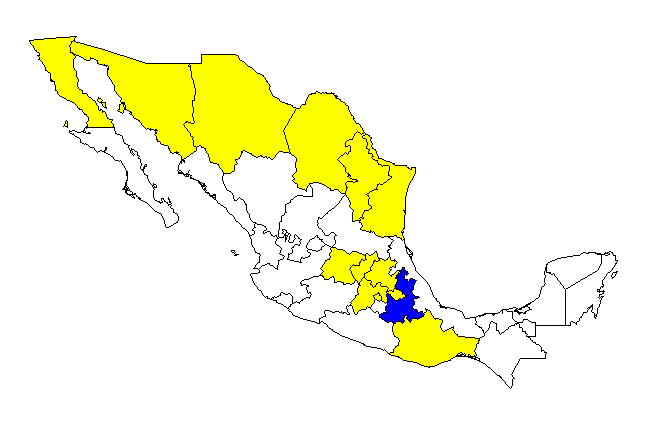
The states of Mexico I have visited, beginning with a quick
trip to Ensenada circa 1985.
This post is an attempt to bring together several disparate threads relating to a country whose fate -- whether any of us wishes this or not -- is interwoven with that of the United States. The far right in the United States has managed to paint Mexico as the root of financial devastation that began much farther north, while Mexico itself continues to derive both much of its pain and much of its gain from proximity to a northern neighbor that views it mostly in terms of well-worn stereotypes.

The Summit
When world leaders met in 1944 to write the rules for the world economy, they gathered at the Mt. Washington Hotel in New Hampshire in a conference known as Bretton Woods. (Readers can decide for themselves whether this intercourse was more or less transgressive than that of Rob Lowe and Jodie Foster in the other Hotel New Hampshire). All 44 of the Allied countries that had opposed Germany, Japan, and Italy in World War II agreed at that point to create the World Bank, the International Monetary Fund, and the General Agreement on Tariffs and Trade (GATT, which would eventually spawn the World Trade Organization, WTO).
Both Mexico and Brazil were represented in that initial meeting, but in subsequent decades such important matters were discussed in much narrower circles, often excluding those most affected. Both G7 and G8 (Group of 7 or 8, depending on whether the Russians were invited) drove the proverbial bus for many years, until they landed it in a colossal ditch of bank deregulation in 2008. At that time, the fig leaf of eight-country consensus was inadequate to the exposure, so a broader group of leaders was called together -- the G20 included such emerging economies as Mexico, Brazil, India, and China in a meeting that is sometimes called Bretton Woods II. Depending on one's point of view, the summit averted financial catastrophe or perpetuated an imbalance of power in favor of banks, or perhaps both.
Leaders of the G20 met in Mexico last week, with very low expectations and the predictable meager achievement of minimizing the damage thought likely to emanate from Europe. The kinds of crises that once threatened collapse only from the periphery now routinely infect the core, but no challenge to economic orthodoxies are yet forthcoming. Even Mexico, which was the host country and nominal "president" of the meeting, made only the feeblest of entreaties for IMF support of debt relief. The outcome was a predictably vague commitment to fostering growth, with no clear vision of how to do this or even whether it is desirable.


Clarification: Although 2008 marked a dramatic expansion in the importance of the G20, it had in fact first met in 1999. Geographer Matt Rosenberg describes the group's evolution in more detail on his What is the G-20? He mentions several other economic groupings and lists the five countries invited to this year's meeting by Mexico.


Chiapas and Greenwash
The latest G20 meeting took place almost simultaneously with a United Nations summit in Rio de Janeiro (described in more detail in a Brazil post I completed earlier today). Again, expectations were low, as leaders focus on short-term crises in the world's financial apparatus, to the exclusion of far deeper crises in the biosphere itself. And those expectations were met, with countries trumpeting environmental euphemisms rather than grappling with environmental realities.Writing for Triple Crisis, Timothy Wise charges that many of the food-security programs trumpeted by Mexico's at G20 are far less than real.
A further coincidence is that this all takes place just as two young friends have headed to Chiapas for a documentary film project that delves into the very real costs of empty environmental promises. Their blog CO2lonialism and the Green Economy examines the sometimes false promise of carbon offsets. Even when working honestly, these arrangements assuage first-world guilt by protecting forests to absorb carbon equivalent to that emitted by our own profligacy. But in Chiapas --- home both to Mexico's most marginalized indigenous communities and its most abundant biodiversity -- even that promise is not met.
Incidentally, as I discuss these and other matters with students in my Geography of Latin America course, I offer them two relevant coffees from Deans Beans, a genuine fair-trade company here in Massachusetts. One is Dean's NOCO2 from Peru, a delicious coffee whose carbon offsets are fully reliable; the other is Birdwatcher's Blend, which comes from certified bird habitat in Chiapas and Guatemala.

Drug War
We recently marked the 40th anniversary of President Nixon's declaration of war on drugs, a misnamed and misguided effort that has been as devastating abroad as it has been ineffective at home. I will not rehearse the many geographic implications that I have previously covered in this space, but again, a few stories are both relevant and quite recent.
It is in this context that Caravana por La Paz a USA (Caravan for Peace to the USA) is being organized, to begin later this summer. Activists from both countries will cross the United States from California to Washington, DC to bring attention to the brutal price ordinary Mexicans continue to pay for living adjacent to a country with such peculiar approaches to guns and drugs. It is difficult to know what to make of the current Fast and Furious scandal -- a weapons sting operation gone horribly wrong -- but it highlights the role of U.S.-origin weapons in the horrendous violence sweeping some of my favorite old haunts in northern Mexico. The degree of violence is brought home by the fact that the McAllen Monitor -- a paper to which I once subscribed -- recently carried a recommendation that diners tip their tables as shields in an event that a restaurant meal is interrupted by a tossed grenade. Yes, GRENADES are now part of the complex landscape of violence where the most heinous crimes are committed by those who were formerly the most elite police units.

Immigration
Regarding immigration, Mitt Romney
is running for Hypocrite-in-Chief
 
Immigration is not, of course, synonymous with Mexico, as thousands of people enter the country legally and illegally -- or overstay legal entries -- every year, from many parts of the world. In Boston, undocumented Irish are part of the social fabric. But no land border in the world joins two countries with a wider wealth disparity than that between the United States and Mexico, so it is natural that labor would be traded across it. As I explained in The Border: Human Sieve, much of the debate about immigration centers around a desire to bring the labor without the humans.
Meanwhile, contrary to the wailing of nativists on the racist right,
President Obama has served as Deporter-in-Chief, sending more
undocumented people out of the country than any other president.
The question of migration has been very much in the news lately, largely because President Obama has responded to courageous and well-organized young Americans who have been living in limbo because they moved to the United States as children. Unable to become fully established in the country they consider home but also lacking roots in their countries of birth, many have risked deportation by speaking out for a compromise. Last week, the president issued a ruling that will allow young adults brought here as children to avoid deportation and gain the ability to work and study legally, though the benefits of the ruling are not as robust as many assume.
One very encouraging bit of news amid all the election-year noise on this subject is that people in the United States -- outside of the more demented segments of talk radio and Fox "News" -- are starting to put the question of immigration in a more realistic perspective than had been the case. Deportations are up, illegal crossings are down, and most people realize by now that the real threats to employment do not come from poor immigrants. As reported on Market Place, immigration is not a top priority for most Democratic or Republican voters, and those who do express an opinion generally support the accommodations the president has made for U.S.-raised migrants.
A related story that appeared in the New York Times represents a very large group of children who will not be helped at all by this week's decision: it describes the difficult adjustment faced by American-born children who join deported parents.

Walmart
And as if Mexico were not putting up with enough, the invasive retail species known as Walmart continues to encroach. Just this morning, I learned that Walmart is slowing its expansion in Mexico, meaning that it is still expanding plenty. Over 6 percent of the world's largest retailer's revenues already come from Mexico, but more than 300 new stores will soon be added. Outside sources link slightly reduced pace of expansion to past bribery scandals, but Walmart simply asserts a desire to ensure proper business practices in its real estate transactions. 
Walmart infection poised to spread.
Map: William & Mary
AMST 370 students
In other words, the expansion is expected to be carried out legally, though the impacts will be criminal in a very real sense. Employment will be created, of course, but as in the United States, for every "real" Walmart job there are 100 menial jobs in which people will gain only slightly, and for each one of those, there will be an untold number of job losses in existing retail and manufacturing firms. As if Mexico did not have enough problems, the Walton family will be feeding on Mexico like a mosquito for years to come.

Election
Last but certainly not least, Mexico will continue to be in the news as a presidential election is taking place there on July 1. After decades of essentially meaningless elections, the past few cycles have been very interesting, as power shifts among three major parties. NPR's Morning Edition reports that Mexican youth are expected to figure prominently in the upcoming decision.

The protester shown here objects to a possible return to rule by the PRI -- the Institutional Revolutionary Party, and oddly-named coalition that ruled Mexico longer than any other political party in modern history -- over seventy years -- before its power was eroded from both the left (PRD) and the right (PAN).

Wednesday, November 30, 2011

Gaita in the Neighborhood


One reason I teach is so that I can keep learning! Many thanks to my student Rosie for introducing me to yet another genre of Latin American music with which I was not yet familiar. Like Rosie, I am not yet a fan of the La Gaita sound per se, which we both find a bit tinny and repetitive. Music is important in its own right, however, and is also a gateway to other aspects of cultural geography. This particular music video offers an intimate look at neighborhood life on one street corner in Maracaibo, in the far northwest of Venezuela. The on-screen comments in English help to illuminate the role of the music in the community, and help to make some of the inside jokes accessible to outside viewers.

EZILON map
For more information about La Gaita, see:
Carruyo, Light. 2005. "La gaita zuliana: Music and politics of protest in Venezuela." Latin American Perspectives 32.3: 98-111. 

Saturday, December 18, 2010

University of Tish, Passim Campus

Toward the end of the time we lived in the Rio Grande Valley of Texas in the mid-90s, we learned of a South Texas musician named Tish Hinojosa. (Actually, she was from San Antonio, about 250 miles to the north of us, where the core of Texas meets South Texas.) We learned that she had just played at a local festival in Harlingen, and that we really should have been there.

Over the years since then, we bought several of her CDs, and nearly wore out Cada Niño/Every Child when our kid (formerly known as Paloma) was young. We love Taos to Tennessee, which really exemplifies Hinojosa's position at the exact midpoint between the country music I grew up with and the Latino music I most enjoy as an adult.

I knew that we would love to see Tish some day. I did not know that my wonderful wife -- and fellow Latin Americanist -- Pam was checking online periodically for the chance to make it happen. A couple of months ago, she announced that she had found a listing for Tish at the Club Passim in Cambridge. This is a coffee house that has brought great performers to small audiences for a half-century, like our own Off the Common but a bit more famous! I was delighted that we would have a chance finally to see Tish and learn more about her work and life.

When we arrived at the club this past Tuesday, we saw just how small the tables at Club Passim are, meaning that our second-row seats were practically on stage with Tish and the amazing Marvin Dykhuis. What Tish is to poetry and voice, Marvin is to guitar and mandolin. He is a big Texan who can make a tiny mandolin sing, and he was the perfect accompaniment to the fluid vocals of Tish Hinojosa.

I remember that at the David Byrne show in Boston a couple of years ago, there was some tension between the audience and the artist, as he wanted to play his newest material and we were all there for our old favorites. A friend tells me Van Morrison goes even further, almost never playing crowd-pleasing oldies. I was wondering how this dynamic would play out with Tish, as she -- like Byrne -- plays in a lot of different genres to begin with, and has a (relatively) new CD that was unfamiliar to me.

I should not have worried. Tish played old favorites from across the spectrum of Spanish ballads, Tex-Mex conjunto, and country-western. She did play quite a bit from her newest album, which immediately became a favorite. The song "Mi Pueblo" (My Town) from the 2008 Our Little Planet hit a strong emotional chord and made me think, "I could teach a whole course with this music." As I told Tish during intermission, I use a lot of Latin American music in my teaching, including hers. "Mi Pueblo" will be perfect for my geography courses, as it beautifully describes the longing for familiar landscapes that is experienced by people who migrate far from home in order to work. It is a theme that recurs several times on this magnificent collection, which reminds us both of the distinctiveness of places and the fact that the whole world turns under the same sun and moon.

On the ride home, listening to our new favorite CD, Pam said that this concert would end up costing us a lot of money, because now we have to buy all the rest of Tish's work. It will be money well spent, though; we are happy to support an artist with such grace and insight!

Lagniappe

See my 2017 Donde Voy post for more about the beautiful and important music Tish Hinojosa continues to make.

Monday, December 06, 2010

Tijuana Rebirth


My only visit to Tijuana -- so far -- was 25 years ago. It was brief, but not as brief as we had hoped. My buddy Mike had visited the coastal town of Ensenada a couple years earlier, and we decided to take a side trip there as part of our 2-week, 8,500-mile tour of the U.S. in his old VW. We drove south on the toll road and found a campground on the beach. He was starting to notice a bad clutch cable, so we bought one while we were there, planning to replace it on our return. We had only a couple of stops to make, so it would be easy. The bad news at the time -- but good news in the long run -- is that a construction detour forced us into the hillsides around Tijuana, where we saw the informal, self-built homes made of car parts and then took us through the city center. The clutch cable eventually broke, causing Mike to roll through a stop sign or two. It was this way that we had the chance to learn about the "mordida" or "bite" system, by which traffic police are paid in small bribes. An extra hour or two, and we were wiser, no worse for wear, and only 7,000 pesos ($20 at the time) lighter.

Since then, all I know of Tijuana has come from reading (especially Jack Kerouac's essential On the Road), music (especially Manu Chao's Welcome to Tijuana), and by inference from the other border towns I've come to know much better, such as Reynosa, Matamoros, Ciudad Juarez, and Nogales. This morning, NPR's Jason Beaubien (what a great name!) reported on Calle Sexta, a Tijuana neighborhood trying to remake itself as a trendy destination. In the process, I learned about an entire genre of Latin music that had escaped my notice: Nortec, which is a Tijuana-specific fusion of Tejano/banda/cumbia/norteño music (itself a fusion) and European techno. I downloaded The Tijuana Sessions: Vol. 1 by the Nortec Collective, and found it quite an enjoyable anthology, and more accessible (for a fan of Tejano) than some of the later collections.

I am especially fond of Fussible's "I Like Tijuana" and the video version by 25th Frame. As with Manu Chao's classic (one version of which has had over six million YouTube views), this work is both a send-up of Tijuana stereotypes (which go all the way back to Kerouac and before), an embrace of its seamy side, and a celebration of daily life in this vibrant, if lately troubled, city.

Lagniappe

Sometimes this has been done for illicit purposes, but human catapult and cannonball crossings have been done as performance art, as a commentary on the border itself.

Wednesday, November 24, 2010

Peruvian Cocaine

I play a lot of music in my classes, particularly in my Geography of Latin America course, and I often learn of interesting songs from my students as a result. Thanks to my student Heather for sharing this song from  Immortal Beloved, in which a variety of characters represent differing perspectives on the problem of violence related to the drug trade in Peru (see lyrics at A-Z Lyrics). Also see the Time to Debate a Change analysis from the Council on Hemispheric Affairs.

Tuesday, November 09, 2010

Los Tigres

In Murder City, my recent post about the eruption of violence on the US-Mexico border, I mentioned the band Los Tigres del Norte, the best known exponents of the narcocorrido sub-genre. I knew about corridos from prior experience in both Tucson and South Texas, but my introduction to narcocorridos was their song La Reina del Sur, about a trafficante's girlfriend who becomes a big-time dealer in her own right. I remember the day I purchased my CD of this transgressive music, in a Borders store on the border. The well-dressed lady next to me was not pleased to hear me ask for it.

The NPR story on narcocorridos explains how the old border radio phenomenon has been reversed, and how the art form can be just as dangerous as the trade itself. Although the phenomenon is found all along the border, the heart of this musical form is in the Rio Grande Valley, where a German influence in the music can still be heard, and where I lived for three years before coming to Bridgewater. Learn more from my Elijah Wald post.

Tuesday, November 10, 2009

Blog Ideas

coffee (25) GEOG381 (24) GEOG388 (23) GEOG470 (18) climate change (18) GEOG130 (16) geography (16) GEOG332 (13) GEOG431 (12) musica (11) GEOG 332 (9) GEOG 381 (9) Mexico (9) Brazil (8) GEOG286 (8) Texas (8) education (8) migration (8) GEOG298 (7) borderlands (7) GEOG199 (6) GEOG331 (6) Massachusetts (6) US-Mexico (6) deBlij04 (6) immigration (6) GEOG 130 (5) GEOG 286 (5) GEOG287 (5) climate justice (5) cultural geography (5) fair trade (5) food (5) geographic education (5) nicaragua (5) water (5) Arizona (4) GEOG 171 (4) GEOG171 (4) GEOG295 (4) Safina (4) africa (4) deBlij05 (4) land protection (4) music (4) politics (4) Bolivia (3) Boston (3) COVID-19 (3) Detroit (3) Ethiopia (3) Managua (3) Obama (3) border (3) cartography (3) drought (3) libraries (3) pesticides (3) suburban sprawl (3) trade (3) unemployment (3) Alaska (2) Amazon (2) Bridgewater (2) Canada (2) Chiapas (2) China (2) Colonialism (2) EPA (2) EarthView (2) Economy (2) Environment (2) GEOG 199 (2) GEOG 287 (2) GEOG 388 (2) Google Maps (2) Government (2) Hawaii (2) India (2) Lexington (2) Maldives (2) Mozambique (2) NOLA (2) NPR (2) National Monuments (2) National Parks (2) New Orleans (2) Religion (2) Rio Grande (2) Taunton River Wild and Scenic (2) Tex-Mex (2) The View from Lazy Point (2) United States (2) Venezuela (2) anthropocene (2) cape verde (2) censorship (2) central america (2) chocolate (2) corn (2) deBlij07 (2) deforestation (2) demographic transition (2) demography (2) education reform (2) employment (2) environmental geography (2) film (2) forest fire (2) global warming (2) islands (2) landscape ecology (2) librarians (2) maps (2) organic (2) peak oil (2) refugees (2) sense of place (2) soccer (2) sustainability (2) television (2) water rights (2) whales (2) #bbc (1) #nicaragua (1) #sosnicaragua (1) #sosnicaragua #nicaragua (1) 100 Years of Solitude (1) ACROSS Lexington (1) Accents (1) Adam at Home (1) Alice (1) Alt.Latina (1) American Hustle (1) April (1) Association of american Geographers (1) Audubon (1) Aunt Hatch's Lane (1) BBC (1) BSU (1) Baby Boomers (1) Banda Aceh (1) Bay Circuit Trial (1) Bechtel (1) Beleza Tropical (1) Belize (1) Beloit College (1) Ben Linder Cafe (1) Bet The Farm (1) Bhopal (1) Biafra (1) Bikeway (1) Bikini (1) Bill Gates (1) Bill Moyers (1) Boeing 777 (1) Brazilian (1) Brazilianization (1) Bridge (1) British Columbia (1) Brockton (1) Bus Fare (1) Bush (1) Cabo Verde (1) California (1) Cambridge (1) Cape Cod Bay (1) Carl Stafina (1) Catholic (1) Ceuta (1) Chalice (1) Chipko (1) Citgo (1) Climate risks (1) Cochabamba (1) Colombia (1) Common Core (1) Commuter (1) Computers (1) Cuba (1) Cups and Summits (1) Dallas (1) David Byrne (1) Deans Beans (1) Delaware Valley (1) Dunkin Donuts (1) Earth Day (1) Earth View (1) Easton (1) El Salvador (1) Elizabeth Warren (1) Ellicott City (1) Emilia Laime (1) English-only (1) Environmental History (1) Euphrates (1) European Union (1) Evo Morales (1) FIFA (1) FYS (1) Fades Out (1) Farms (1) First-Year Seminar (1) Food Trade (1) Frederick Kaufman (1) French press (1) Fresh Pond Mall (1) GEOG 431 (1) GEOG 441 (1) GEOG213 (1) GEOG490 (1) Gabriel García Márquez (1) Garden of Gethsemane (1) Gas wells (1) Gateway Cities (1) General Motors (1) Gini Coefficient (1) Girl in the Cafe (1) Google (1) Gordon Hempton (1) Gravina Island Bridge (1) Great Migration (1) Great Molasses Flood (1) Guy Lombardo (1) Haiti (1) Hawks (1) Heart (1) Higher Education (1) History (1) Holyhok Lewisville (1) Homogenous (1) Honors (1) How Food Stopped Being Food (1) Hugo Chavez (1) IMF (1) Iditarod (1) Imperial Valley (1) Income Inequality (1) Indonesia (1) Iraq (1) Irish (1) Japan (1) Junot Diaz (1) Kenya (1) Ketchikan (1) Key West (1) Kindergarden Students (1) King Corn (1) Kiribati (1) Latin America (1) Limbaugh (1) Literature (1) Living On Earth (1) Louisiana (1) Love Canal (1) Luddite (1) M*A*S*H (1) MCAS (1) MacArthur Genius (1) Maersk (1) Malawi (1) Malaysia (1) Malaysian Air Flight 370 (1) Mali (1) Manu Chao (1) Map (1) Marblehead (1) Mary Robinson Foundation (1) Maryland (1) Massachusetts Bay Colony (1) Math (1) Maxguide (1) May (1) Maya (1) Mayan (1) Mayan Gold (1) Mbala (1) McDonald's (1) Melilla (1) Mexicans (1) Michael Pollan (1) Michelle Obama (1) Micronesia (1) Military (1) Military Dictatorship (1) Minuteman Trail (1) Mongolia (1) Monsanto (1) Montana (1) Morocco (1) Mount Auburn Cemetery (1) Muslim (1) NPS (1) Nantucket (1) National Education Regime (1) Native American (1) Native Americans (1) New Bedford (1) New Hampshire (1) New York City (1) New York Times (1) Nigeria (1) No Child Left Behind Act (1) Norquist (1) North Africa (1) Nuts (1) Oakland (1) Oaxaca (1) Occupeligo (1) Occypy (1) Oklahoma (1) Oklahoma City (1) Oppression (1) PARCC (1) Pakistan (1) Pascal's Wager (1) Peanut (1) Pearson Regime (1) Philadelphia (1) Philippines (1) Pink Unicorns (1) Poland (1) Portuguese (1) Protest (1) Public Education (1) Puebla (1) Puritans (1) Quest University (1) Rachel Carson (1) Reading (1) Republican (1) Retro Report (1) Robert Reich (1) Rock Legend (1) Ronald Reagan (1) Rondonia (1) Rosa Parks (1) SEXCoffee (1) Safety (1) Samoza (1) Sandino (1) Sara Vowell (1) Save the Children (1) Scotch (1) Scotland (1) Seinfeld (1) Senegal (1) Sergio Mendes (1) Severin (1) Sharrod (1) Silent Spring (1) Sinatra (1) Slope (1) Smokey the Bear (1) Somalia (1) Sombra (1) Sonora (1) Sonoran desert (1) Sonoran hot dog (1) South America (1) Spain (1) Stairway to Heaven (1) Storm (1) Suare Inch of Silence (1) Sumatra (1) Swamp (1) Tacloban (1) Tanzania (1) The Amazon (1) The Amazon Trail (1) Tigris (1) Tucson (1) Tufts (1) U.S Federal Reserve (1) U.S Government (1) U.S. economy (1) USDA (1) USLE Formula (1) Uganda (1) Unfamiliar Fishes (1) Union Carbide (1) Vacation (1) Vexillology (1) Vietnam (1) ViralNova (1) WNYC Data News (1) Wall Street (1) Walsenburg (1) Walt Disney (1) Walt and El Grupo (1) Ward's Berry Farm (1) West (1) Whaling (1) Wilson (1) Winter Storm Saturn (1) Wisconsin (1) World Bank (1) Xingu (1) YouTube (1) Zombies (1) agriculture (1) antitrust (1) aspen (1) austerity (1) aviation (1) banned books (1) bark beetle (1) bean (1) beavers (1) bicycle (1) bicycling (1) bike sharing (1) binary (1) biodiversity (1) bioneers (1) books (1) boston globe (1) cacao (1) cafe (1) campaign (1) campus (1) cantonville (1) capitals (1) carbon dioxide (1) carbon offsets (1) carioca (1) cash (1) cashews (1) census (1) chemex (1) chemistry (1) chronology (1) churrasco (1) civil rights (1) coffee grounds (1) coffee hell (1) coffee prices (1) coffee quality (1) college (1) compost (1) computerized test (1) congress (1) conservation commission (1) corporations (1) countries (1) cubicle (1) dams (1) deBlij06 (1) deBlij08 (1) death (1) deficit (1) development (1) dictatorship (1) distracted learning (1) distraction (1) drug war (1) dtm (1) earth (1) economic diversification (1) economic geography (1) election (1) embargo (1) energy (1) enhanced greenhouse effect (1) environmentalist (1) ethnomusicology (1) exremism (1) failed states (1) farming (1) financial crisis (1) football (1) forestry (1) forro (1) fracking (1) free market (1) free trade (1) fuel economy (1) garden (1) genocide (1) geography education (1) geography games (1) geography of chocolate (1) geography of food (1) geologic time (1) geotechnology (1) gerrymandering (1) global pizza (1) globe (1) goodall (1) green chemistry (1) ground water (1) guacamole (1) guatemala (1) habitat (1) high-frutcose (1) home values (1) hospitality (1) hourglass (1) housing (1) hydrology (1) illegal aliens (1) income (1) indigenous (1) interfaith (1) journalism (1) kitchen garden (1) labor (1) language (1) libertarianism (1) library (1) linguistics (1) little rock (1) llorona; musica (1) macc (1) maccweb (1) magic realism (1) maple syrup (1) mapping (1) masa no mas (1) massland (1) medical (1) mental maps (1) mi nina (1) microlots (1) microstates (1) mining (1) mltc (1) monopoly (1) municipal government (1) nautical (1) neoclassical economics (1) new england (1) newseum (1) newspapers (1) noise pollution (1) pandas (1) petroleum (1) piracy (1) pirates (1) poison ivy (1) police (1) political geography (1) pollution (1) provincial government (1) proxy variables (1) public diplomacy (1) quesadilla (1) rabbi (1) racism (1) real food cafe (1) regulations (1) remittances (1) resilience (1) resistance (1) respect (1) rigoberta menchu (1) rios montt (1) romance (1) roya (1) runways (1) russia (1) satellites (1) science (1) sea level (1) selva negra (1) sertao (1) sertão (1) sex (1) sex and coffee (1) simple (1) sin (1) smokey (1) solar (1) solar roasting (1) south africa (1) sovereignty (1) species loss (1) sporcle (1) sports (1) state government (1) taxes (1) tea party (1) teaching (1) textile (1) texting (1) tortilla (1) training (1) transect; Mercator (1) travel (1) triple-deckers (1) tsunami (1) urban geography (1) utopia (1) vermont (1) vice (1) video (1) wall (1) water resources (1) water vapor (1) whiskey (1) whisky (1) widget (1) wifi (1) wild fire (1) wildfire (1) wildlife corridor (1) wto (1)