I must confess that I am agnostic regarding the musical merits or demerits of the band Nickelback, but I am smitten with the official video for Trying Not to Love You. This formulaic coffee romance features Jason Alexander (Seinfeld) in two roles, Brooke Burns (Baywatch) in several tight outfits, and plenty of gratuitous latte art. It also introduces the long-overdue concept of coffee snow angels.
Normally, I would insert some geographic observations here, but this is just fun to watch.

Where is it? Why is it there? So what?
~~~
Geographers apply spatial understanding to the real world.
Wednesday, November 14, 2012


Represent
 |
| Cartogram by Gott & Colley |
Thanks to my friend Gerard -- a librarian and geographer -- for sharing this cartogram representing the 2012 presidential election. Each state (plus DC, which should be a state) is shaded according to the disposition of its electors (red for Mitt Romney and blue for Barack Obama). More details, including the average of pre-election polling by state) are provided on the Electoral Scoreboard 2012 page. The cartogram technique uses area to represent data, so that results are visually proportional in ways that might be obscured in other kinds of mapping. In this case, for example, many of the states won by Obama have relatively high population density, so that a glance at a conventional map -- which represents each state by its surface area -- makes it appear as if Romney won in a greater portion of the country. By area, he did, but by population, he did not.
Other maps have challenged the red state / blue state notion itself. Robert Vanderbei's Purple America is the best example. The 2012 result map shown below is distinct from more common electoral maps in two ways. First, it shows results by county rather than state. A state that votes for one candidate almost always has some areas in which the other candidate prevailed. Second, each county is shaded according to the proportion of the vote going to each candidate. The differences in voting are substantial, but in most places the vote is much closer to 50/50 than one would guess from watching television.
 |
| Purple America 2012 from Robert Vanderbei |
The blogger Skeptical Avenger has shared a map by Chris Howard that goes a step further, using hues as in the map above, but adjusting the saturation according to population density. The result reinforces the notion that urban areas tend to be more left-leaning, thous some swaths of rural blueness also appear in middle tones, notably in Vermont and (a surprise to me) in many Piedmont counties in the South. The result is impressive, though I would quibble with the blogger's emphasis on the word accuracy, since every map is a set of choices that are not always directly comparable.

I was pleasantly surprised that this election was decided in relatively short order, compared to the year 2000 debacle. I had boldly predicted that we would not know the winner until Thanksgiving, and I am very happy to have been mistaken. As it was, the gap between the two leading candidates was big enough that Governor Romney and his allies conceded in the wee hours of the next morning. They had held out hope and did not concede until a couple hours after most non-partisans were convinced of the outcome. This is because they had been believing the echo chamber of their own pre-election pollilng. Still dawn did not see phalanxes of lawyers descending on election offices, so faith in our elections was -- at least for now -- restored.

We Could Learn A Lot From Brazil
I could not help, however, thinking about the comparison to Brazil. I have had Brazilian guests with me on voting day here in Bridgewater, and I have been in Brazil on an election day. The differences are dramatic and quite instructive for the United States. . First of all, Brazil has one Sunday for national elections (Congress and the president) and every four years. Municipal elections are also held every four years in alternation, so that a national election day is held every two years. The simplicity of this scheduling compares favorably with the ease with which people in the United States can become confused about the timing of local elections.

Voting in Brazil is incredibly reliable, with machines audited in real time on election day. The measures to ensure the validity of results is remarkable. Voting in Brazil is also mandatory, generating a fair bit of travel, often to one's home of origin. Some claim that the elections are even a bit sexy, as some areas have become attractive for celebrity voting.
When I was in Brazil for an election, a friend took me from Sao Paulo (where he was living) to Minas Gerais (where he was from), so that he could vote. (And so that I could enjoy his family's coffee farm.). There his sister joined us, though she had been working in California!
Brazilians take pride in their elections, and I witnessed the fact that results were available online -- even for minor local races -- almost immediately. In the United States, by contrast, even during this relatively undramatic year, national results were quite slow in some states, with local elections in Arizona still being disputed a week after the polls closed.
Wednesday, October 31, 2012
Hurricane Lance?
 |
| Big Yellow Taxi: Notice the sheen of oil on the flood waters Charles Sykes, AP/NYT |
This week, one of the most expensive storms ever to strike the United States has ravaged New Jersey and New York City a week before a presidential election that will decide whether the next four years will bring relative inaction or absolute inaction on climate change. (Sadly, our range of choices is not very wide, excepting Jill Stein.)
In much of the world -- even in some circles in the United States -- people who have actual planning responsibilities recognize that they can no longer afford to pretend that the atmosphere is not changing in problematic ways. I am working in a small way with the tea industry, for example, as tea scientists and policy makers try to discern the best way to advise farmers whose plants should remain productive over a period of decades. Closer to home, state governors have long been ahead of their more partisan counterparts at the federal level. Neither insurance companies nor the investors who set their stock prices can afford to deny the obvious, as has already been made clear by Hurricane Sandy.
 |
| This image is not genuine. I should have checked Snopes, which refutes a lot of the images currently circulating. |

This morning, a BBC announcer openly questioned the long-term viability of New York City as a human settlement, and although that reaction might seem a bit premature, it is certainly the case that large population centers near sea level (which is where most of the world's large population centers are) will are now subject to increasingly frequent and severe threats.
Bill McKibben and the 350.org movement have been using a "connect the dots" metaphor for the past couple of years, encouraging people to draw the most plausible -- and useful -- conclusions they can from a rapidly growing body of evidence.
Hurricane Sandy -- and the attendant blizzards, storm surges, power outages, and deaths -- have proven to be such a large DOT that it is actually bringing discussions of climate change back into political discourse (where it rightly belongs). The policy questions that are emerging fall into two categories. The New York Times, for example, has cited the need for a strong federal role in disaster response. Governors and mayors -- most notably Gov. Christie of New Jersey seem grateful that FEMA has adequate funding and a director with actual qualifications.
At this point, some readers might be wondering why the title of this post suggests a renaming of the hurricane. The idea is inspired by a collection of excerpts relating the super storm to climate change, which appeared during the storm on Treehugger. I recommend reading it for all of the interesting questions and analogies it raises, but the most intriguing is this:
Like a baseball player on steroids, our climate system is breaking records at an unnatural pace. And like a baseball player on steroids, it’s the wrong question to ask whether a given home run is “caused” by steroids.In light of recent attention to bicyclist Lance Armstrong, this is particularly apt. Just as the distinction between his individual performance and the enhancement of that performance cannot be clearly made, the contribution of climate change to this week's mayhem cannot be calculated in detail. The timing of the storm probably contributed as much to the catastrophic coastal flooding as did sea-level rise, but the fact is that both contributed.
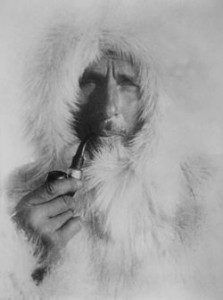
In New Frontiers, Wegener biographer David Lawrence gives an eloquent -- and alarming -- description of America as a nation that has always been conflicted about science. We gladly accept the productive innovations that arise from science, but are too quick to dismiss scholarship that conflicts with our profits or ideologies. Quoting Isaac Asimov, Lawrence calls out the now widespread notion that "my ignorance is just as good as your knowledge."
Last-minute addition: Today the radio program Fresh Air included a very informative interview with Radley Horton, a scientist who serves on New York City's climate-change panel. He does not claim that climate change "caused" the storm, but he does talk about some ways that the general trend and the specific event are related. Later in the day, All Things Considered aired an equally important interview with Andrew Hoerling, who explains that climate change does not seem to be changing the frequency, intensity, or track of hurricanes, though it is correlated with many other kinds of extreme weather. Both interviews bear careful listening, because it is easy to extrapolate too far from either set of statements.
Tuesday, October 23, 2012
Frosty Denial
As I mentioned in my Hot or Not post this summer, neither major political party in the United States advocates a serious response to climate change, even as the urgency of the problem becomes increasingly obvious. Quite simply, substantial doubt about climate change exists only in the United States, while most of the rest of the world (aside from China) has moved on to trying either to slow it down, to adapt to it, or both.
Climate of Doubt is new Frontline documentary that describes how public opinion in the United States has been manipulated to support inaction in the face of mounting evidence. Not surprisingly, the documentary has already drawn vociferous objections in online forums from those whose delusions it describes.
In the face of mounting evidence that humans have seriously altered the climate, all manner of strange theories are angrily espoused, either denying that the change is occurring or blaming the change on natural factors, or both.
The statistical evidence for human-induced climate change was -- until recently -- somewhat subtle, and the denial theories focus on the aspects of the evidence that are most complicated. The physics involved are quite simple, however, and I have never seen the basic physical processes explained away.
:How simple is the problem? Have a look at Frosty.
What material does the magician employ as he pursues his dastardly scheme to melt the snowman? Glass.
Just like the glass on my south-facing porch, greenhouse glass is nearly transparent to visible light, but somewhat opaque to infrared (infra-red) energy. Most of what is emitted by the sun is visible; most of what is emitted by the earth (and objects at earth-like temperatures) is infrared.
Because of gases such as carbon dioxide, methane, and water vapor, the earth's atmosphere behaves in a similar fashion. Most incoming solar radiation (visible or shortwave) gets in, but some of the outgoing terrestrial radiation (infrared or longwave) gets trapped. This greenhouse effect occurs without humans, and we should be grateful for it!
What humans began to do about two hundred years ago, though, is to increase the concentrations of greenhouse gases in the atmosphere by taking the elements out of long-term storage and putting them in short-term storage -- for example converting coal that had accumulated over millions of years into gases that were released in dozens of years.
The effect is like thickening the glass on a greenhouse, or adding a blanket to a bed. It does not create heat, but it increases temperature in a specific location -- inside the greenhouse, under the covers, or in the case of the planet as a whole, within the troposphere. Those who decide that they do not "believe" in climate change are not able to explain this away, just as no other explanation can be offered for Frosty's puddleness.

For more information and resources, see my climate change web site, or see all climate change articles on this blog.
Climate of Doubt is new Frontline documentary that describes how public opinion in the United States has been manipulated to support inaction in the face of mounting evidence. Not surprisingly, the documentary has already drawn vociferous objections in online forums from those whose delusions it describes.
In the face of mounting evidence that humans have seriously altered the climate, all manner of strange theories are angrily espoused, either denying that the change is occurring or blaming the change on natural factors, or both.
The statistical evidence for human-induced climate change was -- until recently -- somewhat subtle, and the denial theories focus on the aspects of the evidence that are most complicated. The physics involved are quite simple, however, and I have never seen the basic physical processes explained away.
:How simple is the problem? Have a look at Frosty.
 |
| Thanks to The Haunted Closet for the Frosty screen captures. |
Just like the glass on my south-facing porch, greenhouse glass is nearly transparent to visible light, but somewhat opaque to infrared (infra-red) energy. Most of what is emitted by the sun is visible; most of what is emitted by the earth (and objects at earth-like temperatures) is infrared.
Because of gases such as carbon dioxide, methane, and water vapor, the earth's atmosphere behaves in a similar fashion. Most incoming solar radiation (visible or shortwave) gets in, but some of the outgoing terrestrial radiation (infrared or longwave) gets trapped. This greenhouse effect occurs without humans, and we should be grateful for it!
What humans began to do about two hundred years ago, though, is to increase the concentrations of greenhouse gases in the atmosphere by taking the elements out of long-term storage and putting them in short-term storage -- for example converting coal that had accumulated over millions of years into gases that were released in dozens of years.
The effect is like thickening the glass on a greenhouse, or adding a blanket to a bed. It does not create heat, but it increases temperature in a specific location -- inside the greenhouse, under the covers, or in the case of the planet as a whole, within the troposphere. Those who decide that they do not "believe" in climate change are not able to explain this away, just as no other explanation can be offered for Frosty's puddleness.

For more information and resources, see my climate change web site, or see all climate change articles on this blog.
Sunday, October 07, 2012
Hawaiian Beauty
This morning my friends at Mirasol's Café posted this landmark video by Israel Kamakawiwo'ole, a reminder to slow down and enjoy some beauty -- of the human spirit and the natural world -- on this beautiful morning. We first learned of Iz a couple of years ago, and included a link to a nice interview with him on our Celebrating the States project. So even if you are not having Hawaiian coffee this morning, you can have a beautiful slice of Hawaii with your coffee.
Monday, October 01, 2012
Elite Coffee Limits

As with foods, however, the appreciation of good coffee also has a lot to do with wanting a better life for farmers and a better relationship with the land. If coffee tastes terrible, it is probably grown and traded under conditions that were not good for soil, water, or farmers. Conversely, if the coffee is very good, the chances are improved that the farmer and the land have been treated fairly.
For a variety of reasons that I discuss in some detail in my courses (and elsewhere on this blog), the free market does not always (or even often) treat labor and land fairly. For that reason, social and environmental certifications have emerged that create "fair" markets that can often improve the treatment of both. These have empowered us to act as consumers where we have failed as citizens. That is, where the political process has not succeeded in protecting human rights and the environment, we can "vote with our wallets" to affect change far from home.
The limitations of this approach are three-fold: first, those with an interest in justice have far fewer dollars to spend than those who either do not care or those who have an active interest in injustice. Second, and related to the first, the certifications themselves are susceptible to being "captured" by those who are thriving in the free market. Witness recent changes in Fair Trade certification brought about by Starbucks and other heavyweights.
Third -- and the impetus for this post -- certification programs help commodity producers only by taking them out of commodity markets. This is helpful for those producers of coffee, tea, cocoa, and the like who are in a position to improve their quality and therefore their livelihoods, but it does nothing to change the lives of millions for whom these products will always be commodities. And it does even less for the people and places responsible for all of the goods that will almost certainly remain commodities -- corn, wheat, copper, and the like.
I have seen first-hand the ways in which attention to quality has helped farm families and the land, so I remain committed to good coffee and the good it can do. But I am also convinced by the argument of blogger @nickcho, who argues that an extreme focus on the pinnacles of coffee quality can turn coffee advocates into coffee snobs, members of the One Percent (or, really, the Point Zero One Percent), for whom boutique coffee can become an end, rather than a means.
Where does all this lead us? Coffee paralysis? I do not think so. In the short run, we should get to know as much as we can about our roasters. What have they had to say about changes in fair trade? What are they actually doing in the field?
In the long run, however, we need to take more responsibility as citizens than we do as consumers. We need to push politicians -- regardless of party -- to prioritize human rights and the environment when they negotiate trade agreements and other areas of domestic and international law and diplomacy.
Tuesday, September 18, 2012
Tea Time
At this week's Intersessional Meeting of the FAO Intergovernmental Group on Tea in Washington, the hotel provides hot water and cups, and the "captains of tea" from all over the tea-growing world bring samples.

I had the great privilege of joining this two-day meeting as part of my sabbatical, during which I am working on a two-volume reference book entitled Geography of Coffee & Tea for ABC-CLIO, publishers. I have a lot to learn about the geography of coffee and even more to learn about the geography of tea.

Having no diplomatic credentials, I was very grateful to be admitted to the meeting as an observer, and gratified to be included in one of the Working Group on Climate Change, whose official members are shown above at our (covered) poolside meeting. I was able to participate as a geographer with this group of top tea researchers from Sri Lanka, India, and Kenya (shown left to right).
 We developed a report (based on our chair's discussion paper) that will guide the FAO-IGG on tea as it prepares to help tea growers around the world adapt to climate change. Building on the PRECIS regional climate model from the British Hadley Centre. Climate change and tea production are spatially quite variable, and climate varies temporally as well. Because a given cultivar of tea remains in place for 40 years or more, climate adaptation means mapping the best tea cultivars for future conditions. We have taken a small step toward using GIS to provide decision support for farmers adapting to change.

As I was discussing this, Sri Lanka's trade minister invited me to a tea seminar and tasting later in the week, to hosted by the only ambassador at our meeting, the Hon. Jaliya Wickramasuriya. The event was both informative and enjoyable.
We learned about the trade in Ceylon tea, the care that is taken with protecting its reputation, and its importance to the Sri Lankan economy. We also learned about Walter's Bay, a U.S. company that maintains as much of the tea commodity chain as possible inside of Sri Lanka.This is a cost-effective way to promote social sustainability in tea processing.
At the end, we were treated to a tasting that included all of the Sri Lanka's regional appellations.
2018 Updates: I eventually had to abandon the encyclopedia project -- a semester off from teaching was not nearly enough time to complete it. But the experience did expand my beverage horizons and let to a new colloquium on tea and climate change.
The group I met with in D.C. continued its work, and though it took a different shape than originally envisioned, it has led to a comprehensive report on climate change in the tea industry, which includes thoughtful ideas on both cause and effect.


I had the great privilege of joining this two-day meeting as part of my sabbatical, during which I am working on a two-volume reference book entitled Geography of Coffee & Tea for ABC-CLIO, publishers. I have a lot to learn about the geography of coffee and even more to learn about the geography of tea.

Having no diplomatic credentials, I was very grateful to be admitted to the meeting as an observer, and gratified to be included in one of the Working Group on Climate Change, whose official members are shown above at our (covered) poolside meeting. I was able to participate as a geographer with this group of top tea researchers from Sri Lanka, India, and Kenya (shown left to right).

I had been doing most of my recent writing on the teas of Sri Lanka, so I was delighted to meet quite a few Sri Lankans, and to ask directly about the uses of :"Ceylon" and "Sri Lanka." The colonial name (Ceylon) of the country had so much global recognition that it is still used to refer to the tea, even though the country itself has reverted to its pre-colonial name (Sri Lanka).
 |
| Map & legend: Almar Teas |
As I was discussing this, Sri Lanka's trade minister invited me to a tea seminar and tasting later in the week, to hosted by the only ambassador at our meeting, the Hon. Jaliya Wickramasuriya. The event was both informative and enjoyable.
We learned about the trade in Ceylon tea, the care that is taken with protecting its reputation, and its importance to the Sri Lankan economy. We also learned about Walter's Bay, a U.S. company that maintains as much of the tea commodity chain as possible inside of Sri Lanka.This is a cost-effective way to promote social sustainability in tea processing.
At the end, we were treated to a tasting that included all of the Sri Lanka's regional appellations.
2018 Updates: I eventually had to abandon the encyclopedia project -- a semester off from teaching was not nearly enough time to complete it. But the experience did expand my beverage horizons and let to a new colloquium on tea and climate change.
The group I met with in D.C. continued its work, and though it took a different shape than originally envisioned, it has led to a comprehensive report on climate change in the tea industry, which includes thoughtful ideas on both cause and effect.

Tuesday, September 11, 2012
The Road (?) to Belmopan
Always looking ahead to the next adventure when I should be finishing the current one, I have started looking at maps that will help us to plan our Geography of Chocolate course (actually called Mayan Gold) in Belize next year. When doing quick look-ups of travel distances online, I was surprised that it could take so long to get around in what I thought of as a fairly small country.
As I investigated further, I was reminded of the New England adage -- often repeated with a fake-Maine accent like the Pepperidge Farm man -- that "You can't get there from here."
Click the image below to see that Mapquest's error message is almost identical to our regional cliche, even though it appears next to a clearly-marked highway joining two small towns less than 20 miles apart.

Google Maps proved a bit more intrepid -- if software can be said to have an adventurous spirit -- when I queried the same trip. Apparently avoiding a washed-out bridge on the Western Highway, it suggested the use of remote, unimproved roads requiring five hours to cover 120 miles.

It is a good reminder of the value of a healthy dose of skepticism and solid geographic skills, even in an age when computers seem to have all the answers. A new colleague at ISIS (where we will be teaching, in San Ignacio) was able to confirm that the direct route actually is open. Important bridges are sometimes lost, such as the 2008 washout of the Kendal Bridge in southern Belize in Tropical Storm Arthur, and apparently the major databases have erroneous information about a lost bridge between Belmopan and San Ignacio.
Many of our BSU colleagues and students have visited Belize for study or service trips, and we have met quite a few educators and students from Belize as part of several partnerships in the country. We are very much looking forward to our chance to get to know the country formerly known as British Honduras. We love quiet adventures, so a country whose three largest cities have barely 100,000 residents between them is quite attractive. Belmopan is, in fact, among the smallest capital cities in the world. Only the capitals of Vatican City and about three dozen island nations and dependencies have smaller capitals.
Ironically, one of the major bonuses of visiting Belize will be the chance to visit a site in Guatemala that we missed on our 2008 coffee trip there. Many people suggested a "side trip" to the Maya ruins at Tikal -- which would have required a flight or a truly inordinate amount of bus travel. From our digs (no pun intended) in San Ignacio, however, this will be a brief jaunt.
Mainly, however, we look forward to meeting our students and traveling with them to the cacaolands of the south, and as time allows, exploring the Cayo district, which includes Mayan ruins of its own at Xunantunich.

And for all of this, the Hawksworth Bridge will ensure that we really can "get there from here!"
As I investigated further, I was reminded of the New England adage -- often repeated with a fake-Maine accent like the Pepperidge Farm man -- that "You can't get there from here."
Click the image below to see that Mapquest's error message is almost identical to our regional cliche, even though it appears next to a clearly-marked highway joining two small towns less than 20 miles apart.

Google Maps proved a bit more intrepid -- if software can be said to have an adventurous spirit -- when I queried the same trip. Apparently avoiding a washed-out bridge on the Western Highway, it suggested the use of remote, unimproved roads requiring five hours to cover 120 miles.

It is a good reminder of the value of a healthy dose of skepticism and solid geographic skills, even in an age when computers seem to have all the answers. A new colleague at ISIS (where we will be teaching, in San Ignacio) was able to confirm that the direct route actually is open. Important bridges are sometimes lost, such as the 2008 washout of the Kendal Bridge in southern Belize in Tropical Storm Arthur, and apparently the major databases have erroneous information about a lost bridge between Belmopan and San Ignacio.
Many of our BSU colleagues and students have visited Belize for study or service trips, and we have met quite a few educators and students from Belize as part of several partnerships in the country. We are very much looking forward to our chance to get to know the country formerly known as British Honduras. We love quiet adventures, so a country whose three largest cities have barely 100,000 residents between them is quite attractive. Belmopan is, in fact, among the smallest capital cities in the world. Only the capitals of Vatican City and about three dozen island nations and dependencies have smaller capitals.
Ironically, one of the major bonuses of visiting Belize will be the chance to visit a site in Guatemala that we missed on our 2008 coffee trip there. Many people suggested a "side trip" to the Maya ruins at Tikal -- which would have required a flight or a truly inordinate amount of bus travel. From our digs (no pun intended) in San Ignacio, however, this will be a brief jaunt.
Mainly, however, we look forward to meeting our students and traveling with them to the cacaolands of the south, and as time allows, exploring the Cayo district, which includes Mayan ruins of its own at Xunantunich.

And for all of this, the Hawksworth Bridge will ensure that we really can "get there from here!"
Monday, September 10, 2012
Sortin' for Dunkin'
From my travels to the coffeelands of Nicaragua, I have learned that there is a market for every bean. From planting to pruning to harvest, and through the many stages of drying, milling, and roasting, coffee beans in are sorted.
Several years ago, I was with students on a sorting area at Selva Negra when a student asked what would happen to the rejected beans. "Dunkin' Donuts" was he answer, only half in jest. This came to mind while I was hand-milling pergamino coffee that was from Finca Mil Flores in Nicaragua. Among the many excellent beans, I noticed one inferior bean, enough to ruin a batch -- or to start a perfectly normal batch at DD.

Several years ago, I was with students on a sorting area at Selva Negra when a student asked what would happen to the rejected beans. "Dunkin' Donuts" was he answer, only half in jest. This came to mind while I was hand-milling pergamino coffee that was from Finca Mil Flores in Nicaragua. Among the many excellent beans, I noticed one inferior bean, enough to ruin a batch -- or to start a perfectly normal batch at DD.

Tuesday, September 04, 2012
Geography of Chocolate

When I was shown these cacao husks being composted on a small farm in Nicaragua, I could not help but admire the surprising variety of colors. I was visiting the farm with students as part of my 2010 Geography of Coffee study tour in Jinotega and Matagalpa. Although Coffea arabica and Theobroma cacao are not close botanical relatives, the geography of chocolate is remarkably similar to that of cacao.
All of my visits to Nicaragua have included Castillo Cacao, an artisanal factory in Matagalpa, and as the cultivation of cacao (from which chocolate is made) continues to expand in Nicaragua's coffeelands, we intend to make cacao farms a regular part of the program with Matagalpa Tours, as we will in January 2013.
And just as my interest in the geography of coffee has now led me to work on the geography of tea, librarian Pamela Hayes-Bohanan and I have now been invited to teach an entire course on the geography of chocolate at the Institute for Sustainable International Study in Cayo, Belize. Our two-week class -- Mayan Gold -- will combine Pam's expertise on Mayan culture with my growing understanding of the global trade in chocolate and cacao (the food and the crop, respectively), and is available for easily transferred credits.
Interested students can contact me for details at jhayesboh@bridgew.edu, or contact ISIS directly.
Subscribe to:
Posts (Atom)