Geography asks three questions:
Where is it? Why is it there? So what?
~~~
Geographers apply spatial understanding to the real world.
Friday, August 21, 2015
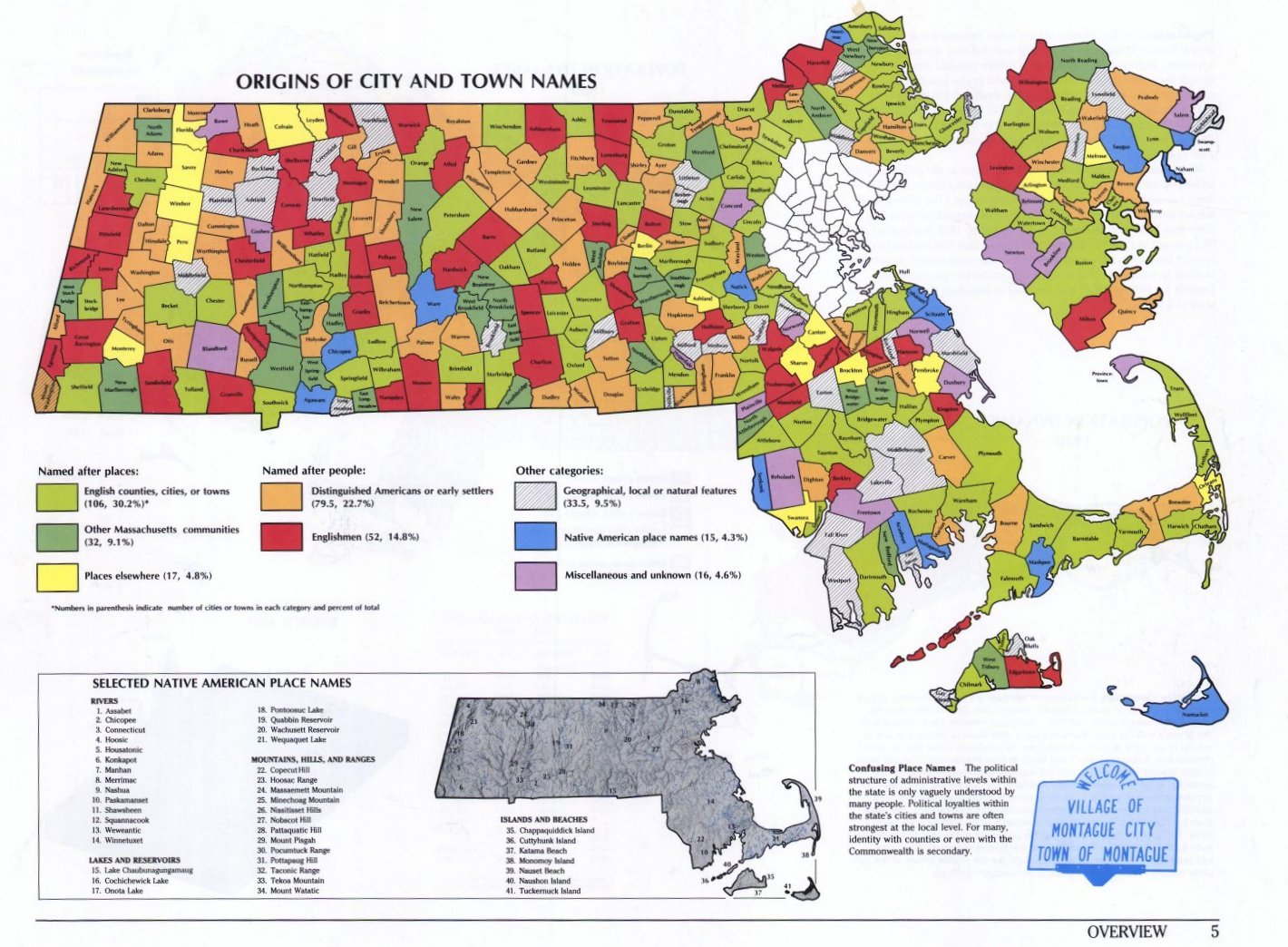
351 Town Names; No Rules
Massachusetts comprises 351 cities and towns; as I have written elsewhere, each is considered something like a sovereign nation, with all the efficiency that implies.
Some of the towns -- such as Bridgewater -- are compound English words that are easy to pronounce. Some are compound English words that are easy to pronounce but strange -- such as Braintree, while at least one is a native-American word that sounds like an odd English word: Mashpee.
But just as some common surnames have Massachusetts-only pronunciations (Gonsalves and Lopez each drop a syllable here), many of the cities and towns are difficult for foreigners to pronounce. And in this context, "foreigner" might include anyone not born in the town in question. Even apparently simple names -- like Dartmouth -- are not what they seem. Others sound almost nothing like they are spelled.
For some levity and instruction, we turn of course to YouTube.
First, some out-of-staters try ten of the hardest. This includes maps and a lot of earnest, if failed, attempts. In some cases, it is actually difficult to avoid obscenity. The entire concept of letters is called into question.
The GuyBoys -- whoever they are -- give it a try. Listen to the end for some meta comments.
Finally, a few more, with funny pictures.
Friday, August 14, 2015
Brazil Buzz
From that bottomless font of listicles comes some subtle insights into Brazilian culture. Buzzfeed presented ten Brazilian cultural traits to a group of "gringos" and recorded their responses. I am not going to translate the whole article, but I do provide the highlights below. All of them ring true, and most of them are quite familiar to me, based on visits over the past two decades to various places, mainly in Rondonia and Santa Catarina.
![]() |
| This image is from the "final considerations" portion of the article. See the original article for more cool and fascinating images. |
See the original article for the replies from Buzzfeed's original panel. If you don't read Portuguese, ask a friend who does to read them with you -- some of the reactions are hilarious. My own thoughts are in italics below.
1. Tomar mais de um banho por dia.
Take more than one shower a day.
This is especially common in the warmer parts of the country, and in fact the chance to take a shower will be offered to guests arriving in a home, much as they might be offered a drink. When I was in the Amazon -- a place that can be humid, smoky, and dusty all at the same time -- I often took 2, 3, or even 4 showers in a day.
This is not as wasteful as it sounds for two reasons First, these are not the long showers that North Americans often take until their water heaters are drained. Second, most Brazilian homes do not have water-heater tanks. If anything, a water heater is a small electric heater attached directly to the shower head. Not being terrified of these is another cultural distinction!
2. Escovar os dentes no trabalho.
Brush teeth at work.
I am not sure why this is not more common in other countries.
3. Sentar ao lado do parceiro no restaurante.
Sit next to a partner at a restaurant.
I had not really noticed this, but as one respondent noted, it does make kissing your date easier.
4. Segurar sanduíche com guardanapo e comer pizza com garfo e faca.
Hold a sandwich with a napkin and eat pizza with a fork and knife.
Brazilians also tend to eat while sitting down in one place. Eating while walking or driving seems uncivilized to them. Because it is.
5. Chamar todo mundo pelo primeiro nome (inclusive a presidente da República).
Call everyone by their first name, including the president of the country.
Surnames are sometimes complicated; first names are more fun and often more unique.
6. Jogar papel higiênico sujo em um lixinho ao lado da privada.
Put toilet paper in a wastebasket next to the toilet.
This certainly got the most animated reactions from the Buzzfeed crowd. I don't think the article explains that this is common throughout Latin America, and has to do with the limitations of plumbing. Even where the plumbing could handle toilet paper, though, the habit is deeply ingrained. Of course most of the gringos on the Buzzfeed panel were horrified by this, but it really is not a big deal. Most of those little waste baskets are covered, and most are emptied frequently. It is not something that Brazilians -- or frequent visitors to Brazil -- expend much energy thinking about.
7. Ter 30 dias de férias por ano e mais de dez dias de feriados.
Have 30 days of vacation per year and more than ten days of holidays.
Something else that should be common. Can we really not get our work done in 220 days? I think that one reason Brazilians are so productive is that they know how to take a vacation -- or even a coffee break -- in a way that allows them to return to work more focused.
8. Comer abacate como fruta, inclusive com açúcar.
Eat avocado as a fruit, even with sugar.
I actually never noticed this.
9. Marcar o horário de uma festa sabendo que as pessoas só vão chegar duas ou três horas depois.
Mark the time for a party, knowing that people are only going to arrive two or three hours later.
If a party is scheduled for six, people will start getting ready at six -- to go join other friends who are on the way to the party. Around 8:30, people who have been gathering in smaller groups for a couple hours will arrive, and the room will go from empty to electric.
10. Terminar mensagens com “abraços” ou “beijos”, mesmo com pessoas que você não conhece pessoalmente.
End messages with "hugs" or "kisses," even with people you do not know personally.
There is really no down side to this.
Cultural geography examines the patterns that help to give regions an identity, to distinguish one place from another. It often begins with "big picture" cultural characteristics such as language, religion, food, and music. These are certainly important, but the finer points of ordinary life -- the mores of a culture -- can be even more instructive.
See my Musica page for more thoughts on the relationship between visible features of a culture and its deeper components.
Sunday, August 09, 2015
Venice on the Charles ...
... and Other Encouraging Stories
I teach about geographic problems -- political, economic, and especially environmental -- because I think the problems are important. And I teach the complexities of the problems because I think we are far beyond simple solutions and wishful thinking. I know, however, that the insights of a geographer can begin to sound like a dismal refrain after a while. As we used to paraphrase my undergraduate advisor, "We're going to hell in a handbasket."
But I keep teaching because I know that we have somehow managed to persist for three decades past those doom-and-gloom classes of my undergraduate days, and I imagine my students (and with luck myself) will be here three decades from now. And we might as well make the best of it. The very best we can.
So with today's post I share a single link to a handful of very encouraging stories about urban environments in the face of climate change. Yes, I used "encouraging," "urban," and "climate change" in the same sentence. This episode of Living On Earth is full of valuable lessons.
I was, ironically, on a long drive when I heard this program. I missed the first segment or two, but each of the rest was both intriguing and encouraging -- uplifting, even. (I'll get the bad news out of the way now. Going back to the online version, I learned that the first segment mentioned Miami, an extremely vulnerable city that is set to be the victim of both climate change and climate denial. But enough of that.)
I enjoyed learning about the work on information technologies that promise to give Helsinkians (Helsinkers?) more choices in transportation for individual journeys while greatly reducing both traffic and parking overall. Then I learned about the thorough integration of green roofs in Copenhagen, where great attention to detail provides benefits for individual buildings and for the city as a whole. Green roofs are very important for ameliorating the urban heat-island effect, which adds several degrees of heating to regionally prevalent temperatures. Then I learned that the former mayor of Curitiba, Brazil has put together a compendium of suggestions for improving urban environments. His interview alone is a rich education. Rather than writing a manual about recreating the improvements in his city -- often called the best-planned in the world -- he brings together snippets of innovation from many places. His emphasis is on good ideas that can be implemented quickly. If his ideas can be implemented in Brazilian government (with a reputation for extreme bureaucracy) there is at least a little hope for those of us working in bureaucratic university environments.
The icing on the proverbial cake, though, was about the Back Bay of Boston, where I was walking with a Brazilian colleague just a couple of days ago. About 1/3 of Beantown (also known as the Hub of the Universe) was marsh or open water two centuries ago. It is among the world cities most vulnerable to rising seas, because so much of it was in the sea so recently. Some cities are erecting hard barriers, and some -- like New York City -- are working on soft barriers. The answer for Boston might be something else entirely: bringing the ocean in. Listen to the final segment to learn about a vision for tidal canals inside the city of Boston!
I teach about geographic problems -- political, economic, and especially environmental -- because I think the problems are important. And I teach the complexities of the problems because I think we are far beyond simple solutions and wishful thinking. I know, however, that the insights of a geographer can begin to sound like a dismal refrain after a while. As we used to paraphrase my undergraduate advisor, "We're going to hell in a handbasket."
But I keep teaching because I know that we have somehow managed to persist for three decades past those doom-and-gloom classes of my undergraduate days, and I imagine my students (and with luck myself) will be here three decades from now. And we might as well make the best of it. The very best we can.
So with today's post I share a single link to a handful of very encouraging stories about urban environments in the face of climate change. Yes, I used "encouraging," "urban," and "climate change" in the same sentence. This episode of Living On Earth is full of valuable lessons.
I was, ironically, on a long drive when I heard this program. I missed the first segment or two, but each of the rest was both intriguing and encouraging -- uplifting, even. (I'll get the bad news out of the way now. Going back to the online version, I learned that the first segment mentioned Miami, an extremely vulnerable city that is set to be the victim of both climate change and climate denial. But enough of that.)
I enjoyed learning about the work on information technologies that promise to give Helsinkians (Helsinkers?) more choices in transportation for individual journeys while greatly reducing both traffic and parking overall. Then I learned about the thorough integration of green roofs in Copenhagen, where great attention to detail provides benefits for individual buildings and for the city as a whole. Green roofs are very important for ameliorating the urban heat-island effect, which adds several degrees of heating to regionally prevalent temperatures. Then I learned that the former mayor of Curitiba, Brazil has put together a compendium of suggestions for improving urban environments. His interview alone is a rich education. Rather than writing a manual about recreating the improvements in his city -- often called the best-planned in the world -- he brings together snippets of innovation from many places. His emphasis is on good ideas that can be implemented quickly. If his ideas can be implemented in Brazilian government (with a reputation for extreme bureaucracy) there is at least a little hope for those of us working in bureaucratic university environments.
The icing on the proverbial cake, though, was about the Back Bay of Boston, where I was walking with a Brazilian colleague just a couple of days ago. About 1/3 of Beantown (also known as the Hub of the Universe) was marsh or open water two centuries ago. It is among the world cities most vulnerable to rising seas, because so much of it was in the sea so recently. Some cities are erecting hard barriers, and some -- like New York City -- are working on soft barriers. The answer for Boston might be something else entirely: bringing the ocean in. Listen to the final segment to learn about a vision for tidal canals inside the city of Boston!
Saturday, August 08, 2015
Ordering Progress ... and a Side of Fries
![]() |
| For some in Brazil, the national motto "Order and Progress" could be "Order some Fries...That's Progress!" |
In an era of increasingly rapid global connections, the diffusion of innovations can be both more rapid and more thorough than in the past. I was reminded of this by the recent story of the cyber-shaming of Bela Gil.
First of all, cyber-shaming itself is an export of which my country should not be proud. The incredible power of computing and communicating is too often employed to give thousands of people the opportunity to behave as sand-lot bullies, picking on people over minor flaws, real or imagined.
Second, the particular reason that the Brazilian food writer Bela Gil is being harassed is that many of her fellow Brazilians have mistaken processed food for economic progress. Gil's flaw? Packing a healthy lunch for her daughter. Really.
Friday, July 31, 2015
… and Northern Ireland, Sir!
The title of this post is a phrase that comes to mind every time I consider the question of what exactly is meant by the terms England, Great Britain, and the UK. That shortest of monikers is an abbreviation, of course, for United Kingdom. But that in turn is shorthand for The United Kingdom of Great Britain and Northern Ireland. But if you took geography with Norman (Stormin’ Norman) Little at North Kansas City High School in the 1970s, the word “Sir!” was added, as it was to all place names during recitations.
Yes, we had recitations as the main form of learning geography – in a room full of maps, half standard and half without any labels – we spent almost every class session in oral-quiz mode. If we failed to answer correctly – or if we failed to end with “Sir!” – the response would be “Young man (or lady) … that will be five points off your next examination!”
This approach to teaching geography had two results, one surprising and one to be expected. The surprise is that most students were fond of Mr. Little. They had actually painted “Stormin’ Norman” to give him an unofficial reserved parking space for his beloved Ford Pinto. He was “old school” with an official one-room schoolhouse on his resume, so I think we all just thought of him as quaint in a way that younger teachers could not have been.
The unsurprising result is that I finished high school with a geography course under my belt, and no idea that it was an actual academic discipline. We spent less than a day on any real geographic questions, so I never even looked at geography as an option when I started college.
But I digress. The real point here is to learn a bit more about the country, nation, state, and island we sometimes just call “the Brits.” Fortunately, we have the help of CGP Grey, who provides a lovely romp through this thicket of nomenclature.
And we don’t have to call him “Sir.”
NOTE: This is actually the third time I've mentioned this video. For some different contexts, see Queen Lisa? (2012) and Borderlines (2013).
Yes, we had recitations as the main form of learning geography – in a room full of maps, half standard and half without any labels – we spent almost every class session in oral-quiz mode. If we failed to answer correctly – or if we failed to end with “Sir!” – the response would be “Young man (or lady) … that will be five points off your next examination!”
This approach to teaching geography had two results, one surprising and one to be expected. The surprise is that most students were fond of Mr. Little. They had actually painted “Stormin’ Norman” to give him an unofficial reserved parking space for his beloved Ford Pinto. He was “old school” with an official one-room schoolhouse on his resume, so I think we all just thought of him as quaint in a way that younger teachers could not have been.
The unsurprising result is that I finished high school with a geography course under my belt, and no idea that it was an actual academic discipline. We spent less than a day on any real geographic questions, so I never even looked at geography as an option when I started college.
But I digress. The real point here is to learn a bit more about the country, nation, state, and island we sometimes just call “the Brits.” Fortunately, we have the help of CGP Grey, who provides a lovely romp through this thicket of nomenclature.
And we don’t have to call him “Sir.”
NOTE: This is actually the third time I've mentioned this video. For some different contexts, see Queen Lisa? (2012) and Borderlines (2013).
Sunday, July 26, 2015
Dependent Development
When we lived in Arizona (1990 to 1994), I was aware of deep fissures in the political philosophies prevalent in the desert Southwest, particularly with respect to land and water. This was the home, after all, of Barry Goldwater and of an abiding and even growing form of libertarian thinking. I was there to study political ecology and to prepare for my work in one of the world's very wet places -- Rondonia -- but I also thought quite a lot about what it meant to live in this very dry place.
I quickly realized that even the most fiercely independent westerners are highly dependent -- like it or not -- on the federal government. I became familiar with the contradictions of "welfare ranchers" such as the petulant Nevadan Cliven Bundy, who famously refuses to pay his rent. His tantrum has now inspired legislators in several western states to attempt land grabs that would amount to acre-by-acre secessions from the United States.
I also knew that our own ability to live, work and study depended upon highly subsidized water, but a recent Living on Earth story helped me to understand that dependence much more fully. It explains connections among politics, water, electricity, agriculture, and climate change, all focused on the infamous Navajo Generating Station. I use the word "infamous" because I have long known it as a major source of air pollution that often creates an ugly haze over the Grand Canyon. I did not realize, though, that its main purpose is pumping water against gravity to supply the cities and farms of Arizona, Nevada, and southern California. Nor did I realize that it is the third-most important source of greenhouse gases in the United States. Steve Curwood explains who benefits from this arrangement, and why change is so unlikely.
I quickly realized that even the most fiercely independent westerners are highly dependent -- like it or not -- on the federal government. I became familiar with the contradictions of "welfare ranchers" such as the petulant Nevadan Cliven Bundy, who famously refuses to pay his rent. His tantrum has now inspired legislators in several western states to attempt land grabs that would amount to acre-by-acre secessions from the United States.
I also knew that our own ability to live, work and study depended upon highly subsidized water, but a recent Living on Earth story helped me to understand that dependence much more fully. It explains connections among politics, water, electricity, agriculture, and climate change, all focused on the infamous Navajo Generating Station. I use the word "infamous" because I have long known it as a major source of air pollution that often creates an ugly haze over the Grand Canyon. I did not realize, though, that its main purpose is pumping water against gravity to supply the cities and farms of Arizona, Nevada, and southern California. Nor did I realize that it is the third-most important source of greenhouse gases in the United States. Steve Curwood explains who benefits from this arrangement, and why change is so unlikely.
Coffee People
In three decades of visiting coffeelands around the world, photographer Steve McCurry has emphasized the people who grow, process, roast, and brew it. Jordan Teicher describes McCurry's work for Slate and includes a few photos, such as this one showing how coffee is typically prepared in Ethiopia. More of these photos are in McCurry's book From These Hands.
McCurry's work is motivated by the conviction that it is important for people to understand that food comes to us not just from land, but also from people. Ten million people around the world make their livelihood from coffee. McCurry does a great service by bringing a few of them into focus. The work highlights two of the concepts of the geography of coffee that are also explored in Dean Cycon's Javatrekker. First is that coffee connects us to many people across many miles; the other is that since the best coffee is high-grown, it comes from communities that are often quite remote and isolated.
Monday, July 20, 2015
Frontier on Fire
![]() |
| Some of Alaska's fires this season. Source: Slate. |
Of course, forest and brush fires are natural occurrences that do not destroy land; they just change what is on it. But those degree and intensity of the changes are not natural, and they are damaging to resources we rely upon and should care about.
To learn more, start with Nathan Rott's vivid reporting on the scope and severity of this year's fire season in the Final Frontier state. Speaking with local experts, his story also explains why these fires will last longer than similar fires elsewhere would.
![]() |
| An Alaska Army National Guard Black Hawk helicopter drops about 700 gallons of water onto the Stetson Creek Fire in June 2015. (Photo: Sgt. Balinda O’Neal/U.S. Army National Guard via Living on Earth) |
![]() |
| ... can cause so many forest fires. |
In the 1980s I was fortunate to be studying with a landscape ecologist who helped me to understand an important, additional dimension of the problem: patchiness, to which Curwood's piece also alludes. Not only have decades of success allowed fuel to accumulate in millions of acres of forest; but the normal patchwork of old and new forest has been lost. Prior to the very successful campaigns embodied in Smokey the Bear, if one area of forest had a heavy load of fuel, it was likely to be surrounded by a patchwork in which some areas had less fuel because they had recently burned.
The result is a landscape in which fire is likely to behave differently than it did a century ago, in both horizontal and vertical dimensions. The lack of a patchwork facilitates horizontal movement of fire; heavy fuel loads help the fire to reach the canopy much more readily. This can increase the temperature and intensity of the fire, and is much more likely to result in damage to trees that have evolved to withstand occasional, low-temperature ground fires.
As I mention above, these landscape-scale effects of fire policy were not understood for about 50 years -- the amount of time it took to reach uniform fuel loads over large areas. It has taken a couple more decades to understand the ability of climate change to intensify the resulting fire regimes -- and to add extreme temporal variation, as each fire year can be very different from the last.
For more thoughts on fire and climate, see my Hot or Not? post, written in the hottest month of the last presidential election cycle.
Lagniappe
As if fire in Alaska were not concerning enough, consider the emergence of a new urban wildfire threat in Washington state. Eastern Washington is drier than the Pacific coast, but the threat of fires in downtown Spokane is nonetheless a novel problem.
2018 Update
The fire season of 2018 is, predictably as devastating as recent years, perhaps more so. The combination of climate change, wildland/urban sprawl, and historic patterns of fire suppression have led to massive, deadly fires. The continuous worsening of fire danger has led one inventor to develop a supertanker of aircraft, able to deliver unprecedented quantities of fire suppressant from the air, and to do so in a controlled way that is more effective against fire and less dangerous to ground crews.
The plane has been used in Chile and Israel but has not yet been deployed in the United States because of unspecified bureaucratic obstacles.
Thursday, July 02, 2015
Homeland Insecurity
I usually enjoy sharing maps, but I would rather not have to share this one.
Many justified the second war in Iraq with the mantra that it would be better to fight the terrorists "over there" than to fight them over here. I was never quite on board with that, since the people "over there" did not ask to be our arena. But now the terrorists really are "over here" and we need to step up to protect our fellow citizens.
The map clearly shows that these attacks are clustered in the South, but notice that they are points, representing a few or perhaps a few dozen individuals. I have been in the region enough to know that these terrorists do not speak for all of their neighbors. Such ilk never do.
Map: Recent fires at African-American churches in the South
Six predominantly black churches have caught on fire in the past two weeks. Where are they and what are officials saying?
PRI.ORG
Many justified the second war in Iraq with the mantra that it would be better to fight the terrorists "over there" than to fight them over here. I was never quite on board with that, since the people "over there" did not ask to be our arena. But now the terrorists really are "over here" and we need to step up to protect our fellow citizens.
The map clearly shows that these attacks are clustered in the South, but notice that they are points, representing a few or perhaps a few dozen individuals. I have been in the region enough to know that these terrorists do not speak for all of their neighbors. Such ilk never do.
Map: Recent fires at African-American churches in the South
Six predominantly black churches have caught on fire in the past two weeks. Where are they and what are officials saying?
PRI.ORG
Wednesday, July 01, 2015
Environmental Geography Gamut
One of my goals in general-education classes is to ensure that students will emerge better able to interpret course-related news they encounter in the future. For this reason, my final exams often ask them to find a news item, describe it, and relate it to something they learned in the course. This is a pedagogic approach I learned from the work of geographer L. Dee Fink; it is also a way to ensure that I continue to learn from my students.
At the moment I am taking a break from grading summer courses to share some of the articles that came my way as the result of such an assignment, because all of them fit nicely into the theme of this blog -- and the title of the course in question -- Environmental Geography. (See my "What is environmental geography, anyway?" web page if you've been wondering about that title. Most of what is on this blog fits somehow into that category, though some of it is more appropriately called political, economic, or cultural geography.)
Here -- without elaboration, in the interest of time -- are the articles and radio pieces that students shared. Each one made a connection between the article and Carl Safina's book The View from Lazy Point. (See more Safina references throughout this blog.) In some cases, several students commented on the same stories, making different connections.
Supreme Court Blocks Obama Administration Plan on Power Plant Emissions. NPR June 29th, 2015.
Note From A Civilized City: Boston Parks To Offer Dispensers Of Free Sunscreen. WBUR June 26, 2015.
New Panda Count Brings Cheers And Debate. WBUR March 2, 2015.
Survival Of The Greenest Beer? Breweries Adapt To A Changing Climate. NPR June 24, 2015.
Risk of Extreme Weather From Climate Change to Rise Over Next Century, Report Says. New York Times, June 22, 2015.
Chinese Couples Urged to Have More Children. The Guardian June 29, 2015.
The Dutch Ruling On Climate Change That Could Have A Global Impact. NPR June 25, 2015.
The Evolution of Birdsong. Living on Earth, June 26, 2015.
Genetically Modified Salmon: Coming To A River Near You? NPR June 24, 2015.
How A Historical Blunder Helped Create The Water Crisis In The West. NPR June 25, 2015.
To Tackle Food Waste, Big Grocery Chain Will Sell Produce Rejects. NPR June 17, 2015. (In searching for this, I also found Landfill of Lettuce by the same reporter.)
Decisions On Climate Change Will Affect Economic Future Of U.S. NPR June 22, 2015.
Save Wildlife, Save Yourself? NPR June 26, 2015.
Scientists Build Case for 'Sixth Extinction' ... and Say It Could Kill Us. NBC News. June 19, 2015.
Accelerated modern human–induced species losses: Entering the sixth mass extinction. Science Advances 1(5): June 19, 2015. Gerardo Cebellos, Paul Ehrlich, et al.
At the moment I am taking a break from grading summer courses to share some of the articles that came my way as the result of such an assignment, because all of them fit nicely into the theme of this blog -- and the title of the course in question -- Environmental Geography. (See my "What is environmental geography, anyway?" web page if you've been wondering about that title. Most of what is on this blog fits somehow into that category, though some of it is more appropriately called political, economic, or cultural geography.)
Here -- without elaboration, in the interest of time -- are the articles and radio pieces that students shared. Each one made a connection between the article and Carl Safina's book The View from Lazy Point. (See more Safina references throughout this blog.) In some cases, several students commented on the same stories, making different connections.
Supreme Court Blocks Obama Administration Plan on Power Plant Emissions. NPR June 29th, 2015.
Note From A Civilized City: Boston Parks To Offer Dispensers Of Free Sunscreen. WBUR June 26, 2015.
New Panda Count Brings Cheers And Debate. WBUR March 2, 2015.
Shameless and gratuitous use of cute charismatic megafauna.
Risk of Extreme Weather From Climate Change to Rise Over Next Century, Report Says. New York Times, June 22, 2015.
Chinese Couples Urged to Have More Children. The Guardian June 29, 2015.
The Dutch Ruling On Climate Change That Could Have A Global Impact. NPR June 25, 2015.
The Evolution of Birdsong. Living on Earth, June 26, 2015.
Genetically Modified Salmon: Coming To A River Near You? NPR June 24, 2015.
How A Historical Blunder Helped Create The Water Crisis In The West. NPR June 25, 2015.
![]() |
| Image: NPR |
Decisions On Climate Change Will Affect Economic Future Of U.S. NPR June 22, 2015.
Save Wildlife, Save Yourself? NPR June 26, 2015.
Scientists Build Case for 'Sixth Extinction' ... and Say It Could Kill Us. NBC News. June 19, 2015.
OK, so I will elaborate on this one. This story was cited by a couple of students. I had seen the headline but had not yet worked up the nerve to read the article. Not only will I now be assigning it in some of my classes -- such as Land Protection -- but I will also be assigning the original article on which it is based:
Accelerated modern human–induced species losses: Entering the sixth mass extinction. Science Advances 1(5): June 19, 2015. Gerardo Cebellos, Paul Ehrlich, et al.
Subscribe to:
Posts (Atom)
Blog Ideas
coffee
(25)
GEOG381
(24)
GEOG388
(23)
GEOG470
(18)
climate change
(18)
GEOG130
(16)
geography
(16)
GEOG332
(13)
GEOG431
(12)
musica
(11)
GEOG 332
(9)
GEOG 381
(9)
Mexico
(9)
Brazil
(8)
GEOG286
(8)
Texas
(8)
education
(8)
migration
(8)
GEOG298
(7)
borderlands
(7)
GEOG199
(6)
GEOG331
(6)
Massachusetts
(6)
US-Mexico
(6)
deBlij04
(6)
immigration
(6)
GEOG 130
(5)
GEOG 286
(5)
GEOG287
(5)
climate justice
(5)
cultural geography
(5)
fair trade
(5)
food
(5)
geographic education
(5)
nicaragua
(5)
water
(5)
Arizona
(4)
GEOG 171
(4)
GEOG171
(4)
GEOG295
(4)
Safina
(4)
africa
(4)
deBlij05
(4)
land protection
(4)
music
(4)
politics
(4)
Bolivia
(3)
Boston
(3)
COVID-19
(3)
Detroit
(3)
Ethiopia
(3)
Managua
(3)
Obama
(3)
border
(3)
cartography
(3)
drought
(3)
libraries
(3)
pesticides
(3)
suburban sprawl
(3)
trade
(3)
unemployment
(3)
Alaska
(2)
Amazon
(2)
Bridgewater
(2)
Canada
(2)
Chiapas
(2)
China
(2)
Colonialism
(2)
EPA
(2)
EarthView
(2)
Economy
(2)
Environment
(2)
GEOG 199
(2)
GEOG 287
(2)
GEOG 388
(2)
Google Maps
(2)
Government
(2)
Hawaii
(2)
India
(2)
Lexington
(2)
Maldives
(2)
Mozambique
(2)
NOLA
(2)
NPR
(2)
National Monuments
(2)
National Parks
(2)
New Orleans
(2)
Religion
(2)
Rio Grande
(2)
Taunton River Wild and Scenic
(2)
Tex-Mex
(2)
The View from Lazy Point
(2)
United States
(2)
Venezuela
(2)
anthropocene
(2)
cape verde
(2)
censorship
(2)
central america
(2)
chocolate
(2)
corn
(2)
deBlij07
(2)
deforestation
(2)
demographic transition
(2)
demography
(2)
education reform
(2)
employment
(2)
environmental geography
(2)
film
(2)
forest fire
(2)
global warming
(2)
islands
(2)
landscape ecology
(2)
librarians
(2)
maps
(2)
organic
(2)
peak oil
(2)
refugees
(2)
sense of place
(2)
soccer
(2)
sustainability
(2)
television
(2)
water rights
(2)
whales
(2)
#bbc
(1)
#nicaragua
(1)
#sosnicaragua
(1)
#sosnicaragua #nicaragua
(1)
100 Years of Solitude
(1)
ACROSS Lexington
(1)
Accents
(1)
Adam at Home
(1)
Alice
(1)
Alt.Latina
(1)
American Hustle
(1)
April
(1)
Association of american Geographers
(1)
Audubon
(1)
Aunt Hatch's Lane
(1)
BBC
(1)
BSU
(1)
Baby Boomers
(1)
Banda Aceh
(1)
Bay Circuit Trial
(1)
Bechtel
(1)
Beleza Tropical
(1)
Belize
(1)
Beloit College
(1)
Ben Linder Cafe
(1)
Bet The Farm
(1)
Bhopal
(1)
Biafra
(1)
Bikeway
(1)
Bikini
(1)
Bill Gates
(1)
Bill Moyers
(1)
Boeing 777
(1)
Brazilian
(1)
Brazilianization
(1)
Bridge
(1)
British Columbia
(1)
Brockton
(1)
Bus Fare
(1)
Bush
(1)
Cabo Verde
(1)
California
(1)
Cambridge
(1)
Cape Cod Bay
(1)
Carl Stafina
(1)
Catholic
(1)
Ceuta
(1)
Chalice
(1)
Chipko
(1)
Citgo
(1)
Climate risks
(1)
Cochabamba
(1)
Colombia
(1)
Common Core
(1)
Commuter
(1)
Computers
(1)
Cuba
(1)
Cups and Summits
(1)
Dallas
(1)
David Byrne
(1)
Deans Beans
(1)
Delaware Valley
(1)
Dunkin Donuts
(1)
Earth Day
(1)
Earth View
(1)
Easton
(1)
El Salvador
(1)
Elizabeth Warren
(1)
Ellicott City
(1)
Emilia Laime
(1)
English-only
(1)
Environmental History
(1)
Euphrates
(1)
European Union
(1)
Evo Morales
(1)
FIFA
(1)
FYS
(1)
Fades Out
(1)
Farms
(1)
First-Year Seminar
(1)
Food Trade
(1)
Frederick Kaufman
(1)
French press
(1)
Fresh Pond Mall
(1)
GEOG 431
(1)
GEOG 441
(1)
GEOG213
(1)
GEOG490
(1)
Gabriel García Márquez
(1)
Garden of Gethsemane
(1)
Gas wells
(1)
Gateway Cities
(1)
General Motors
(1)
Gini Coefficient
(1)
Girl in the Cafe
(1)
Google
(1)
Gordon Hempton
(1)
Gravina Island Bridge
(1)
Great Migration
(1)
Great Molasses Flood
(1)
Guy Lombardo
(1)
Haiti
(1)
Hawks
(1)
Heart
(1)
Higher Education
(1)
History
(1)
Holyhok Lewisville
(1)
Homogenous
(1)
Honors
(1)
How Food Stopped Being Food
(1)
Hugo Chavez
(1)
IMF
(1)
Iditarod
(1)
Imperial Valley
(1)
Income Inequality
(1)
Indonesia
(1)
Iraq
(1)
Irish
(1)
Japan
(1)
Junot Diaz
(1)
Kenya
(1)
Ketchikan
(1)
Key West
(1)
Kindergarden Students
(1)
King Corn
(1)
Kiribati
(1)
Latin America
(1)
Limbaugh
(1)
Literature
(1)
Living On Earth
(1)
Louisiana
(1)
Love Canal
(1)
Luddite
(1)
M*A*S*H
(1)
MCAS
(1)
MacArthur Genius
(1)
Maersk
(1)
Malawi
(1)
Malaysia
(1)
Malaysian Air Flight 370
(1)
Mali
(1)
Manu Chao
(1)
Map
(1)
Marblehead
(1)
Mary Robinson Foundation
(1)
Maryland
(1)
Massachusetts Bay Colony
(1)
Math
(1)
Maxguide
(1)
May
(1)
Maya
(1)
Mayan
(1)
Mayan Gold
(1)
Mbala
(1)
McDonald's
(1)
Melilla
(1)
Mexicans
(1)
Michael Pollan
(1)
Michelle Obama
(1)
Micronesia
(1)
Military
(1)
Military Dictatorship
(1)
Minuteman Trail
(1)
Mongolia
(1)
Monsanto
(1)
Montana
(1)
Morocco
(1)
Mount Auburn Cemetery
(1)
Muslim
(1)
NPS
(1)
Nantucket
(1)
National Education Regime
(1)
Native American
(1)
Native Americans
(1)
New Bedford
(1)
New Hampshire
(1)
New York City
(1)
New York Times
(1)
Nigeria
(1)
No Child Left Behind Act
(1)
Norquist
(1)
North Africa
(1)
Nuts
(1)
Oakland
(1)
Oaxaca
(1)
Occupeligo
(1)
Occypy
(1)
Oklahoma
(1)
Oklahoma City
(1)
Oppression
(1)
PARCC
(1)
Pakistan
(1)
Pascal's Wager
(1)
Peanut
(1)
Pearson Regime
(1)
Philadelphia
(1)
Philippines
(1)
Pink Unicorns
(1)
Poland
(1)
Portuguese
(1)
Protest
(1)
Public Education
(1)
Puebla
(1)
Puritans
(1)
Quest University
(1)
Rachel Carson
(1)
Reading
(1)
Republican
(1)
Retro Report
(1)
Robert Reich
(1)
Rock Legend
(1)
Ronald Reagan
(1)
Rondonia
(1)
Rosa Parks
(1)
SEXCoffee
(1)
Safety
(1)
Samoza
(1)
Sandino
(1)
Sara Vowell
(1)
Save the Children
(1)
Scotch
(1)
Scotland
(1)
Seinfeld
(1)
Senegal
(1)
Sergio Mendes
(1)
Severin
(1)
Sharrod
(1)
Silent Spring
(1)
Sinatra
(1)
Slope
(1)
Smokey the Bear
(1)
Somalia
(1)
Sombra
(1)
Sonora
(1)
Sonoran desert
(1)
Sonoran hot dog
(1)
South America
(1)
Spain
(1)
Stairway to Heaven
(1)
Storm
(1)
Suare Inch of Silence
(1)
Sumatra
(1)
Swamp
(1)
Tacloban
(1)
Tanzania
(1)
The Amazon
(1)
The Amazon Trail
(1)
Tigris
(1)
Tucson
(1)
Tufts
(1)
U.S Federal Reserve
(1)
U.S Government
(1)
U.S. economy
(1)
USDA
(1)
USLE Formula
(1)
Uganda
(1)
Unfamiliar Fishes
(1)
Union Carbide
(1)
Vacation
(1)
Vexillology
(1)
Vietnam
(1)
ViralNova
(1)
WNYC Data News
(1)
Wall Street
(1)
Walsenburg
(1)
Walt Disney
(1)
Walt and El Grupo
(1)
Ward's Berry Farm
(1)
West
(1)
Whaling
(1)
Wilson
(1)
Winter Storm Saturn
(1)
Wisconsin
(1)
World Bank
(1)
Xingu
(1)
YouTube
(1)
Zombies
(1)
agriculture
(1)
antitrust
(1)
aspen
(1)
austerity
(1)
aviation
(1)
banned books
(1)
bark beetle
(1)
bean
(1)
beavers
(1)
bicycle
(1)
bicycling
(1)
bike sharing
(1)
binary
(1)
biodiversity
(1)
bioneers
(1)
books
(1)
boston globe
(1)
cacao
(1)
cafe
(1)
campaign
(1)
campus
(1)
cantonville
(1)
capitals
(1)
carbon dioxide
(1)
carbon offsets
(1)
carioca
(1)
cash
(1)
cashews
(1)
census
(1)
chemex
(1)
chemistry
(1)
chronology
(1)
churrasco
(1)
civil rights
(1)
coffee grounds
(1)
coffee hell
(1)
coffee prices
(1)
coffee quality
(1)
college
(1)
compost
(1)
computerized test
(1)
congress
(1)
conservation commission
(1)
corporations
(1)
countries
(1)
cubicle
(1)
dams
(1)
deBlij06
(1)
deBlij08
(1)
death
(1)
deficit
(1)
development
(1)
dictatorship
(1)
distracted learning
(1)
distraction
(1)
drug war
(1)
dtm
(1)
earth
(1)
economic diversification
(1)
economic geography
(1)
election
(1)
embargo
(1)
energy
(1)
enhanced greenhouse effect
(1)
environmentalist
(1)
ethnomusicology
(1)
exremism
(1)
failed states
(1)
farming
(1)
financial crisis
(1)
football
(1)
forestry
(1)
forro
(1)
fracking
(1)
free market
(1)
free trade
(1)
fuel economy
(1)
garden
(1)
genocide
(1)
geography education
(1)
geography games
(1)
geography of chocolate
(1)
geography of food
(1)
geologic time
(1)
geotechnology
(1)
gerrymandering
(1)
global pizza
(1)
globe
(1)
goodall
(1)
green chemistry
(1)
ground water
(1)
guacamole
(1)
guatemala
(1)
habitat
(1)
high-frutcose
(1)
home values
(1)
hospitality
(1)
hourglass
(1)
housing
(1)
hydrology
(1)
illegal aliens
(1)
income
(1)
indigenous
(1)
interfaith
(1)
journalism
(1)
kitchen garden
(1)
labor
(1)
language
(1)
libertarianism
(1)
library
(1)
linguistics
(1)
little rock
(1)
llorona; musica
(1)
macc
(1)
maccweb
(1)
magic realism
(1)
maple syrup
(1)
mapping
(1)
masa no mas
(1)
massland
(1)
medical
(1)
mental maps
(1)
mi nina
(1)
microlots
(1)
microstates
(1)
mining
(1)
mltc
(1)
monopoly
(1)
municipal government
(1)
nautical
(1)
neoclassical economics
(1)
new england
(1)
newseum
(1)
newspapers
(1)
noise pollution
(1)
pandas
(1)
petroleum
(1)
piracy
(1)
pirates
(1)
poison ivy
(1)
police
(1)
political geography
(1)
pollution
(1)
provincial government
(1)
proxy variables
(1)
public diplomacy
(1)
quesadilla
(1)
rabbi
(1)
racism
(1)
real food cafe
(1)
regulations
(1)
remittances
(1)
resilience
(1)
resistance
(1)
respect
(1)
rigoberta menchu
(1)
rios montt
(1)
romance
(1)
roya
(1)
runways
(1)
russia
(1)
satellites
(1)
science
(1)
sea level
(1)
selva negra
(1)
sertao
(1)
sertão
(1)
sex
(1)
sex and coffee
(1)
simple
(1)
sin
(1)
smokey
(1)
solar
(1)
solar roasting
(1)
south africa
(1)
sovereignty
(1)
species loss
(1)
sporcle
(1)
sports
(1)
state government
(1)
taxes
(1)
tea party
(1)
teaching
(1)
textile
(1)
texting
(1)
tortilla
(1)
training
(1)
transect; Mercator
(1)
travel
(1)
triple-deckers
(1)
tsunami
(1)
urban geography
(1)
utopia
(1)
vermont
(1)
vice
(1)
video
(1)
wall
(1)
water resources
(1)
water vapor
(1)
whiskey
(1)
whisky
(1)
widget
(1)
wifi
(1)
wild fire
(1)
wildfire
(1)
wildlife corridor
(1)
wto
(1)