Showing posts sorted by relevance for query peak oil. Sort by date Show all posts

Thursday, June 09, 2011

Peak Whale

In January, I wrote about Tom Ashbrook's interview with Carl Safina, author of The View from Lazy Point: A Natural Year in an Unnatural World. We are reading the book together now; it is a beautiful telling of some ugly truths. For example:
"Formerly, whales were the world's wells, civilization's chief source of oil, and we pumped the sea nearly dry of them. Now many wish to pump it dry of petroleum, incurring deeper risks at deeper depths (and not just in the Gulf of Mexico). We appear to have leanred little of whales and nothing of oil. Japan, Norway, and Iceland cannot get beyond their blood thirst, nor we our oil addiction. The average Yank uses twice as much fossil fuel as the average Brit. Compared to 1970, we in the United States use half again as much energy, have increased our paved-road miles by half again, upped our vehicle miles driven by more than 175 percent, and increased the size of our new homes by half again. In 2007 the United States was burning over twenty million barrels of oil a day, about the same as the industrial behemoths Japan, Germany, Russia, China, and India -- combined. God bless us indeed." (p. 83)
We have the advantage of hindsight with regard to the decimated stocks of whales and their oil. Sadly, as Safina indicates, our oil addiction has made the most obvious explanations suspect. Peak oil is denied, while people blame high fuel prices on every short-term cause that comes to mind. Clearly, just as regional oil fields have reached their peak and entered decline in many places, so too has the global oil supply.

See humpback whales at NGS.

Lagniappe


ROCK OIL vs WHALE OIL (courtesy of New Bedford Whaling Museum, August 27, 2014)- 155 yrs ago today, Col. Edwin Drake struck oil at 69 ft. in a well he was drilling near Titusville, PA for a group of Connecticut investors who had hired him to prospect for petroleum, then called 'mineral oil' or 'rock oil' because it flowed from the earth and not from whales. Drake's well proved prospect drilling successful. It was the beginning of the end for whale oil. This 1861 cartoon depicts whales celebrating the new era, which changed the world and made countless fortunes. But Drake died a poor man, living on a small pension in later years.

Tuesday, December 13, 2011

Best Case Against Green Energy

Source: Wind Powering America
Every oil field on the planet runs a course from discovery through increasing production to peak production to declining production and eventually to exhaustion. The last drop is never really extracted from the ground; fields can be reopened if the prices rise or technology improves. Nonetheless, just as most of the world's individual oil fields have passed their peak, so also has the planet as a whole. Peak production of the other fossil fuels may not have been reached on a global level yet, but coal and natural gas will inevitably decline, albeit much later than oil has done.

I was reminded of this as I read an article against green energy in an April 2011 issue of Forbes magazine. In The Green Energy Economy Reconsidered, Jerry Taylor and Peter Van Doren do the great service of describing five important drawbacks to sustainable energy alternatives, with a particular focus on wind and solar power. I call their article a service because it is important to understand the limitations of these sources, if for no other reason than to understand why they have not yet been adopted much more widely.

The authors describe fundamentally geographic reasons that essentially free energy has not been widely adopted in the United States or elsewhere. Low spatial density and spatial mismatches between supply and demand are two of the major obstacles. For Taylor and Van Doren, these are among a handful of reasons to reject government efforts to promote green energy. The article implies at least a faint recognition of the peak-oil problem, but dismisses it as not particularly relevant to questions of electricity production, in which more-abundant coal is dominant. As free-market proponents, they argue that the burdens of green energy are so great that they do not justify market-distorting subsidies.

I would like to suggest the opposite. The limitations of green energy explain why the market has not yet allowed for their widespread adoption, but these limitations do not explain why that initial market response (or non-response) should be accepted. This may be the strongest possible case against green energy, but it falls short in several key respects. First, fossil fuels appear more cost-effective than they actually are, because important externalities -- including but not limited to pollution costs -- are ignored. Second, free markets in petroleum and the other fossil fuels would lead inevitably to the near-exhaustion of each resource described above, but this need not be taken as the only possible future.

Given the extremely high costs of climate change, our current goal should be to leave as much oil, coal, and natural gas in the ground on a permanent basis as possible. Subsidizing green energy in the short term -- though admittedly not easy -- can bring about some of the needed reductions; doing nothing will, of course, achieve nothing.

Tuesday, December 15, 2020

Post-Peak Oil


Detail of photo by Adriana Loureiro Fernandez
for Bloomberg Green

Perhaps the most profane guest lecturer I ever brought to campus was James Howard Kunstler, author of The Long Emergency. I qualify this with "perhaps" because I also helped to bring Junot Díaz to campus. Kunstler is certainly the more curmudgeonly of the two: a professional pessimist for whom dire predictions are a moral imperative. It is as if we were stepping off a curb in front of a fast-moving bus, and he is trying to push us out of its path with books, lectures, and profanity-laden blog posts.

I was reminded of this by a recent story from Bloomberg. In Toxic Spills in Venezuela Offer a Bleak Vision of the End of Oil, journalists Fabiola Zerpa, Peter Millard, and Andrew Rosati describe the multiple environmental catastrophes that are accompanying the financial collapse of what was once a leading national petroleum industry.

As the article describes in detail, the demise of petroleum in Venezuela is following a path that is not likely to play out in other producing areas. It is, after all, failing to refine oil while it still has plenty. Most other oil fields -- and the global oil field as a whole -- will not run aground financially until reserves are proportionally much scarcer than they are in Venezuela at the moment. 

But the tale is a cautionary one for another reason: it is difficult enough to get polluters to take financial responsibility for the havoc they cause while they are profitable. It is much more difficult when they have run out of money. It is for this reason that regulatory programs such as RCRA in the United States require industries to show strong financial reserves as part of any process of permitting potentially polluting facilities. 

As oil reserves dwindle worldwide -- and all of them will -- abandoned fields and infrastructure will require close scrutiny. Unfortunately, many of the costs of our oil addiction are likely to be borne by generations who do not enjoy the benefits.

Tuesday, December 04, 2012

Oil Non-Futures

UPDATE: After this was posted, news emerged that Rep. Lamar Smith (R-TX), a career-long recipient of oil-industry funding and a vocal denier of climate science, has been chosen to chair the House Committee on Science, Space, and Technology.

Former Boston City Councilor Tom Keane is one of several writers to conclude -- based on production forecasts from the International Energy Agency -- that the future portends A new world of energy independence. Writing in the Boston Globe last Sunday, he predicts peace and prosperity based on petroleum production, basing his forecast on a linear extrapolation of recent trends that neither can nor should be sustained.

His argument is an illustration of the fallacies that arrive when economics and politics are considered in the absence of geography.

The image to the right accompanied the online version on Keene's article. I do not think it is meant to be a parody, but a smiling Uncle Sam bathing in a pool of petroleum reminds the viewer more of the catastrophes of the Exxon Valdez or Deepwater Horizon than of the prosperity that the oil is meant to make possible.

In the print edition, Keene's article ran alongside Student activism is alive and well, in which Bill McKibben (of 350.org) expresses optimism that the young activists leaders he meets on campuses have both the wisdom and the idealism to brush aside such dangerous, facile approaches as those advocated by an under-regulated petroleum industry. Bold New Plan on Nation of Change describes McKibben's work with universities in more detail.

This week, Adam Greenberg of Milton, Massachusetts is one such young leader who is currently representing youth at the climate meetings in Doha, where his voice is sorely needed. Last year, Abigail Borah of Vermont bravely stood up at a similar meeting in Durban, calling attention of the failure of the official delegation to take seriously the burdens that are being shifted to the shoulders of her generation.

At this writing, I am not sure whether the Globe will run my reply to Keene's article. I sent it Monday morning, and post here in its entirety for the convenience of readers. (Update December 9: The Globe did run the letter, along with another letter about the importance of science in this debate and a photo of an anti-fracking sign)
In his exuberance over reports of growing U.S. petroleum production, Tom Keane has set aside his usually careful approach to complex policy questions (“The energy glut,” December 2). It is true that dependence on production elsewhere has led to dangerous entanglements in oil-producing areas, which in turn have been justified excessive military spending and reckless engagements. Those bells are going to be difficult to unring, however, and just as military contractors did not suffer from the promised the post-Soviet “peace dividend,” so too will a way be found to sustain support for the military-industrial complex in the absence of strategic petroleum interests.
Keane’s analysis also raises but too blithely dismisses very important concerns about the environmental geography of petroleum production. Nothing has changed to discredit peak-oil as a principle. Even if heroic (and dangerous) measures prolong the inevitable decline of production in a region, the decline will come, and as it does, increased costs will push us toward alternatives. Hydraulic fracturing (fracking) simply means that even more disruption of the carbon cycle will take place in the mean time, with costly and deadly consequences for everyone. 
Fracking is affordable only if the costs of contamination and dwindling water supplies are borne by water users in producing areas. The optimistic production forecasts are based on straight-line extrapolation from recent production increases, which occurred in a well-financed regulatory vacuum.
It is strange that Keane cites unspecified regulations as an obvious remedy to the catastrophic environmental costs of fracking, and mentions the risks taken with BP’s offshore production as evidence. The failure of evidence in the Deepwater Horizon case should make us worry more about fracking, not less.
Additional resources are on my recent Fracking Hell post and my Inconvenient Geography page, as well as Fracking Our Food from The Nation.

Thursday, April 30, 2020

Market turmOIL

Q: What is going on with oil markets now? Is it:

Peak,
Valley,
Demand-driven,
Supply-driven,
Globalization,
Deglobalization,
Calamity,
Opportunity,
Orchestrated,
or Accidental?

A: Yes.

All of these realities really do seem to be part of the oil-market landscape in this pandemic season in which the futures market for oil went sharply negative for the first time in history, two days ahead of the 50th anniversary of Earth Day.

This did not mean that we were being paid to fuel our jalopies, but it did mean that many changes are afoot in this most important industry. The causes and consequences for economies, employment, and the environment are complicated.
Pumping Oil at Negative (in theory) Prices
Image: Getty via On Point
Journalist extraordinaire Meghna Chakrabarti led an excellent discussion of the countervailing winds facing the oil industry in Low Prices, Full Storage Tanks: What's Next For The Oil Industry, part of the On Point program's Coronavirus Hours series. She gathered an interesting guest list for this discussion. The hour opens with an energy and economy reporter and the owner of a small oil company, both from Texas. Most of the time is spent with a petroleum economist and an international affairs specialist. The combination is an excellent one, and even the economist has some valuable insights.

Most intriguing: the economist suggests that some oil might be left in the ground at the end of all the transitions being discussed. Whether or not this is possible is, from the point of view of climate disruption, the most important of the many topics covered in this fascinating hour.

Bonus: The On Point production team has included an extensive reading list on the episode web page for exploring all of these questions further.

Lagniappe:

Monday, December 11, 2017

Finity

I write this post from our family's "Whaling House" near the historic whaling port of New Bedford, where we are members of the Whaling Museum. I am also an active member Whaling City Rowing and the Azorean Maritime Heritage Society, where I have learned how to row whaleboats. We even have a harpoon leaning in the corner. 

Like many others in the area, I enjoy the stories of Moby-Dick and the Essex, and learning about the lives of those who worked in this most gruesome of trades for more than a century. I have learned that I need to be careful, as my enthusiasm has occasionally given students the impression that I actually hunt whales myself. That became clear when I showed a class this image of spermaceti oil that was recovered from a beached sperm whale on Nantucket.  
Pure spermaceti oil at the Whaling Museum of Nantucket; for a brief time,  this snapshot I took was the official WikiMedia image of the historic material. 
I had to assure the class that I had not hunted the whale from which these samples were collected, and that I fully support the end of whale-hunting. Indeed, the institutions I mention above all support the protection of whales, though some whaling nations continue to block protection measures.

All of this is prelude to two important stories that I heard on the radio yesterday that I see as related to each other, and to the problem of the finity of natural resources. Both stories were reported by the talented science journalists Dr. Heather Goldstone and Elsa Parton on Living Lab Radio.

I recommend taking the time to listen to each story carefully, and to contemplate what they teach us about the interactions among perpetual, renewable, and finite resources. (Vocabulary note: Some geographers, including this one, consider "renewable" the appropriate term for biological resources that can be renewed but whose overuse can lead to their decline. More common usage also applies the term "renewable" to resources we would call "perpetual," such as wind and solar power.)

The first story is an interview with Frank O'Sullivan, who has co-authored important studies on the futures of natural gas and of solar energy. In Can We Skip?, he and Heather Goldstone spend 15 minutes carefully comparing the two and addressing whether one can be viewed as a bridge to the other. The reasons that natural gas is environmentally better than coal are explained, as are recent and expected trends in its use, particularly in New England. The conversation also details why natural gas is neither a permanent solution nor something we can easily abandon right now.
Image: Smithsonian Ocean Portal
From this story about 21st-century energy resources, the program moved to the latest of several it has aired on the plight of the right whale, whose demise was part of the story of energy a century ago. The name of this whale (actually three related species of baleen whale) reveals something about its plight. 

A source of both baleen (the plastic of pre-petroleum days) and lamp oil, whalers referred to these species as the "right" ones to hunt. A vast, renewable, and seemingly infinite resource was thus hunted to a small fraction of its prior population.  The official marine mammal of Massachusetts now numbers only 450 individuals, which are dying at a steady rate because of collisions with ships and entanglement in fishing gear, especially lobster pots. A conversation with Woods Hole expert Mark Baumgartner explains what has made this great whale so vulnerable, and promising technology to help save it from extinction.

I was interested to hear these two stories together, because of two earlier posts on this blog that connect fossil fuels and whaling -- Peak Whale (2011) and Plank to the Future (2013).

Tuesday, May 08, 2018

Whaleboat History

Two of the WCR fleet, taken after a Shiverin' Timbers evening row in October 2025:
The Herman Melville (see Privilégios) and Skylark (see below).

As I wrote in my November 2012 post Harbor Learning, I first learned of whaleboat clubs from a Boston Globe article about the activity (hurray, journalists!), and within a few weeks found myself on the water. I continue to enjoy the physical exercise, the company of new friends, and the learning that always happens in these boats.

On the learning front, I was pleased to be able to give back in a small way on the learning front. One of my whaleboat clubs (I'm a member of two now) sponsors an annual skills contest called the Wicked Whaleboat Challenge. Circling Crow's Island, crews compete not on speed or endurance, but rather on fairly complicated maneuvers.

I helped to design the original challenge (on a cocktail napkin, truth be told) and have competed a couple of times. This year, I provided the coffee and an essay on whaleboat history for the event's program booklet. (Caveat: I am a geographer, so this is not really a history.)

Now that the event has passed, I am posting that essay here for any who might be interested. Fortunately, the event coordinator (more like mastermind) is also an excellent graphic designer, so he gave me a word limit; otherwise I would have followed tangents for days in writing the essay. I kept it brief and focused on New Bedford; I included a couple of key links for those wishing to learn more.

Herewith:

The Wicked Whaleboat Challenge is a time for fun on the water and tests of skills and athleticism, but it is much more.  For nearly two centuries, the skills on display today have been practiced and honed on these very waters. In this remarkable harbor between New Bedford and Fairhaven, the Yankee whaleboat was perfected and thousands of crewmembers were trained to row them on all of the world’s oceans. 

The boats used in today’s event are fiberglass replicas of the wooden whaleboats that were designed by *Carl (or Charles) Beetle, the best known of many builders who supplied the New Bedford fleet during the peak of its prominence in the world-wide hunt for whales and their oil. His design was successful on the water and also in the workshop, where its simplicity allowed for quick production, averaging one hand-built boat per week for two decades during the middle of the nineteenth century.

Each ship carried aboard up to a half dozen of the boats, all high in the stern and bow. Everything about them – from the high double-bow to the carefully-chosen set of tools on board – was calculated to make them effective tools for the pursuit of whales. Though equipped with both oars and sails, the rowing was the more important during the hunt. 

Once a whaleship got close to a whale, a crew would be lowered quickly to the water and the chase would immediately be on. An officer would steer the boat from the stern with a long oar, commanding the rowers to adjust their port or starboard speed to complement his actions. The crew would advance steadily on a speeding whale, and once within reach, that same officer would move to leading bow to harpoon the whale. The panicked leviathan would often pull the boat in what came to be known as a Nantucket Sleigh Ride, and eventually the exhausted animal would be dispatched by lances carried in the boat.

The names of the boats in today’s race are significant. The Skylark is named in honor of the first boat ever to win a whaleboat race in this harbor, an 1857 jaunt of just under three miles in just over 25 minutes. The Flying Fish honors the winner of an 1859 Independence Day race, and the Herman Melville honors the author whose work introduced the reading public to the workings of whaleships.

In the early 20th century, demand for the boats declined as petroleum began to replace whale oil. Members of the Beetle family continued to apply their expertise in the mass production of wooden boats by turning their attention to recreational boats, most notably the Beetle Cat, which the company continues to produce in nearby Wareham.

The continuity of the Beetle workshop proved to be a boon to maritime heritage when, in 2014, the company was called upon to produce a new whaleboat for the 38th voyage of the Charles W. Morgan. The restoration of America’s oldest commercial ship required that it be outfitted with new whaleboats of the original Beetle design. The fact that one of these boats could be produced in a Beetle workshop added poignancy to the first whaleship voyage under sail in 90 years.

Since the Morgan’s New England tour, that “genuine replica” has been part of the collection of the New Bedford Whaling Museum. Whaling City Rowing is proud to collaborate with the Museum by operating that boat on a seasonal basis in the very harbor where the design of the Yankee whaleboat was perfected nearly two centuries ago.


Sources: beetlecat.com, whalingmuseum.org, and whalingcityrowing.org

June 2014: Delivering a boat to the Open Water Challenge so that the racing crew would be fresh for the 3.75-mile race. I have since had the chance to be in the race a couple of times, and lucky enough to be on a winning crew in 2017.

Lagniappe

The learning will also continue in my geography classes. This spring I created an assignment for our senior seminar, in which students used maps and forecasts to make hypothetical plans for outings in the harbor. I also plan to use much of what I have learned about whaleboats in a two-week summer class I call New Bedford Fortnight.

*Possible correction: The South Coast being a small place with myriad social connections, one of our rowing-club members recently learned that a friend of hers is related to this boat-building family, and that the inventor's name is Carl; it was Charles in the sources I consulted for this post. 


Friday, June 04, 2010

All Aboard!

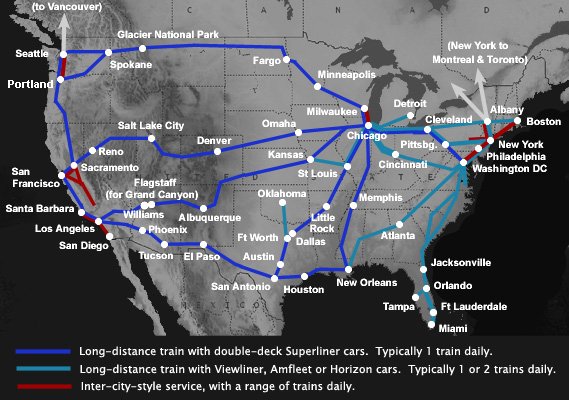
Trains and ships are big and use a lot of resources. But compared to any other form of long-distance transportation, they move freight and people farther with lower environmental impact. We might never decide to do anything about climate change, but we will have no choice but to do something about diminishing oil stocks (having reached peak production about a decade ago). For our homes and offices, we will be using a lot more wind and solar power, but for transportation, a return to the era of train and ship travel is in order.

The Man in Seat 61, a UK-based website, is here to help with the transition. Throughout the world -- even in the under-served United States, the site provides guidance and links to trains and ships to make good time. (As Pirsig says, it all depends on where you put the emphasis: in this case, GOOD time.)


Sit back, relax, and enjoy the ride:

Blog Ideas

coffee (25) GEOG381 (24) GEOG388 (23) GEOG470 (18) climate change (18) GEOG130 (16) geography (16) GEOG332 (13) GEOG431 (12) musica (11) GEOG 332 (9) GEOG 381 (9) Mexico (9) Brazil (8) GEOG286 (8) Texas (8) education (8) migration (8) GEOG298 (7) borderlands (7) GEOG199 (6) GEOG331 (6) Massachusetts (6) US-Mexico (6) deBlij04 (6) immigration (6) GEOG 130 (5) GEOG 286 (5) GEOG287 (5) climate justice (5) cultural geography (5) fair trade (5) food (5) geographic education (5) nicaragua (5) water (5) Arizona (4) GEOG 171 (4) GEOG171 (4) GEOG295 (4) Safina (4) africa (4) deBlij05 (4) land protection (4) music (4) politics (4) Bolivia (3) Boston (3) COVID-19 (3) Detroit (3) Ethiopia (3) Managua (3) Obama (3) border (3) cartography (3) drought (3) libraries (3) pesticides (3) suburban sprawl (3) trade (3) unemployment (3) Alaska (2) Amazon (2) Bridgewater (2) Canada (2) Chiapas (2) China (2) Colonialism (2) EPA (2) EarthView (2) Economy (2) Environment (2) GEOG 199 (2) GEOG 287 (2) GEOG 388 (2) Google Maps (2) Government (2) Hawaii (2) India (2) Lexington (2) Maldives (2) Mozambique (2) NOLA (2) NPR (2) National Monuments (2) National Parks (2) New Orleans (2) Religion (2) Rio Grande (2) Taunton River Wild and Scenic (2) Tex-Mex (2) The View from Lazy Point (2) United States (2) Venezuela (2) anthropocene (2) cape verde (2) censorship (2) central america (2) chocolate (2) corn (2) deBlij07 (2) deforestation (2) demographic transition (2) demography (2) education reform (2) employment (2) environmental geography (2) film (2) forest fire (2) global warming (2) islands (2) landscape ecology (2) librarians (2) maps (2) organic (2) peak oil (2) refugees (2) sense of place (2) soccer (2) sustainability (2) television (2) water rights (2) whales (2) #bbc (1) #nicaragua (1) #sosnicaragua (1) #sosnicaragua #nicaragua (1) 100 Years of Solitude (1) ACROSS Lexington (1) Accents (1) Adam at Home (1) Alice (1) Alt.Latina (1) American Hustle (1) April (1) Association of american Geographers (1) Audubon (1) Aunt Hatch's Lane (1) BBC (1) BSU (1) Baby Boomers (1) Banda Aceh (1) Bay Circuit Trial (1) Bechtel (1) Beleza Tropical (1) Belize (1) Beloit College (1) Ben Linder Cafe (1) Bet The Farm (1) Bhopal (1) Biafra (1) Bikeway (1) Bikini (1) Bill Gates (1) Bill Moyers (1) Boeing 777 (1) Brazilian (1) Brazilianization (1) Bridge (1) British Columbia (1) Brockton (1) Bus Fare (1) Bush (1) Cabo Verde (1) California (1) Cambridge (1) Cape Cod Bay (1) Carl Stafina (1) Catholic (1) Ceuta (1) Chalice (1) Chipko (1) Citgo (1) Climate risks (1) Cochabamba (1) Colombia (1) Common Core (1) Commuter (1) Computers (1) Cuba (1) Cups and Summits (1) Dallas (1) David Byrne (1) Deans Beans (1) Delaware Valley (1) Dunkin Donuts (1) Earth Day (1) Earth View (1) Easton (1) El Salvador (1) Elizabeth Warren (1) Ellicott City (1) Emilia Laime (1) English-only (1) Environmental History (1) Euphrates (1) European Union (1) Evo Morales (1) FIFA (1) FYS (1) Fades Out (1) Farms (1) First-Year Seminar (1) Food Trade (1) Frederick Kaufman (1) French press (1) Fresh Pond Mall (1) GEOG 431 (1) GEOG 441 (1) GEOG213 (1) GEOG490 (1) Gabriel García Márquez (1) Garden of Gethsemane (1) Gas wells (1) Gateway Cities (1) General Motors (1) Gini Coefficient (1) Girl in the Cafe (1) Google (1) Gordon Hempton (1) Gravina Island Bridge (1) Great Migration (1) Great Molasses Flood (1) Guy Lombardo (1) Haiti (1) Hawks (1) Heart (1) Higher Education (1) History (1) Holyhok Lewisville (1) Homogenous (1) Honors (1) How Food Stopped Being Food (1) Hugo Chavez (1) IMF (1) Iditarod (1) Imperial Valley (1) Income Inequality (1) Indonesia (1) Iraq (1) Irish (1) Japan (1) Junot Diaz (1) Kenya (1) Ketchikan (1) Key West (1) Kindergarden Students (1) King Corn (1) Kiribati (1) Latin America (1) Limbaugh (1) Literature (1) Living On Earth (1) Louisiana (1) Love Canal (1) Luddite (1) M*A*S*H (1) MCAS (1) MacArthur Genius (1) Maersk (1) Malawi (1) Malaysia (1) Malaysian Air Flight 370 (1) Mali (1) Manu Chao (1) Map (1) Marblehead (1) Mary Robinson Foundation (1) Maryland (1) Massachusetts Bay Colony (1) Math (1) Maxguide (1) May (1) Maya (1) Mayan (1) Mayan Gold (1) Mbala (1) McDonald's (1) Melilla (1) Mexicans (1) Michael Pollan (1) Michelle Obama (1) Micronesia (1) Military (1) Military Dictatorship (1) Minuteman Trail (1) Mongolia (1) Monsanto (1) Montana (1) Morocco (1) Mount Auburn Cemetery (1) Muslim (1) NPS (1) Nantucket (1) National Education Regime (1) Native American (1) Native Americans (1) New Bedford (1) New Hampshire (1) New York City (1) New York Times (1) Nigeria (1) No Child Left Behind Act (1) Norquist (1) North Africa (1) Nuts (1) Oakland (1) Oaxaca (1) Occupeligo (1) Occypy (1) Oklahoma (1) Oklahoma City (1) Oppression (1) PARCC (1) Pakistan (1) Pascal's Wager (1) Peanut (1) Pearson Regime (1) Philadelphia (1) Philippines (1) Pink Unicorns (1) Poland (1) Portuguese (1) Protest (1) Public Education (1) Puebla (1) Puritans (1) Quest University (1) Rachel Carson (1) Reading (1) Republican (1) Retro Report (1) Robert Reich (1) Rock Legend (1) Ronald Reagan (1) Rondonia (1) Rosa Parks (1) SEXCoffee (1) Safety (1) Samoza (1) Sandino (1) Sara Vowell (1) Save the Children (1) Scotch (1) Scotland (1) Seinfeld (1) Senegal (1) Sergio Mendes (1) Severin (1) Sharrod (1) Silent Spring (1) Sinatra (1) Slope (1) Smokey the Bear (1) Somalia (1) Sombra (1) Sonora (1) Sonoran desert (1) Sonoran hot dog (1) South America (1) Spain (1) Stairway to Heaven (1) Storm (1) Suare Inch of Silence (1) Sumatra (1) Swamp (1) Tacloban (1) Tanzania (1) The Amazon (1) The Amazon Trail (1) Tigris (1) Tucson (1) Tufts (1) U.S Federal Reserve (1) U.S Government (1) U.S. economy (1) USDA (1) USLE Formula (1) Uganda (1) Unfamiliar Fishes (1) Union Carbide (1) Vacation (1) Vexillology (1) Vietnam (1) ViralNova (1) WNYC Data News (1) Wall Street (1) Walsenburg (1) Walt Disney (1) Walt and El Grupo (1) Ward's Berry Farm (1) West (1) Whaling (1) Wilson (1) Winter Storm Saturn (1) Wisconsin (1) World Bank (1) Xingu (1) YouTube (1) Zombies (1) agriculture (1) antitrust (1) aspen (1) austerity (1) aviation (1) banned books (1) bark beetle (1) bean (1) beavers (1) bicycle (1) bicycling (1) bike sharing (1) binary (1) biodiversity (1) bioneers (1) books (1) boston globe (1) cacao (1) cafe (1) campaign (1) campus (1) cantonville (1) capitals (1) carbon dioxide (1) carbon offsets (1) carioca (1) cash (1) cashews (1) census (1) chemex (1) chemistry (1) chronology (1) churrasco (1) civil rights (1) coffee grounds (1) coffee hell (1) coffee prices (1) coffee quality (1) college (1) compost (1) computerized test (1) congress (1) conservation commission (1) corporations (1) countries (1) cubicle (1) dams (1) deBlij06 (1) deBlij08 (1) death (1) deficit (1) development (1) dictatorship (1) distracted learning (1) distraction (1) drug war (1) dtm (1) earth (1) economic diversification (1) economic geography (1) election (1) embargo (1) energy (1) enhanced greenhouse effect (1) environmentalist (1) ethnomusicology (1) exremism (1) failed states (1) farming (1) financial crisis (1) football (1) forestry (1) forro (1) fracking (1) free market (1) free trade (1) fuel economy (1) garden (1) genocide (1) geography education (1) geography games (1) geography of chocolate (1) geography of food (1) geologic time (1) geotechnology (1) gerrymandering (1) global pizza (1) globe (1) goodall (1) green chemistry (1) ground water (1) guacamole (1) guatemala (1) habitat (1) high-frutcose (1) home values (1) hospitality (1) hourglass (1) housing (1) hydrology (1) illegal aliens (1) income (1) indigenous (1) interfaith (1) journalism (1) kitchen garden (1) labor (1) language (1) libertarianism (1) library (1) linguistics (1) little rock (1) llorona; musica (1) macc (1) maccweb (1) magic realism (1) maple syrup (1) mapping (1) masa no mas (1) massland (1) medical (1) mental maps (1) mi nina (1) microlots (1) microstates (1) mining (1) mltc (1) monopoly (1) municipal government (1) nautical (1) neoclassical economics (1) new england (1) newseum (1) newspapers (1) noise pollution (1) pandas (1) petroleum (1) piracy (1) pirates (1) poison ivy (1) police (1) political geography (1) pollution (1) provincial government (1) proxy variables (1) public diplomacy (1) quesadilla (1) rabbi (1) racism (1) real food cafe (1) regulations (1) remittances (1) resilience (1) resistance (1) respect (1) rigoberta menchu (1) rios montt (1) romance (1) roya (1) runways (1) russia (1) satellites (1) science (1) sea level (1) selva negra (1) sertao (1) sertão (1) sex (1) sex and coffee (1) simple (1) sin (1) smokey (1) solar (1) solar roasting (1) south africa (1) sovereignty (1) species loss (1) sporcle (1) sports (1) state government (1) taxes (1) tea party (1) teaching (1) textile (1) texting (1) tortilla (1) training (1) transect; Mercator (1) travel (1) triple-deckers (1) tsunami (1) urban geography (1) utopia (1) vermont (1) vice (1) video (1) wall (1) water resources (1) water vapor (1) whiskey (1) whisky (1) widget (1) wifi (1) wild fire (1) wildfire (1) wildlife corridor (1) wto (1)