Thursday, November 18, 2010

Loko = Crazy

Like many people of a certain age, I learned about the Four Loko phenomenon only at the backlash phase. That is, I never heard about caffeinated malt beverages until health, safety, and legal alarm bells were all ringing. Even though I have an interest in coffee and many concerns about college drinking, by the time I heard of Four Loko, it had already become one of the top "Hot Topics" on Boston.com.


AllPosters.com
The problem with Four Loko, it seems, is the combination of caffeine and alcohol. "Wait a minute," I thought, "hasn't that combination been part of one of my favorite beverages for a long time?" After all, I've often joked that Irish Coffee has the four essential food groups: caffeine, fat, sugar, and alcohol. (In moderation, of course; this is a "favorite" that I enjoy about once a year, if that.)


It turns out that the caffeine/alcohol combination per se was not the problem with Four Loko: it was the way this combination was marketed and in turn the way the product was actually used. Each can of Four Loko is almost twice the size of a normal can or bottle of beer, with an alcohol concentration almost three times as high. This means that a single can nearly matches the alcohol content of a six-pack. With its sweet flavor, it would go down much more quickly than the equivalent amount of beer (or even a similarly charged half-pint of whiskey). And the key concern: stimulants including caffeine allow the consumer to drink many more of these than would otherwise be possible before noticing signs of intoxication. In other words, the caffeine removes even the limited amount of self-awareness that usually accompanies heavy drinking. As has been demonstrated, the results can be dangerous. I am not aware, however, of any direct comparisons between this mode of intoxication and more traditional social lubricants, such as cheap beer.


The comparison to traditional coffee is much closer to my area of interest, and a few key distinctions are worth noting. First, for those interested strictly in the deliver of caffeine and alcohol, traditional coffee cocktails or liqueurs are more expensive than the current wave of party drinks. (Four Loko, of course, is just one of several brands available.) The higher prices are supported by a completely different demographic, willing to pay more per drink for the flavor, and perhaps for the oddly soothing combination of stimulant and depressant in an Irish Coffee or White Russian. These have roughly the equivalent of one cup of coffee and one beer or  1/10 cup of coffee and 2 beers, respectively, compared to one cup of coffee and six beers for the Four Loko can).


I emphasize per drink because consumption of specialty coffee cocktails is very likely to stop at one, perhaps two servings. As noted in the NY Times Spiked Coffee story, these beverages are typically consumed between 10 and 11 p.m., an hour suggesting the slight extension of an evening out, rather than a party-til-dawn rave.


In addition to a difference in dose, of course, is a difference in flavor and quality. I have to admit that I have not tried Four Loko, but I am pretty nonetheless pretty certain that the focus has not been on these factors. The caffeine in these drinks does not even come from coffee, but rather from the process of decaffeination. In the case of Kahlua, the caffeine comes not merely from real coffee, but from real, shade-grown Veracruz coffee. Similarly, the bartenders covered by the NY Times are using specialty coffee, including some from one of my favorite coffee companies.


It is for these reasons that -- although they seem similar at one level -- brands such as Kahlua and Allen's Coffee Brandy are likely to be on shelves for years to come. 


It appears that Four Loko's producers are determined to stay on shelves as well. Having built a brand but facing serious state and federal sanctions, the company has decided to cut its losses by eliminating three of the four key ingredients. Which did the company decide is most important? Alcohol.


Tuesday, November 16, 2010

One That Got Away

Followers of this blog know that my interest in coffee began with economic and environmental conditions of the coffee trade, but eventually grew to encompass the beverage itself and the coffee shops that so often become the hubs of local communities. For the past several years, in fact, students in my coffee seminar have been charged with bringing me stories about coffee shops, and last spring we started putting those stories on a dedicated Yelp! channel for my students (to complement the Yelp! channel that carries my own reviews.)
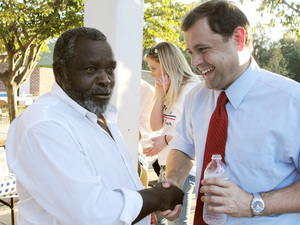
From today's Boston Globe I learned of a shop that did not come to my attention in time. The Allston Cafe, in the eponymous neighborhood of Boston, served its last customers this week, some with tears in their eyes. As is always the case with the best coffee shops, regulars -- such as "Mail Box Mike" above -- helped to make the business what it was.

Owners Page Masse and Derek Brown faced steadily-increasing food prices and rapidly-increasing rent, as their landlord attempts to profit from a planned expansion of Harvard University in the neighborhood. They hope to re-open nearby (with a more humane landlord, it is to be hoped). If they are able to do soon enough,  their loyal customers might just enable them to re-create some of what has been lost. If it happens, I plan not to miss it next time!

Thursday, November 11, 2010

From Boston to the Other Side

Elijah Wald was a reporter for the Boston Globe who had little experience in Latin America prior to becoming interested in narcocorridos, a sub-genre of the traditional corrido that may be on its way to becoming better known than the original form. I am probably not helping matters, with my recent post about the most famous of these songs, Reina del Sur.

In the course of Wald's research, he established himself as an authority on corridos in general and narcocorridos in particular. His web site includes information about recordings (I have both the book and its companion CD, for example), a chapter that was considered too hot to publish in the original book, and corridos about special stories, including the women of Juarez and the terrorist attacks of September 11, 2001. A corrido has even been composed about Wald himself! (See my post about Private Felix Longoria for another special corrido story.) The Smithsonian's Corridos sin Fronteras exhibit is a another educational resource on this art form, which continues to be an important cultural sounding board.

The narcocorrido story is also told quite effectively in the POV film Al Otro Lado (To the Other Side). The film describes the phenomenon from the point of view of a young songwriter who sees this art form as his ticket out of poverty (as traffickers will pay handsomely for songs about themselves). Unfortunately, the film is difficult to find, except in an educational version that costs almost what a coyote would charge!

A South Texas Veteran, Forgotten & Remembered

I took some time this Veteran's Day learning the story of Felix Longoria, a Mexican-American who lost his life in the Philippines during a valiant and dangerous mission during that summer between the end of World War II  Europe in the Pacific. The short promo below hints at the broad, historic sweep of the Longoria story, as told by filmmaker John Valadez of Independent Lens. Have a look, and then make plans to see the full documentary, in English or Spanish.

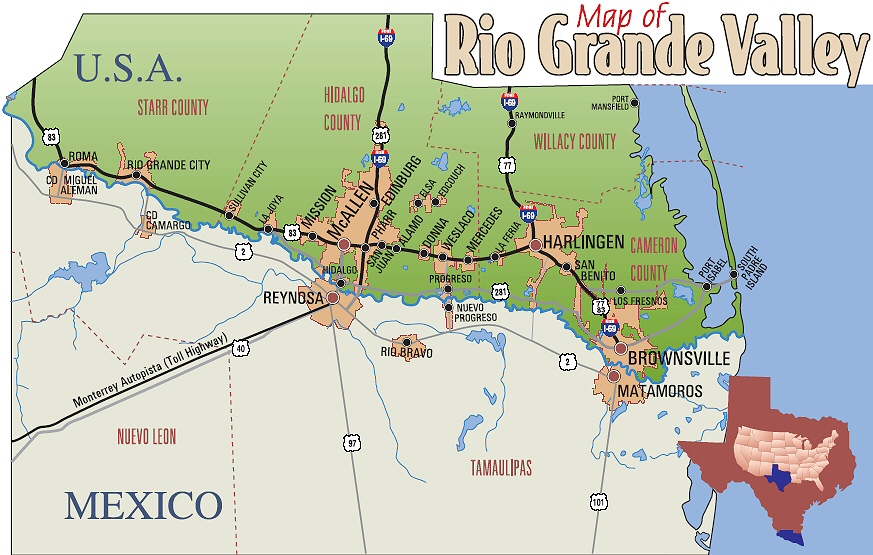
Pvt. Longoria lived in Three Rivers, Texas, a town that was not officially segregated, but whose founder, Charles Tips, had gone to the trouble of giving Spanish names only to streets west of the railroad tracks -- a legacy of his racism that is present to this day. The town is on the northern edge of South Texas, 50 miles north of my old teaching job (at Texas A&M-Kingsville, Alice Extension) and 200 miles north of our former home in Pharr.
It is a place we passed many times without knowing its significance. When Pvt. Longoria's body was sent home in 1949, the new funeral director in town was afraid to let his wake be held in the chapel. This film tells the story of how that refusal helped to galvanize Mexican-American veterans -- who had fought and died in disproportionate numbers in the war -- around an effort to have his sacrifice recognized. Ultimately, Felix Longoria was buried at Arlington National Cemetery. The film explains why Senator Lyndon Johnson was present for the burial, but not visible in news coverage of it, and how his involvement on behalf of the Longoria family helped to bring both JFK and LBJ to the White House.
Woven throughout the film is the story of Santiago Hernandez, a resident of Three Rivers who has sought to memorialize Pvt. Longoria, first by having the local post office named for him. Early in the film, we learn of his frustration at being denied this opportunity to recognize his town's hero, with no satisfactory reason given. He composes a corrido in Pvt. Longoria's honor, and ultimately succeeds in having a state historical marker erected. Pieces of the song are played in various scenes (at 10:00, 28:45, and 49:00 to the end).

I was interested in the Hernandez side story for two reasons: first, I have been teaching some of my students about corridos recently, but mostly the narrow sub-genre of narcocorridos, and it is good to have an example that is a bit more typical of what corridos are all about. Second, I have recently been involved in trying to have something named for a hero of mine, though it was a coffee shop instead of a post office. I am learning to look for a way to get past the frustration over a bad decision, as Hernandez had to do, and look for other ways to honor a legacy.

Tuesday, November 09, 2010

Los Tigres

In Murder City, my recent post about the eruption of violence on the US-Mexico border, I mentioned the band Los Tigres del Norte, the best known exponents of the narcocorrido sub-genre. I knew about corridos from prior experience in both Tucson and South Texas, but my introduction to narcocorridos was their song La Reina del Sur, about a trafficante's girlfriend who becomes a big-time dealer in her own right. I remember the day I purchased my CD of this transgressive music, in a Borders store on the border. The well-dressed lady next to me was not pleased to hear me ask for it.

The NPR story on narcocorridos explains how the old border radio phenomenon has been reversed, and how the art form can be just as dangerous as the trade itself. Although the phenomenon is found all along the border, the heart of this musical form is in the Rio Grande Valley, where a German influence in the music can still be heard, and where I lived for three years before coming to Bridgewater. Learn more from my Elijah Wald post.

Saturday, November 06, 2010

Life Behind the Wall


For forty years, Doonesbury has chronicled applied dry wit to the folly and arrogance behind some of our country's most tragic mistakes. His recent strip in about civilian casualties in Iraq is particularly cogent -- and geographic. The cartoon president's "gated community" in many ways represents the U.S. as a whole, seeking isolation rather than grappling with the realities of our privilege (yes, even during a recession we are privileged) in a world of great disparity.

Tuesday, November 02, 2010

American/Sandinista Viewing

The film American/Sandinista will be shown this Thursday evening, November 4, in the Library Lecture Hall. Refreshments will be served. See the Geography Department blog for more details.

Murder City

Photo: NPS
Ciudad Juarez was once one of my favorite places. Many years ago, I read Tom Miller's On the Border, about a journey in which he traversed every border crossing, from Tijuana to Matamoros, from Brownsville to San Diego. After years living in the Gasden Purchase section of Arizona -- where my wife Pamela actually got to work with Tom on one of his books --  and in the southmost tip of Texas, I realized that I had been through most of the border crossings. Los Ebanos with its hand-drawn ferry was a favorite, but so, too, was through the Chamizal Peace Park between El Paso and Ciudad Juarez.

Almost all of the cities on the Mexican side of the border are bigger than their U.S. counterparts, and Juarez is no exception. It is the largest border city in the world, with 2/3 of the population on the Chihuahua side. Despite its sprawling size, I enjoyed several visits in the 1990s, and walked around comfortably in the sunshine and even in the evenings. In those days, even the crossing back into the U.S. was simple and easy.

View Larger Map


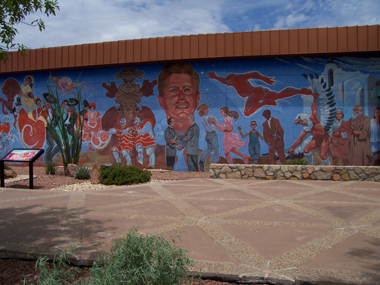
In the 13 years since we left the borderlands, Juarez has become a tragic place -- one of the few I would rather not visit for a while. Jennifer Lopez has told the story -- at some risk to her own safety -- in Bordertown. I highly recommend both the fictionalized account (see trailer) and the DVD extra feature that explains how the film came to be made. The otherwise infamous narcocorrido singers Los Tigres del Norte told the story in the CD Pacto de Sangre. Both of these refer to the hundreds of young women who have been kidnapped, raped, killed, and left in the deserts surrounding Juarez over the past decade or more. Many of them have been attracted to the area for maquila manufacturing jobs, working long hours for low pay in factories that do not provide them adequate protection. It is thought that a conspiracy among very elite men is responsible for the failure to solve these crimes -- about two thousand women who have disappeared. The image at left is from a blog post called ¡Feminicidios sin resolver! -- one of many that expresses outrage and sorrow about the loss of innocent young lives in this once beautiful city. This particular image is remarkable for the way it integrates motifs representing femininity and veneration of the dead at one level, along with representations of crime scenes and of the border itself. The accompanying narrative is focused on the fact that many of the victims were killed going home from jobs that they were far too young to hold legally.


Pam reminded me that the first time we heard about the Juarez killings was through a performance of Eve Ensler's Vagina Monologues (an important program that is put on each February at BSU). Each year, the VDAY show focuses on a cause, and in 2004 the women of Juarez were that focus. One of the monologues, The Memory of Her Face, honors women victims of violence in Islamabad, Baghdad, and Ciudad Juarez, with a stanza of the reading representing a woman in each of these cities in which violence against women has become a consequence of wars -- declared and undeclared. Read more about the Women in Juarez Spotlight and about the 5,000 shows performed in Mexico City in support of Juarez women (second item on this news page).

In the past couple of years, this already tragic and violent story has gotten much worse -- probably ten times worse. The murder rate in Mexico as a whole remains relatively low, in part because firearms are very difficult to procure. But the murder rate in Ciudad Juarez has become much higher, as it has in other border towns. The reason: the Sinaloa drug cartel, which formerly operated with impunity throughout the northwest of the country, is in a battle over territory with a group called the Zetas in the northeast. I met a few of the Zetas during an inspection stop near Monterrey in the 1990s, when they were legitimate narcotics police. They eventually cooperated with the Gulf Cartel, and still later took it over. Now shootouts are so common in Matamoros, across the river from my former job at UT-Brownsville/Texas Southmost College that the campus has actually been hit by stray bullets.
Borderland journalist Charles Bowden describes the killing in Juarez in his book Murder City, which is at the same time compelling and unbearable. He explores the dynamics I outline above, but goes beyond this to put the brutality in the context of even larger forces related to economic exploitation. He discusses his claims -- and explains why he keeps going back to Juarez -- in an interview with NPR's Mary Louise Kelly that was recorded after three people affiliated with the U.S. consulate were killed last April.

View full gallery at
MexConnect
I argue, with Bowden, that  is not possible to understand violence on the border without acknowledging the transformation of the border itself from an edge situated within a bicultural zone of transition to an increasingly impersonal sieve that separates humans from their labor. It is also not possible, however, to understand death along the border without understanding the distinctive attitude toward death in Mexico, as exemplified by the Dia de los Muertos. November 1 is a colorful holiday -- as suggested below -- in which the dead are honored, celebrated, visited, and consulted.

As reported last spring in a fascinating article in National Geographic, the increasing brutality of the drug war has created a class of wealthy and youthful criminal class who are full of both bravado and fear and at the same time increasingly status-conscious. In this context, graves -- while always important -- have become sites of obsessive competition among traffickers. The focus of the article -- Troubled Spirits -- is on the veneration of Santa Muerte, literally Saint Death. Even in the panoply of images that embrace the figure of the skull, the imagery of Santa Muerte is remarkably chilling. Whether standing in a gown in a tiny living room or being carried on the shoulders of mourners at a gangster funeral, figures of Santa Muerte are arresting. Although not sanctioned by the Catholic Church, Santa Muerte is an increasingly important object of adoration and supplication, as traffickers seek both protection and riches through her. And although many assume Santa Muerte to be a very recent phenomenon, at least one Hoodoo practitioner claims several generations of veneration of Santa Muerte.

See the amazing, complete photo gallery at NGS Magazine

Lagniappe

In a late 2023 post, I cite New York Times reporting from our part of the borderlands in Texas, which highlights traditional, non-criminal associations with Santa Muerte. 

Friday, October 29, 2010

Globalization and the Local Church

The Table is a non-profit organization of volunteers from throughout southeastern Massachusetts that has operated a soup kitchen in Brockton for 30 years. For the past several months, its leaders have been seeking a new location that would make its meals more accessible while also providing additional services to the community.

News from the Episcopal Diocese of Massachusetts is pushing the group to move sooner rather than later, as the 117-year-old church that has housed The Table is about to close.

So, what does this story have to do with globalization? Globalization is a process that has unfolded over centuries, particularly since the expansion of European empires about five centuries ago and most especially since the acceleration of technological change in the past generation or two. The most robust definitions recognize the role of communications, transportation, and institutional change in fostering an increasingly complex web of global connections.

An important thread running through all these changes is the extension of the tentacles of the world space-economy; the penetration of global capitalism into every nook and cranny of human and physical geographies. This has led steadily to the commodification of relationships that previously did not involve money. Direct relationships between people and the land are replaced by commercial relationships, as subsistence farmers become customers. Relationships of generalized reciprocity -- in which members of a family or clan or village care for each other without tracking the details -- are replaced by relationships of exchange.

And apparently, even a church can become so fixated on money that the vicar of St. Paul's actually wrote of her own church:
Episcopal churches do well in affluent towns and suburbs. Brockton, at present, is too poor and its residents struggling too hard to make ends meet, to create here an Episcopal church like the ones that now exist elsewhere in the Diocese of Massachusetts.
This assertion goes beyond ordinary stewardship of the church's resources by identifying believers more strongly with their socio-economic status than with their faith.

While looking for a nice image of Jesus feeding the multitudes to contrast with this story, I had the great fortune of finding the blogger Prairie Preacher. His article What Would Jesus DO? is directly relevant to the topic at hand, and just skimming his February 2008 archives makes me want to read more of what this genuine Christian has to say. His is a refreshing voice at the end of a tough week in which some of my own social-justice projects have been running aground on the MONEY TALKS gestalt of this era.


Squeamish about Good Coffee?

In a report on the final week of campaigning for mid-term elections, Melissa Block indicates that candidate Tom Perriello was understandably squeamish about being seen purchasing a "fancy latte." He was buying it from a locally-owned business that promotes literacy and buys its coffee from roaster that supports -- to a considerable degree -- fair trading practices and sustainable economic development approaches in coffee-growing communities. That "fancy latte" has more potential to support working people than does more ordinary coffee.

If he should be squeamish about anything, it should be the bottled water he is carrying. More to the point, candidates think nothing of buying low-grade, commodity coffee in diners from coast-to-coast, most of which is grown by people living in poverty, sometimes at the very edge of survival. A cup of Dunkin' Donuts coffee -- which promotes poverty and lines the pockets of investor Mitt Romney -- should get more negative attention.

By purchasing a quality latte, Rep. Perriello is supporting the economy of central Virginia and doing more to address illegal migration than all of the grand-standing and wall-building that his opponents can muster.

Blog Ideas

coffee (25) GEOG381 (24) GEOG388 (23) GEOG470 (18) climate change (18) GEOG130 (16) geography (16) GEOG332 (13) GEOG431 (12) musica (11) GEOG 332 (9) GEOG 381 (9) Mexico (9) Brazil (8) GEOG286 (8) Texas (8) education (8) migration (8) GEOG298 (7) borderlands (7) GEOG199 (6) GEOG331 (6) Massachusetts (6) US-Mexico (6) deBlij04 (6) immigration (6) GEOG 130 (5) GEOG 286 (5) GEOG287 (5) climate justice (5) cultural geography (5) fair trade (5) food (5) geographic education (5) nicaragua (5) water (5) Arizona (4) GEOG 171 (4) GEOG171 (4) GEOG295 (4) Safina (4) africa (4) deBlij05 (4) land protection (4) music (4) politics (4) Bolivia (3) Boston (3) COVID-19 (3) Detroit (3) Ethiopia (3) Managua (3) Obama (3) border (3) cartography (3) drought (3) libraries (3) pesticides (3) suburban sprawl (3) trade (3) unemployment (3) Alaska (2) Amazon (2) Bridgewater (2) Canada (2) Chiapas (2) China (2) Colonialism (2) EPA (2) EarthView (2) Economy (2) Environment (2) GEOG 199 (2) GEOG 287 (2) GEOG 388 (2) Google Maps (2) Government (2) Hawaii (2) India (2) Lexington (2) Maldives (2) Mozambique (2) NOLA (2) NPR (2) National Monuments (2) National Parks (2) New Orleans (2) Religion (2) Rio Grande (2) Taunton River Wild and Scenic (2) Tex-Mex (2) The View from Lazy Point (2) United States (2) Venezuela (2) anthropocene (2) cape verde (2) censorship (2) central america (2) chocolate (2) corn (2) deBlij07 (2) deforestation (2) demographic transition (2) demography (2) education reform (2) employment (2) environmental geography (2) film (2) forest fire (2) global warming (2) islands (2) landscape ecology (2) librarians (2) maps (2) organic (2) peak oil (2) refugees (2) sense of place (2) soccer (2) sustainability (2) television (2) water rights (2) whales (2) #bbc (1) #nicaragua (1) #sosnicaragua (1) #sosnicaragua #nicaragua (1) 100 Years of Solitude (1) ACROSS Lexington (1) Accents (1) Adam at Home (1) Alice (1) Alt.Latina (1) American Hustle (1) April (1) Association of american Geographers (1) Audubon (1) Aunt Hatch's Lane (1) BBC (1) BSU (1) Baby Boomers (1) Banda Aceh (1) Bay Circuit Trial (1) Bechtel (1) Beleza Tropical (1) Belize (1) Beloit College (1) Ben Linder Cafe (1) Bet The Farm (1) Bhopal (1) Biafra (1) Bikeway (1) Bikini (1) Bill Gates (1) Bill Moyers (1) Boeing 777 (1) Brazilian (1) Brazilianization (1) Bridge (1) British Columbia (1) Brockton (1) Bus Fare (1) Bush (1) Cabo Verde (1) California (1) Cambridge (1) Cape Cod Bay (1) Carl Stafina (1) Catholic (1) Ceuta (1) Chalice (1) Chipko (1) Citgo (1) Climate risks (1) Cochabamba (1) Colombia (1) Common Core (1) Commuter (1) Computers (1) Cuba (1) Cups and Summits (1) Dallas (1) David Byrne (1) Deans Beans (1) Delaware Valley (1) Dunkin Donuts (1) Earth Day (1) Earth View (1) Easton (1) El Salvador (1) Elizabeth Warren (1) Ellicott City (1) Emilia Laime (1) English-only (1) Environmental History (1) Euphrates (1) European Union (1) Evo Morales (1) FIFA (1) FYS (1) Fades Out (1) Farms (1) First-Year Seminar (1) Food Trade (1) Frederick Kaufman (1) French press (1) Fresh Pond Mall (1) GEOG 431 (1) GEOG 441 (1) GEOG213 (1) GEOG490 (1) Gabriel García Márquez (1) Garden of Gethsemane (1) Gas wells (1) Gateway Cities (1) General Motors (1) Gini Coefficient (1) Girl in the Cafe (1) Google (1) Gordon Hempton (1) Gravina Island Bridge (1) Great Migration (1) Great Molasses Flood (1) Guy Lombardo (1) Haiti (1) Hawks (1) Heart (1) Higher Education (1) History (1) Holyhok Lewisville (1) Homogenous (1) Honors (1) How Food Stopped Being Food (1) Hugo Chavez (1) IMF (1) Iditarod (1) Imperial Valley (1) Income Inequality (1) Indonesia (1) Iraq (1) Irish (1) Japan (1) Junot Diaz (1) Kenya (1) Ketchikan (1) Key West (1) Kindergarden Students (1) King Corn (1) Kiribati (1) Latin America (1) Limbaugh (1) Literature (1) Living On Earth (1) Louisiana (1) Love Canal (1) Luddite (1) M*A*S*H (1) MCAS (1) MacArthur Genius (1) Maersk (1) Malawi (1) Malaysia (1) Malaysian Air Flight 370 (1) Mali (1) Manu Chao (1) Map (1) Marblehead (1) Mary Robinson Foundation (1) Maryland (1) Massachusetts Bay Colony (1) Math (1) Maxguide (1) May (1) Maya (1) Mayan (1) Mayan Gold (1) Mbala (1) McDonald's (1) Melilla (1) Mexicans (1) Michael Pollan (1) Michelle Obama (1) Micronesia (1) Military (1) Military Dictatorship (1) Minuteman Trail (1) Mongolia (1) Monsanto (1) Montana (1) Morocco (1) Mount Auburn Cemetery (1) Muslim (1) NPS (1) Nantucket (1) National Education Regime (1) Native American (1) Native Americans (1) New Bedford (1) New Hampshire (1) New York City (1) New York Times (1) Nigeria (1) No Child Left Behind Act (1) Norquist (1) North Africa (1) Nuts (1) Oakland (1) Oaxaca (1) Occupeligo (1) Occypy (1) Oklahoma (1) Oklahoma City (1) Oppression (1) PARCC (1) Pakistan (1) Pascal's Wager (1) Peanut (1) Pearson Regime (1) Philadelphia (1) Philippines (1) Pink Unicorns (1) Poland (1) Portuguese (1) Protest (1) Public Education (1) Puebla (1) Puritans (1) Quest University (1) Rachel Carson (1) Reading (1) Republican (1) Retro Report (1) Robert Reich (1) Rock Legend (1) Ronald Reagan (1) Rondonia (1) Rosa Parks (1) SEXCoffee (1) Safety (1) Samoza (1) Sandino (1) Sara Vowell (1) Save the Children (1) Scotch (1) Scotland (1) Seinfeld (1) Senegal (1) Sergio Mendes (1) Severin (1) Sharrod (1) Silent Spring (1) Sinatra (1) Slope (1) Smokey the Bear (1) Somalia (1) Sombra (1) Sonora (1) Sonoran desert (1) Sonoran hot dog (1) South America (1) Spain (1) Stairway to Heaven (1) Storm (1) Suare Inch of Silence (1) Sumatra (1) Swamp (1) Tacloban (1) Tanzania (1) The Amazon (1) The Amazon Trail (1) Tigris (1) Tucson (1) Tufts (1) U.S Federal Reserve (1) U.S Government (1) U.S. economy (1) USDA (1) USLE Formula (1) Uganda (1) Unfamiliar Fishes (1) Union Carbide (1) Vacation (1) Vexillology (1) Vietnam (1) ViralNova (1) WNYC Data News (1) Wall Street (1) Walsenburg (1) Walt Disney (1) Walt and El Grupo (1) Ward's Berry Farm (1) West (1) Whaling (1) Wilson (1) Winter Storm Saturn (1) Wisconsin (1) World Bank (1) Xingu (1) YouTube (1) Zombies (1) agriculture (1) antitrust (1) aspen (1) austerity (1) aviation (1) banned books (1) bark beetle (1) bean (1) beavers (1) bicycle (1) bicycling (1) bike sharing (1) binary (1) biodiversity (1) bioneers (1) books (1) boston globe (1) cacao (1) cafe (1) campaign (1) campus (1) cantonville (1) capitals (1) carbon dioxide (1) carbon offsets (1) carioca (1) cash (1) cashews (1) census (1) chemex (1) chemistry (1) chronology (1) churrasco (1) civil rights (1) coffee grounds (1) coffee hell (1) coffee prices (1) coffee quality (1) college (1) compost (1) computerized test (1) congress (1) conservation commission (1) corporations (1) countries (1) cubicle (1) dams (1) deBlij06 (1) deBlij08 (1) death (1) deficit (1) development (1) dictatorship (1) distracted learning (1) distraction (1) drug war (1) dtm (1) earth (1) economic diversification (1) economic geography (1) election (1) embargo (1) energy (1) enhanced greenhouse effect (1) environmentalist (1) ethnomusicology (1) exremism (1) failed states (1) farming (1) financial crisis (1) football (1) forestry (1) forro (1) fracking (1) free market (1) free trade (1) fuel economy (1) garden (1) genocide (1) geography education (1) geography games (1) geography of chocolate (1) geography of food (1) geologic time (1) geotechnology (1) gerrymandering (1) global pizza (1) globe (1) goodall (1) green chemistry (1) ground water (1) guacamole (1) guatemala (1) habitat (1) high-frutcose (1) home values (1) hospitality (1) hourglass (1) housing (1) hydrology (1) illegal aliens (1) income (1) indigenous (1) interfaith (1) journalism (1) kitchen garden (1) labor (1) language (1) libertarianism (1) library (1) linguistics (1) little rock (1) llorona; musica (1) macc (1) maccweb (1) magic realism (1) maple syrup (1) mapping (1) masa no mas (1) massland (1) medical (1) mental maps (1) mi nina (1) microlots (1) microstates (1) mining (1) mltc (1) monopoly (1) municipal government (1) nautical (1) neoclassical economics (1) new england (1) newseum (1) newspapers (1) noise pollution (1) pandas (1) petroleum (1) piracy (1) pirates (1) poison ivy (1) police (1) political geography (1) pollution (1) provincial government (1) proxy variables (1) public diplomacy (1) quesadilla (1) rabbi (1) racism (1) real food cafe (1) regulations (1) remittances (1) resilience (1) resistance (1) respect (1) rigoberta menchu (1) rios montt (1) romance (1) roya (1) runways (1) russia (1) satellites (1) science (1) sea level (1) selva negra (1) sertao (1) sertão (1) sex (1) sex and coffee (1) simple (1) sin (1) smokey (1) solar (1) solar roasting (1) south africa (1) sovereignty (1) species loss (1) sporcle (1) sports (1) state government (1) taxes (1) tea party (1) teaching (1) textile (1) texting (1) tortilla (1) training (1) transect; Mercator (1) travel (1) triple-deckers (1) tsunami (1) urban geography (1) utopia (1) vermont (1) vice (1) video (1) wall (1) water resources (1) water vapor (1) whiskey (1) whisky (1) widget (1) wifi (1) wild fire (1) wildfire (1) wildlife corridor (1) wto (1)